Saturday, August 24, 2013

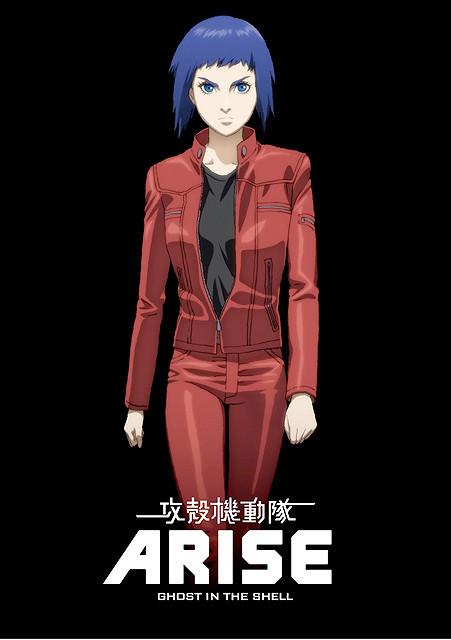
Ghost in the Shell Arise 1 review

When I first heard that some new Ghost in the Shell was being announced, I threw my hands up in the air in celebration. Ghost in the Shell is one of my favorite anime helmed by two of my favorite directors (Mamoru Oshii and Kenji Kamiyama). A new director’s spin on things is going to be awesome! As I heard more coming down the pipeline, like that it was a completely separate timeline from either Oshii’s or Kamiyama’s, I got a little more excited and when I heard that it was going to be a prequel, I got a little less excited. But all that aside, Ghost in the Shell Arise certainly delivers on every level I’d have wanted it to out of a first episode. 

Ghost in the Shell Arise is a prequel to Shirow Masamune’s original Ghost in the Shell comics. However, I don’t believe that it is stand alone. Everything would feel so distant without any introduction to the series (whether that be Masamune’s comics, Oshii’s films, or Kamiyama’s series). But don’t let that be a detraction from an otherwise great work.

Production I.G puts in their A-game in terms of animation here. It blends a modern-style of character designs (done by Kazuchika Kise, who worked on xxxHolic and Legend of the Galactic Heroes of all things) with Oshii’s original feel of the films (a bleaker, dirtier cyberpunk vision compared with Kamiyama’s sleeker look). Kise’s also directing these OAVs and he certainly proves that he can do it. He’s previously worked extensively as a key animator and an animation director, but this is his first time in charge. The direction isn’t bad, but it’s nothing outstanding either. The action scenes were really cool, but they weren’t nearly as dynamic as Oshii’s films.

The scripts are helmed by Tow Ubukata, a longtime contributor for Production I.G (he worked on Le Chevalier D’Eon, Heroic Age, and Mardock Scramble). The scripts are much better than Kamiyama’s as they feature much less stilted dialogue and everything flows much nicer. I’m not sure what Kamiyama was doing in Ghost in the Shell, because his Moribito and Eden of the East scripts were fine.

The music was pretty cool in here too. It’s hard to follow after Kenji Kawai and Yoko Kanno, but Cornelius does a stunning job. It’s nothing I’d listen to recreationally (and I’d listen to Kawai and Kanno’s stuff ad infinitum), but it really fits the mood of the series. The opening in particular provides a great door to the rest of the series. This is the PV, but the opening plays in it.
Arise begins with the familiar Major, now noticeably younger, returning to Japan after a stint somewhere (it’s not brought up, nor is it of particular importance). Still a little wet behind the ears compared to what Oshii or Kamiyama’s versions portrayed, she’s in Unit 501 and her commanding officer has just died.

The things she fights in the first scene we see her in are reminiscent of the dolls from Ghost in the Shell: Innocence, but they’re anything but. They’re actually walking mines that’ll explode upon a good gunshot to the anywhere. The doll thing is actually inside of the coffin that’s supposedly holding Kusanagi’s commanding officer’s body (and intact cyberbrain).

What the show fails to do immediately is inundate us with a familiarity with the characters, which is why I wouldn’t suggest these OAVs to a Ghost in the Shell newcomer. I’ve seen Oshii’s films and Kamiyama’s series (but not Masamune’s original comics), so I’m quite familiar with the Major and her typical antics. In Arise, she’s noticeably different. She acts a little more rashly and she’s a little shorter tempered (and she wears more clothes).

What the show succeeds in is what Ghost in the Shell has always succeeded in: Creating an interesting world with an interesting story involving political intrigue. These OAVs are revolving around the aftermath of the last World War, in which Japan threw seemingly all their money into cybernetics research. Now that the war is over, they have to find a new purpose for people like Kusanagi, who are fully cybernetic. It also poses a problem that never existed in the previous anime adaptations: Kusanagi’s body is technically the property of the army, not her own. In addition, the army is considering implementing a rule for people with full cybernetic bodies similar to a labeling system. They would have to register their body and get approval for basically any action they take. Kusanagi, of course, is against it.

But that’s a very interesting concept that hasn’t really been brought up prior. There’s been a blur between what’s human and what’s cyborg—the first Ghost in the Shell film was about that. But there’s never been anything dealing with prejudice against fully cybernetic bodies or any desire to control those with them. Since Ghost in the Shell’s concepts and stories have been so intriguing, I haven’t considered it, but now that it’s brought up, there’s been a missed opportunity until now.

The bulk of the story, though, is trying to find out how and why Kusanagi’s superior officer, Lieutenant Colonel Mamuro died. In this process, Kusanagi finds something happens to her that happened to a random garbage man in the first film: Her memory is altered. Kusanagi’s memory is, mercifully, fixed. But until then, she’s seeing things she shouldn’t be and not seeing things she should be. It’s not until the third act when she syncs her vision with the Logicoma that she sees things as they truly are.

From beginning to end, we get drops of people from the franchise, most prominently thus far is just Aramaki. Batou (still a Ranger at this point), Pazu, and Togusa (still a police officer) make their small appearances. While they’re important to the plot, they don’t serve much purpose as characters. Its obvious Ubukata is working in their pasts into Kusanagi’s just so they can meet up, but with a prequel story, it’s bound to happen. It isn’t done awkwardly and everyone gets their fair amount of screen time. However, these OAVs are about Kusanagi and not much spotlight should be placed on anyone else.

The cast is completely replaced on the Japanese side of things. Maaya Sakamoto (the only “returning” cast member) plays Kusanagi, a role she once did in Oshii’s film and the Laughing Man OAV as a young Motoko. Kenichirou Matsuda, Batou’s actor, hasn’t done much, but he’s tackling this big character well enough. In comparison, Tarusuke Shingaki as Togusa has much more under his belt, most notably Kariya Mato in Fate/Zero. One of the stand outs is Ikkyuu Juku as Shinji Aramaki who, again, hasn’t done much else. But THE stand out is Miyuki Sawashiro as the Logicoma and don’t let anyone else tell you otherwise. She brings her usual charm into a mix of veterans and newcomers and fits the Logicoma perfectly to the Tachikoma.


The OAVs promise more than they give thus far, and the ending is of course going to be the formation of Section 9 as we know it in other anime media. It looks like the mystery behind Lieutenant Colonel Mamuro isn’t fully solved yet and Kusanagi is still on the fence about joining up with Aramaki. Or at least, that’s what she wants Aramaki to think. Internally, she sounds excited for the opportunity, and so am I.

Sunday, August 4, 2013

Barefoot Gen review

I’ve been striving to write more reviews for my blog, just to get my own words out there. Now, I’ve had five beers, but throughout the film I’ve been drinking water and I’m pretty much out of the proverbial woods of inebriation now.

Recently, I’ve had a lot on my plate and not enough time to do it. Reviewing anime and manga part time is becoming too full time and it’s only my own fault for that! But I’m glad to be doing it, because I like doing it. But for today, I’m reviewing Barefoot Gen from back in 1983 and 1986. 

There’s something insatiably interesting to me about media from a country that lost a war. In the 50s, America got a lot of comedy out of its entertainment media because we didn’t want to think about what we just went through (not that Americans went through more than Japan, but both countries gave up a lot). But Japan comes from a very interesting perspective. Japan is the country that lost the war—in fact, Japan surrendered unconditionally. Germany and Italy are the other two big powers that lost the war, but I don’t think they’ve created nearly as much entertainment media as Japan has over the years and certainly not as much about the war as Japan did.

Japan’s creators were influenced by the calamity they went through, moreso than Germany and Italy or any of the Axis powers. People like Akiyuki Nosaka, Keiji Nakazawa, and Shigeru Mizuki were so profoundly affected by the war and the post-war aftermath that they couldn’t help but write about it. And I couldn’t be more glad they did.

Grave of the Fireflies is the other well-known anime film about post-war Japan. Grave of the Fireflies follows Seita and Setsuko as they simply attempt to survive after their parents are killed. It’s about survival more than anything else.

While Barefoot Gen is undoubtedly about survival, it also takes a deep and dark look into what exactly an atomic bomb does to the people it hits. Having not lived in the era, never been through war, and been as detached for hardship as I almost possibly could be, the experience of simply watching it play out had a profound effect on me.
-----
I kind of went off the rails for a few days, and while these previous paragraphs were written Friday night, it is now Sunday afternoon and I have forgotten the flow I was in during the sleepless stupor at 3 in the morning Friday (technically Saturday). Let’s continue. 

Barefoot Gen doesn’t attempt to romanticize war, as we in the US often do in our film media. It doesn’t try to tell a sob story about the war-torn Japan. It tries to depict life as it was in the aftermath of Hiroshima/Nagasaki. Not only this, it achieves something more. The Japanese are a proud people and when Japan didn’t surrender, the film depicts the people not directly affected by the bomb praising this decision (and even some affected by the bomb praising it). They didn’t want to “conditionally surrender.” They wanted to continue fighting as a country that had already lost its way and the war. Its people were suffering, but TWO atomic bombs had to stop it. That’s part of this depiction, of Japanese nationalism and loyalty. Some Japanese were ashamed, even after Hiroshima and Nagasaki, that Japan surrendered. They can’t be seen surrendering, they need to be annihilated honorably (just read Mizuki’s Onward Towards Our Noble Deaths for that depiction). But Gen, his father, and his family all agreed that if you discard honor for the sake of the life of people, it would be worth it.

That kind of selflessness is a running theme throughout the film. When they meet a burn victim later, Gen licks the burns and says, “These aren’t dirty at all.” These same burns that she’s been ridiculed about since she received them, Gen was embracing and accepting. It’s these kinds of acts that make the film so indelible.

But the film is about tragedy, and tragedy strikes Gen more than just Hiroshima. His sister is born in the ashes of the bomb, and his mother and he struggle to provide sufficient nourishment to her. Everything finally seems alright when Gen and newfound orphan and “brother,” Ryuta Kondo, care for a rich man’s brother, badly burned from the bomb. They received 100 yen and use it all to buy milk. But when they get home, they find that Gen’s sister has already died from malnourishment. These depictions of the war are what emphasize not just the immediate aftermath, but the aftermath days and months after the bomb hit. No one in Hiroshima or Nagasaki was able to recover except the rich, and everyone else was pushed to the lower class and given rations of rice porridge they were happy to have.

The one ray of hope Gen and Ryuta have is the wheat that’s starting to grow despite the fact that grass isn’t supposed to grow for 70 years after the bomb.

The second film picks up three years after the first, and features the aforementioned burn victim girl. The aftermath is only emphasized with the poisoned rain and lingering radiation sickness.

A striking part is the anti-American sentiment that the Japanese had after the bombings. This is, of course, to be expected after something like an atomic bomb, but it’s not something you immediately think of when you consider everything that surrounded Hiroshima/Nagasaki. The adults would look at their occupiers with scorn and wonder why they even needed to be there. Schools would teach, monotone, the rules of Japan’s unconditional surrender. And while the Americans likely got all the resources they needed, Japan’s struggling middle and lower classes were still starving.

Of course, the film can’t be complete without another tragedy. Gen’s mother, suffering from her own malnutrition and cancer, ends up succumbing to it all. Gen is now without any family left, and is kind of listless for a while. It’s only his orphan friends that allow him to grip reality again and continue on living.


These two films are some of the best depictions of a war-torn country I’ve ever seen, and one of the best World War II films I’ve ever seen. They’re also among the paramount anime of the 1980s. They’re a must-see for any anime fan interested in good cinema.

Sunday, July 28, 2013

Rurouni Kenshin film review

Here at AnimeIowa, or at anime conventions in general, you can usually check out some really cool things in the video rooms. In my case, I missed out of Golgo 13 and Evangelion 3.0, but I did check out that Rurouni Kenshin live action film from back in 2012.


I didn’t expect much of this from what I’d heard—I saw the trailer and thought it looked pretty cool, but you can’t garner much from a trailer. What I mostly got out of it was a pretty exciting film with good visuals for what it was trying to do.

Kenshin fit in every major character from the anime in some way (except Misao), and it’s a good thing the film didn’t try to do too much with them. Characters like Yahiko and Sanosuke are merely there as nods to fans and don’t serve much of a purpose beyond that.

Fans of the original manga and anime will recognize one of the main villains as the antagonist for the first arc in Kenshin (the one with the “Battosai” claiming to be part of the Kamiya dojo). Parts of this story are taken out, such as why he’s trying to taint the Kamiya dojo’s name, but it doesn’t take away from the film as a whole. Fans know why and those coming in new will enjoy him for what he needs to be: a challenge for Kenshin in terms of swordplay.

But otherwise the villain falls kind of flat. He's seemingly just there to provide a challenge to Kenshin and as a bodyguard to the other main antagonist. He is an opium dealer that I vaguely recognize from the series, but I don’t remember his name…After looking it up, it’s Takeda Kanryu. But anyway, his character works as well. He’s the money-grubbing dealer that takes advantage of the drug’s most sellable quality, its addictiveness.

See a trend so far? The minor characterizations are pretty much fine, and often downright entertaining, but no one’s really growing or being more than a one-dimensional and sometimes two-dimensional characters. It’s the same for Kaoru, arguably the second most important character after Kenshin. Her role is largely the voice of reason for Kenshin.

But the film does revolve around Kenshin and, despite how subtle and sometimes frustrating his arc is in the film, he does have an arc. His internal conflict between himself has always been keeping to his now-semi-pacific philosophy and reverting to his Battosai persona. Throughout most of the film, he maintains his aloof and cool personality. Each and every event challenges Kenshin to maintain that persona and each and every event pushes him further over the edge until he compels himself with a mantra. “I will kill you to save Kaoru.” He’s not saying that to Jin’e, the man who was sullying the Kamiya dojo, he’s saying that to himself. He’s justifying his actions to kill this man to save Kaoru’s.

It really felt like this movie was one of those where you go ask yourself, “What is this movie doing?” throughout the entire film and you finally get that “A-HA!” moment near the end when you see Kenshin’s transformation in full (a change in voice and demeanor like in the anime).

The best parts of the film are in what it doesn’t do. The comedy isn’t over the top, like the anime sometimes was, and the battles are kept mostly realistic. I really appreciated the lack of Power Rangers-esque wire pully systems just to maintain that anime feel. Of course, they were still in there, but it was only during the climactic battle, so I give it a pass.

The story of the film is rather convoluted. Because of the introduction of so many characters, trying to do enough justice to be a nod to fans but not be intrusive, some of the story is sacrificed. Overall, it's of course about the opium dealer and how he just happens to correlate with Kenshin. But its disjointed by Sano trying to challenge the Battosai to prove his worth, distracted by the incident with Jin'e taking too long to resolve. If the script had been plotted tighter, the film would be much stronger and much more accessible to fans wanting to get into it new.

What I wanted out of the film was a reminder of why I liked the original anime back when I watched it in the early 2000s, and I got that in full force. It’s not great for someone new to Kenshin, but it’s really fun for someone at least vaguely familiar with its source material.

Grade: B+

Wednesday, July 10, 2013

All about pre-1997ish anime

Like I usually do, I ranted on reddit a lot yesterday. Except this time, it was suggesting a lot of classic anime to some dude who wanted classic anime suggestions. Since I couldn't just let that fall into the aether of reddit, like everything does, I wanted to post it here. And since I have no pretense of professionalism, it's fine with me. Even if I did have a pretense of professionalism, it's since gone from my old and poorly written posts.

Without further ado:


I've been down this road myself, and I've found quite a few anime that are worth watching, or are in my queue to watch. Revolutionary Girl Utena flies under your radar, since you said pre-1995. But it's one of the seminal titles of the 90s.

Armored Trooper Votoms was a compelling and complex story about politics and robots that can't fly. That's right, they can only slide really fast with their wheel things.

Galaxy Express 999 and its sequel Adieu Galaxy Express 999, I've been told, are among the best space opera shows of the 70s and 80s. The series is streaming on Crunchyroll. All glorious 113 episodes of it (I call it glorious because I've heard it is).

A bit of an obscure one (but just because us in the west didn't get much into sports anime) is Aim for the Ace. If you've heard of Osamu Dezaki, he helmed the series about a girl playing tennis. It's never going to be licensed, so I torrented it and that's going to be the only way to get it.

Speaking of Dezaki, he's got quite a few things worth checking out. First off, the Black Jack OVAs from 1993. I'll basically give anything that has Tezuka's name on it somewhere a look. Unrelated, Anime Sols is streaming the 2004series. I watched the first episode and threw money at Anime Sols like a parent buying Christmas gifts.

The aforementioned Rose of Versailles was also helmed by Dezaki. He took over in episode 19, according to Anime News Network.

The third, and only, Dezaki work I've watched myself is the Space Adventure Cobra film and I couldn't recommend it highly enough. If any film represented anime in the 1980s, it is probably Space Adventure Cobra.

And I can't believe no one's mentioned Legend of the Galactic Heroes yet! Do I need to explain this one? Because I haven't seen it yet and honestly can't.

For the ridiculousnes, you must do Fist of the North Star. When Right Stuf had their Discotek sale, I didn't pick it up. I regret it to this day and definitely will during their next Discotek sale or when I want to.

The Ghibli's you definitely need to see (if you haven't yet; you didn't list them at least) are: Nausicaa of the Valley of the Wind (not technically Ghibli, shut up), Castle in the Sky, Kiki's Delivery Service, and My Neighbor Totoro.

I'll reiterate Mobile Suit Gundam and vouch for the film trilogy, which ends with Char's Counterattack. The film is technically a follow up to the Zeta Gundam and Double Zeta series, but I had no problem understanding what went on without slogging through all that Zeta.

I'll also add the OTHER mecha show of the decade, Macross: Do You Remember Love?. Campy songs aside, it is a great film worth looking at for any anime anthropologist.

Moving on to the early 90s, check out Memories if you haven't. It's another one by Katsuhiro Otomo and features early works of Satoshi Kon, Tensai Okamura, and Yoko Kanno.

Speaking of Satoshi Kon, again falling under (or over?) your wire is Perfect Blue. A 1997 film that started his career and he, in my opinion, never made anything better. Not to say that I didn't absolutely love Tokyo Godfathers, Millennium Actress, and Paprika. But Perfect Blue was the pinnacle.

More Macross in the 90s (because it's fucking Macross) is Macross Plus featuring some guy named Bryan Cranston. I hear he's in some bullshit nowadays.

I'm counting it because I'm a total cheater, but The Vision of Escaflowne has got only praise from those I've heard from. I watched a few episodes about 5 years ago and wasn't impressed, but I'm going to have to go back. It's 1996, which is why I say I'm a cheater.

Neon Genesis Evangelion if you haven't watched that for some reason.

Last but not least is Touch. I said we were out of the 80s, but I LIED. I lied to your face and I have no regrets about it because Touch is perhaps my favorite series that I've listed thus far (Utena may beat it out though; I'm halfway through Utena). Touch is a baseball anime that is so endearing and so (haha) touching that you can't help but put on the next episode when you finish one.

Oh, by the way, anime may be referred to as going through a golden age in the 1980s because that was around the bubble for anime in Japan when money was freely flowing and OVAs were pushed out like hotcakes. Most sucked, but some were awesome.

By the way, I cannot recommend highly enough the Mamoru Oshii film Patlabor 2, which I forgot about since someone else mentioned it. That movie was so precedent to Japanese audiences that when the Sarin gas attacks hit Tokyo, the news outlets interviewed Mamoru Oshii. And yes, I totally stole that quote from ANNCast. 

Thursday, July 4, 2013

Honey and Clover

I just finished Honey and Clover for the second time, the first time was about a year ago. This is a show that you immerse yourself in and just allow yourself to make parallels with the lives of these characters, and it’s especially pertinent if you’ve just graduated college (which I have).

If you haven’t seen Honey and Clover yet, then WARNING, spoilers ahead.


While the first season of Honey and Clover is much about discovery, both of yourself and your new peers, the second season is more about reconciliation. It nicely wraps up the arcs of the story without seeming too convoluted. I’ll get more into that later.

First, I want to focus on a few of my favorite characters: Takemoto and Yamada. It’s easy for anyone to pick out a favorite character, because at least one of the six main characters (and four supporting cast) will resonate with you. For me, it was Takemoto and Yamada, both of whom are going through much the same journey I am right now.

Takemoto is undoubtedly the main character of the story. He’s the focal point of the first episode, he has the longest arc, and he’s the focal point of the last episode. And he’s definitely the best main character for this story because his life is a journey from his second year of high school up until graduation as a fifth year. His journey is also the most blatant to the audience. He rides his bicycle from Tokyo to Hokkaido and, while he doesn’t call this journey one of “finding himself,” he certainly does find himself throughout it. His approximately 1,000 km (630 mile) travel takes him all over Japan, to places he never even dreamed of going. Through this, he discovered exactly what he needed to discover: How important those things are that you left behind. Takemoto realizes that, no matter how far you run away, those people will still be there waiting for you when you come back. This is further emphasized with the part-time manual laborers that he meets along the way, who welcomed him back with open arms after knowing each other for just under two weeks.

It’s Takemoto’s return to Hanamoto-sensei, Mayama, Yamada, Morita, and Hagu that make his journey all the more impactful. In a callback to some episodes back, they go to a festival again at the end of the first season. In it, Takemoto, Yamada, and Hagu all act like the immature people they sometimes are (and aren’t we all?). But when it comes time to act the big man, Mayama gives Takemoto the money to pay for the festival games to act the big man, instead of taking the reins himself or having someone like the adult-figure Nomiya do it like in the first festival. This is the literal handing off of the torch to Takemoto from Mayama that signifies that, through Takemoto’s journey, the two are now peers instead of kohai-sempai as they have been.

Takemoto’s arc rings especially true for me because I’m at that stage where he was at near the end of season one, where he doesn’t really know what he wants to do with his life and he just keeps going to school and getting denied for jobs. I think most of us have gone through that stage of our lives where we’ve just graduated and we’re at a loss of what to do since we’re now just thrust into the real world.

It wasn’t until later in the series (because I was looking too closely on a character-to-character basis) that Morita is very much a foil to Takemoto. While Takemoto is kind of a wandering soul, wondering what he’s going to do. Honey and Clover relies heavily on internal monologues at the beginnings and ends of episodes and scenes, and during one of those monologues, Takemoto says that he entered art school because he liked to build things with his hands. That’s the case for so many of us, that we just enter college because we like to do X so we major in X. But Morita seems to have his life in order, even though he seems the most out of order in the group. He’s constantly getting art commissions, leaving for weeks or months at a time as a result, and he’s firmly set in the sculpture department. Morita seems to know exactly what he wants to do, but part of that is because he’s being sort of manipulated by his brother Kaoru. But the point is that Morita, this man with natural talent and jobs ahead of him, seems the least composed while Takemoto, struggling to even get hired for a job, seems the most composed (aside from Hanamoto-sensei and Mayama).

Morita provides his own foil to Hagu as well. Both are tremendously talented, and both are naturally so. What differs is that Morita seems uninterested in using his talents for anything unless it’s one of the commissions that Kaoru sets up for him. Hagu, meanwhile, simply wants to paint. There’s an amazing scene early on when Hanamoto-sensei visits Hagu at her home when she’s in high school. In the scene, Hanamoto-sensei sees all of Hagu’s drawings of the same exact scene, throughout the seasons. This wasn’t an artistic choice on Hagu’s part to show the changing seasons. No, this was the only thing Hagu could draw that was of nature. There was nowhere for her to go, because she was so trapped in her own world by her grandmother. But even after leaving for Tokyo and going to art school, she just wants to return home and be able to paint every day. She doesn’t have to make money or feel accomplished, she just wants to paint.

There’s something really indelible about Hagu’s character in that way. She’s not like Takemoto, who just wants to find his way in life. She’s not like Morita, who wants to be able to have fun with his contemporaries. She’s not like Mayama, who wants to be able to support the one he loves. She’s not like Yamada, who is too focused on Mayama to realize her full potential (more on Yamada later). And she’s not like Hanamoto-sensei, who wants to nurture young artists into professionals. Hagu, despite her loli character and usually distracting character designs, is simply a woman who’s been emotionally stunted due to the situations surrounding her and an artist that just wants to create art.

But it’s the natural talented-ness that draws Morita to Hagu, and Hagu to Morita. And it’s unfortunately what ousts Takemoto from both of them. However, it’s Takemoto and Hanamoto-sensei—perhaps the two least naturally talented in the group—that Hagu finds herself confiding in. There’s an episode where Hagu is alone because Hanamoto-sensei is out on a research trip and Yamada has to take care of matters back home. Takemoto comes over, worried about Hagu, and finds himself staying the night. It’s sweet and emotional to see these two, Hagu simply wanting comfort and not knowing how much she’s hurting Takemoto by that little thing and Takemoto wanting only to stay by the side of the girl he loves, but always at arm’s length. It’s a tender moment that epitomizes the love in the series.

It is perhaps Mayama that most emphasizes the love in the series. He’s the object of Yamada’s affection and when she confesses to him, over and over again, he can only say, “Yeah” to her, over and over again. He doesn’t want to close her off, but he doesn’t want to say yes. It’s unnaturally cruel, but weirdly nice of Mayama to hang Yamada out on a limb like this, barely holding on to the love she has yet already beginning to fall. Mayama keeps Yamada at this distance because he loves Rika, Hanamoto-sensei’s classmate and roommate in college.

Rika’s story is only one of tragedy, where she’s ousted herself from her classmates and only warms up to others when she start to hang out with Hanamoto-sensei and her eventual husband, Harada. Rika represents the spiral you can fall down, even after being so successful after college. Harada dies and she wants only to follow after him. It’s Hanamoto-sensei, ever the nurturer, that snaps her back into reality. Once Rika feels like she’s accomplished all she can, and nearly gives up on her life again, it’s Mayama that snaps her back again. Rika believes that she only has to wrap up the loose ends of when Harada was alive and then she can follow after him. Mayama, however, has fallen in love with her (at some points stalking her, though not maliciously). It’s Rika who holds Mayama at arm’s length this time, though. But it’s only their story that ends in happy love—or appears to end in happy love. Yamada is left alone, Hagu chooses Hanamoto-sensei so she can recover, Morita moves to LA to work with Peter Lucas, and Takemoto moves to become a restorer.

This, I believe, so encompasses the college life, though. The second season didn’t just reconcile everything, as I said previously. The second season makes you watch as these characters gradually grow apart. Morita just suddenly disappears, Mayama goes on a business trip with Rika to Spain, and Takemoto has finally found his place in life. This is much more representative of life, though. It’s not like everyone’s lives wraps up nicely all the time. Some people take five years to graduate, some people take eight, and some people go to graduate school. But everyone takes diverging paths at different times, especially in college.

Moving back to Yamada…It was her arc that I sympathized the most with. I connected the most with Takemoto, but watching Yamada hurt my heart every time she was on screen. It’s like watching an alcoholic drive him/herself further and further down the rabbit hole. But with Yamada, her alcohol is her love to Mayama.

What makes her story so endearing is that she’s so devoted to her love to Mayama, even when she knows that he’s not going to give her the time of day. Throughout the first season, it’s much the same thing. It climaxes with her dressing herself up in a kimono to watch fireworks, just to have Mayama compliment her on her looks. All that work for one comment and a promise of nothing. That so encompasses her love to Mayama, because he’s only willing to give Yamada that one line. Anything more would be to committing to Mayama and it would only hurt Yamada more. But, in fact, it’s the fact that he’s leaving her hanging at the edge that hurts the most.

The second arc, so to speak, of her love begins when Nomiya is introduced. Nomiya almost makes Yamada’s arc more hurtful to herself because there’s now this guy that does like her, but she denies her. As she says, if she starts to love Nomiya, won’t that just deny her ever loving Mayama? It’s not true that it’ll deny her previous love, but I see where she’s coming from. She never got any confirmation, or any kind of affection besides that of friendship, from Mayama. Only a tender, “Yeah” whenever she tried to confess her feelings.

Honey and Clover is on the level of such josei manga like Nana and Usagi Drop in its realistic storytelling. I never once felt like these were caricatures or characters in a story. I believed that these were real people going through real problems, and that’s an issue with a lot of the middle-of-the-road anime and manga out there (and, really, a lot of the middle-of-the-road media out there). The comedy elements are hit or miss on whether I laugh at them or not, but they’re rarely misplaced. The drama is realistic and makes you care for these characters. Each of their arcs are touching in different ways, and you’ll root for both Yamada and Mayama to find their own happiness by the end.


This is a series that hits very close to home for me right now, and I hope to be able to pop this in and remember the olden days as I grow older. As the show says, we will always have the memories of those days. 

Sunday, April 14, 2013

Spring 2013 Anime Preview


Attack on Titan
What if humanity was in a war for the last few hundred years? What if they protected themselves over those few hundred years by caging themselves in a wall, 50 meters tall? What if the tiny sliver of hope that humanity has, the Survey Corps, admitted that they never get anything done, that they never CAN get anything done?

If any of those concepts interested you, then Attack on Titan is probably going to interest you. Never before have I seen such desperation in just living out your lives in anything, but Attack on Titan did it. Attack on Titan grabbed my interest and my emotion and pulled them like a marionette does a puppet. From beginning to end, I was hooked.

Of course, the most notable thing from Attack on Titan is the despair, the hopelessness, the exploration of these psychological issues as a society and on an individual level. It’s absolutely captivating to see a grown man try to lie through his teeth, only to fall to his knees and confess that he is indeed helpless. It’s captivating to see a mother tell her child to run and, when she seems him go away, to save his own life at the cost of her own, to see the mother cry out, “Don’t go” in her final act of selfishness to just live on with her child.

Attack on Titan has it all, guys. It is the end all, be all of this season. For all we know, of the year.

HENNEKO - The “Hentai” Prince and the Stony Cat-
Before you get started on me about stupid titles, “hentai” just means “pervert” in Japanese. So it’s not like they’re flaunting their boobs everywhere on late night cable television.

HENNEKO follows the story of Hentai Prince Yoto Yokodera who is, frankly, a pervert. But he puts up a facade to convince people he’s not a pervert, so he prays to the Stony Cat to rid himself of his facade. In a chance meeting, he meets Tsukiko Tsutsukakushi at the Stony Cat, who doesn’t want her expressions to be read so easily. When they both lose that thing, in a way similar to the monkey’s hand, they make a promise to each other to get those things back. And so they meet Azusa Azuki.

Despite the stupid title, this show is actually pretty funny. Imagine if you were unable to hold yourself back from just saying, outloud, your perverted thoughts. Or if you were completely expressionless (well, that’s been overdone since 1995 and Rei Ayanami, so not so much that one). Or if you were unable to get out of your facade. The shenanigans simply put in place by the Stony Cat make this show better than last season’s Oreshura, which had a similar feeling setup.

And, despite the name, there is actually less fanservice in this than in Date a Live and Photo Kano. It is very much appreciated to NOT start a show with the imoutou character dropkicking her brother out of bed while flashing her panties everywhere.

This season seems rife with comedy (as in there are two shows I find funny as opposed to the usual zero), so we’ll see where this one goes.

Date a Live
Mysterious spacial quakes have killed about 150 million people thus far, but no one seems to care because they go into Evangelion-like Tokyo-3 protection when a spacial quake is coming. Fret not! There’s a secret organization that deals with the things causing the quakes.

Date a Live, however, is fraught with fanservice and only has hints of maybe being great. You see, the concept is there and, as always, Ayana Taketatsu is great at what she does: acting. But her acting and the concept cannot make up for what Date a Live is trying to do, which is sell copies and figures.

I talked about this with Photo Kano, but I really have no problem with fanservice. I’m just not going to watch the shows with a crap ton of it. I don’t see merit in them as I consume entertainment. But, well, might as well check out all the first episodes? I guess?

Valvrave the Liberator
In True Calendar year 71, a kid named Haruto hijacks a giant robot to fight against the enemy who pilot slightly smaller robots. You see, Haruto’s love interest was just killed right before his eyes and now those same eyes are full of vengeance.

This is something that anime is sometimes poor at in these middle-of-the-road and/or mediocre shows, and that’s dramatic setup and making us care about the characters before they kill them. I’ve heard Nadesico did it great and Angel definitely did. But in Valvrave, it just falls flat. I don’t care that generic love interest died. But they make it seem like I should.

On top of that, they have these mysterious other kids that just go around killing people in cold blood. And I have no idea what they’re after. What is this all for but to hook the viewer? There has to be something here aside from just mystery. Mystery without purpose is superfluous and doesn’t hook as much as it annoys.

I think the big kicker here was that Haruto just jacked the robot. I can buy this in something like Evangelion and Gundam where the robot was tailor made for Shinji and Amuro is the son of a military scientist and tinkers with robots in his spare time, respectively. But this is just your Joe Schmoe who picked up the robot, got stabbed in the neck, and then suddenly knew how to pilot it. Even I will call shenanigans here.

This is entertainment, guys. And, while it entertained me, that’s all it did. It was just mindless entertainment that, if I turned off my brain, would be really pretty to look at. Because there were some really good visuales. But there needs to be more. Even Date a Live had more to grasp onto that wasn’t just mystery.

My Teen Romantic Comedy SNAFU
Cynist Hikigaya hands in his essay about high school life to his teacher full of sarcasm and dry humor and, naturally, his teacher doesn’t appreciate this. She orders him to join the Service Club, but not that kind of service. It’s a club that helps people overcome their shortcomings. Service Club President Yukinoshita immediately starts her antagonistic relationship with him and so the story begins.

As you might imagine, I was hesitant to start this show because the title (like that of a lot of anime) is questionable. But I am so glad I started this. This show is hilarious in its cynicism and dry humor. It is not your ordinary rom-com just because of that. Hikigaya, feeling shades of Kyon from Haruhi, has extensive internal monologues that commentate on everything that’s going on around him and it only works because the comedy is so good.

The show just isn’t about comedy, though. That’s just the -com part, there’s also the rom- part. And the romance is a little sweet in My Teen Romantic Comedy. When Yuigahama shows up and professes that she needs help, but immediately goes into calling everyone by nicknames they hate, it was both ugh-worthy and hilarious. You see so many characters like this, but she just seemed to work in the context (probably because Hikigaya’s monologues).

My Teen Romantic Comedy should be hailed for its cynicism about high school life, which anime often romanticizes, and for its in-your-face truth-telling about the entire situation surrounding the characters. It’s funny, the characters work (though not fully developed yet), what more can you ask for out of a rom-com?

Photo Kano
What if protagonist’s Maeda’s life were turned upside down by the camera he received from his dad? Well, that’s the premise of Photo Kano and it could not be more true. I know because it’s based off of a Japanese dating sim. As per usual, these dating sims have their otaku checklist of characters: cute little sister, childhood friend, ditzy teacher, busty character, and I’m sure there are tons more characters yet to be introduced who are all just the same archetypes.

But sometimes these shows surprise, like Clannad and Amagami, which were a touch above the rest. Rarely do they do this, but sometimes! Photo Kano is not stepping above the rest and I do not foresee it doing so. We’re going to go through the laundry list of girls and then he’s going to end up with one at the end following a predictable and dramatic climax.

The problem with shows like Photo Kano is that they’re clearly just trying to sell BDs and figures and nothing more. It’s a fine marketing strategy, and it works. I’m not faulting anyone for producing them because it keeps food on the table for a lot of people (and off the table for others, but that’s their choice). This’ll probably be the last show I watch that I know is based off of a dating sim game and I really have no idea why I picked it up now. Same old, same old for this show.

Red Data Girl
Izumiko Suzuhara is a girl with a mysterious power to control electronic devices? But she can also make them just completely stop working. It’s a very strange phenomenon that she’s hesitant about, and tries to not use any electronic devices as a result. Sort of childhood friend Miyuki Sagara is not impressed by her powers or her destiny.

The first half of RDG, with exploration of Suzuhara’s powers, is much more interesting than the last half. The last half kind of devolves into old friend hates your destiny story, and it’s not executed well enough to be at all interesting. The formerly timid and changing Suzuhara turns straight back into the timid little girl she was before she drastically cut her hair. It really felt like we were going to see some good character change from Suzuhara as she un-alienates herself from her father (or, perhaps more accurately, her father from Suzuhara but it’s not yet gone into depth on that).

I think what ultimately turned me off from the show was Sagara as a whole. Right now, he’s just generic child prodigy that’s there to hate Suzuhara and ultimately push her to her goal at the climax of the show. The first half was promising enough that I want to keep watching, but I’m more skeptical than I’d like to be.

Flowers of Evil
Social pariah Kasuga loves reading, but isn’t that great at school. But he has a crush on the smartest girl in school, Saeki.

That’s about the gist of the show thus far, but it is so good. If all three of you reading this pick up any show this season, let it be this one. Especially for you fans of animation. There’s something about Flowers of Evil’s pacing and deliberation that really draws you into the story and makes you forget that you’ve been sitting for 23 minutes watching a show.

There’s a lot of deliberation and care that goes into the animation for Flowers of Evil. When there’s a close up, and someone’s saying something, you can see their mouth move as if a real live person is saying it. And the character designs and the animation style itself is extremely interesting and steeped in realism. The first episode feels like you’re watching a live action show, but it’s clearly animated. I’m not a scholar of animation, but I can tell care went into this.

I think it’s the subtle moments of characterization that ultimately draw me further and further into the show. Like when Kasuga hastily looks away when Saeki catches him glancing over at her. It’s an overdone trope in anime, for sure, but it works here. Or when the teacher is handing back the tests and he just tells Kasuga to “do better next time, eh” as we get a close up of his less than mediocre score. It so telling of both the Japanese culture’s emphasis on test scores as well as the dickishness of this teacher just in one three second moment. There’s not often a lot of subtlety in anime, but when it’s done, it’s done well. Really well.

Sparrow’s Hotel
Sparrow’s Hotel is about the Sparrow’s Hotel where busty woman Saiyuri works. Alongside her are forgettable manager and forgettable other woman worker. In fact, I only remember Saiyuri’s name because it was literally the last line of the show.

This is one of those three minute shorts that, unless they’re as good as last season’s Encouragement of Climb, you have to like their comedy the first episode or it’s just not going to resonate with you. This particular one is about Saiyuri’s antics at being in love with cute things (probably) and being super strong (definitely).

YUYUSHIKI
Yuyushiki follows the shenanigans of Yui, Yukari, and Yuzu as they are just entering high school. Yui plays the straight man while Yuzu is the clown and Yukari is the yuri lover, but only in secret.

This feels a lot like something like Lucky Star or Yuruyuri, where they just have a whole bunch of gags stuff into an episode and pass it off as the passing of time. Granted, their settings are in a logical chronological order, but it feels like it’s chronological only because it couldn’t be a three-minute short.

The problem with Yuyushiki is that its jokes aren’t as funny as Lucky Star because it doesn’t have the extra element of poking fun at otaku Konata and Konata is in general a stronger character than any of the Yu-’s. And Yuruyuri had more of a complete narrative than Yuyushiki does thus far. It seems like it’ll revolve around this club with zero members that they’re joining, but it just isn’t there yet. Given how much it meandered prior to them joining, it doesn’t seem like it’ll really get anywhere. Which is fine, but when there are other shows out there that I think are doing exactly what Yuyushiki is trying to do, why not just rewatch those?

AIURA
Aiura’s another one of those three-minute shorts (but this one runs four minutes!) that’s about three students about to enter high school. That’s about all you get from the first episode aside from some generic character archetypes.

But given the subdued nature of the first episode, Aiura shows promise, especially compared to either Sparrow’s Hotel or Yuyushiki. Encouragement of Climb had some pretty amazing characterization in the time they were given, and it worked great. I have a feeling Aiura can do the same thing. I’m optimistic.

Mushibugyo
The Insect Magistrate (Mushibugyo in Japanese) are a group of insect exterminators that kill these giant monster demon insects. Jinbei is an overzealous late teens/20-something kid who is the son of a great swordsman. Jinbei travels to Edo to join the Insect Magistrate in the stead of his father, and so begins our story.

When you get right down to it, this show is your pretty typical shonen show chock full of flashbacks, inner monologues, and exciting and well animated fight scenes. And even, as Masaomi Kida may put it, boobylicious females (well, female; but, really, that’s enough). I commend Mushibugyo for its steadfast determination to conform to expectations.

Unfortunately, there’s really nothing else behind this show so far. It was a good introduction for the main character, Jinbei. But until we get into the other four members of the Insect Magistrate, I can’t really call this anything but exciting.

Karneval
Surrounded in mystery and intrigue, Karneval is about a law enforcement agency that’s equipped with some cool magic powers and it surely about to fight some more supernatural stuff. Meanwhile, main characters Gareki and Nai are two even more surrounded in mystery and intrigue.

Karneval isn’t really doing much more than Mushibugyo, but it’s working a lot better for me for some reason. The world is more interesting (it’s in what looks to be 1920s-ish England as opposed to maybe Edo-era Japan), the characters are more interesting, the everything is more interesting. Instead of just being, “Oh fantasy characters are attacking feudal-era Japan again”, it’s a neat 1920s-era trains and magic world, which I just personally like better. The characters are less one-dimensional tropes and archetypes and more two-dimensional bases for what could be interesting characters.

The art for this show is stunning as well. I mean, look at this:
http://www.funimation.com/karneval. That’s colorful and exciting and thought provoking on a very basic level. I thought it’d be a silly show from the name Karneval, but it intrigued me from this very image. There’s a lot of potential to be had with Karneval, and we’ll see where it goes.

Arata the Legend
Let me say this upfront: I really like Yuu Watase. I haven’t read Fushigi Yugi, but I certainly want to. But I have read Imadoki! and Appare Jipangu! and I really liked them both. I’ve also heard good things about Alice 19th and Absolute Boyfriend. Not to mention I like her art style. And with that, I’m looking forward to Arata before I even start the episode! Though the art Crunchyroll has on their page doesn’t look very indicative of Watase’s art...We’ll see.

Present day, high schooler and “guy with sense of justice” Arata won’t join the track team. Back in fantasy land, Princess-to-be Arata (who is still male) has to become the next princess or sacrifice his entire clan.

From my memories of Imadoki! and Appare Jipangu!, I’m a bit disappointed in Arata thus far. Those were pretty good slice of life stories and, with the introduction of these big fantasy ideas, I’m not sure I’m yet sold on Arata. It seems like Watase is just throwing as much in there as she can to make it interesting. But usually with these shojo high fantasy shows, it only gets tighter as we move along and Arata is one of Watase’s more recent series, so she’s been around the block once or twice.

However, my fears about the art turned out to be pretty true. I can see some Watase in the way the characters move and how their bodies are, but the faces are a far cry from the trademark look in Imadoki! and Appare Jipangu! I skimmed through some of the manga online and they made the look sleeker and more mainstream and I’m not sure if I like it this way.

Despite all my minor qualms, the show certainly did entertain and, if Watase’s previous work is any indication, it will only get better.

Muromi-san
One day, a fishing high schooler catches a big one...It’s just not the big one he expected. It’s a mermaid that’s buffed up with fanservice and annoying.

The show itself seems to be relatively informative, talking about the ryuugujou (the Dragon’s Palace Castle under the sea in Japanese lore), cretaceous period, jurassic period, and even name dropping Poseidon. But it barely scratches the surface of any of these topics and it more a passing thought than a history lesson. Though, in a television show, you don’t want much more than that.

Other than that, it seems like a gag comedy where Muromi shows up and bugs the main character while he tries (and fails) to fish. It’s certainly an entertaining 20 minutes of TV, but if the comedy doesn’t resonate with you, it’s going to get old fast.

Zettai Boei Leviatan
There is a main character named Leviatan and also two other characters. That is literally what the first lines of the show tell you. The show is actually about a group of three heroes that are heroic and presumably will do heroic things in the future. And Leviatan has a brother that’s missing. But that’s about all you get thus far.

It certainly is a nice looking show, though. The animation being nice to look at and the character designs are easy on the eyes. The acting of Kana Hanazawa as little fairy Syrop and Ayana Taketatsu as Jormungandr are great as always. But I really feel like there isn't much more to say about the show, because there was nothing else given. It was just a very typical good guys v. bad guys story. I'll see how the second episode plays out, if only because what else is there now?

Gargantia on the Verdurous Planet
Mysterious Stranger and his giant robot Chamber are locked in a battle for the sake of their race against a mysterious alien enemy. Given that this plot was already done this season, and I feel that Majestic Prince was a little more unique in its execution, I was skeptical with this show from the get-go.

But Gargantia separated itself at about the halfway point and made it, thus far, the most interesting show this season for me. You see, the whoever aliens are winning and Mysterious Stranger and his people are forced to retreat back through the wormhole. Only, the Mysterious Stranger falls of their ship and gets sent somewhere else. And this is where it gets interesting.

What was so good about Gargantia was its willingness to explore. There’s a lot of cool science fiction things going on here, like the JARVIS-esque robot system, the futuristic setting, and the militant society. But what’s unique is its steeped in realism, by the time we get through the wormhole.

SPOILERS START HERE, because I want to talk about this particular part in detail.

He lands on Earth, but he doesn’t know that. He just lands on a mysterious planet that is exactly 1G and has breathable air. The Earthlings are reminiscent of Native Americans in their clothes and I’m sure it could grow into a cool commentary of where we are now as people. But the most interesting part was when he was running around and he asks Chamber where he is. Chamber responds that there is one possibility, but it’s only been reported and never proven to exist. That’s our planet: Earth. That’s pretty cool. I’m looking forward to explorations of his society, commentary on our society, and the mixture of the two. We’ll see how it works out.

The Severing Crime Edge
Kiri Kaimura finds himself wandering to the house of a ghost with beautiful hair. The ghost turns out to be loli girl Iwai Mushanokoji, just a normal girl with really long hair. That is cursed. You see, her hair can’t be cut. But Kiri has a special pair of scissors.

The setup of Severing Crime Edge would have made me roll my eyes had I read it prior to watching the show. However, getting past that, it has some interesting mythology it could explore. Kiri’s special pair of scissors is the pair that was used by a serial killer that, well, killed people with them. They’re part of a group of weapons that all were used by serial killers or mass murderers or whatever.

That’s what’s so interesting. If they explore this mythology of the weapons and keep it exciting with the two other cursed weapons we know of, it could turn out to be really fun. It was really fun so far. It has an interesting story and mythology to go on, and it can hopefully only build on that from here.

Oreimo season 2
SPOILERS FOR SEASON 1 IN THE FOLLOWING TEXT

Middle schooler Kirino was a closet otaku and lover of “imouto” games and anime before she revealed her big secret to big brother Kyousuke. From there, she was able to branch out, meet other otaku, and reveal her secret to her “normal” friends.

Oreimo’s second season picks up right where the first one left off, with Kirino back home from her study abroad in America. But something’s amiss; Kirino is treating Kyosuke like he’s just a fly on the wall, like it was before the series ever began and it has Kyosuke a little worried that his relationship with his sister is breaking apart. To complicate this, Kuroneko kissed him on the cheek just a few days ago and it’s got him all confused about love and life and stuff.

Thus far, the series is still a really fun slice of life of otaku culture and, while not as good as Genshiken as a whole, does a lot of important commentary against the otaku culture, something that wasn’t present in Genshiken. Fans of the first season are glad to have it back in animated form, because we’re never getting those light novels.

The Devil is a Part-Timer!
The demon king and his trusted companion find themselves in the human world. One hero who stood against the great demon king drove them out of their own dimension following an all-out war between humans and demons.

The first thing I have to mention is anime’s sometimes amazing, somethings awful references to other media. In this show, it’s Holy Potter: Blood Sorcerer and a Dragon. And I love/hate it. And also MgRonald.

Anyway, as the title suggests, they have to get a part-time job to make their way and make their way back to their own dimension. Let me just say this: YAWN. I won’t spoil the obvious ending for you folks, but it’s obvious. The merits of this show simply lay in its promise. It COULD be a cool fantasy story. It COULD be a cool good v. evil story. It COULD be a lot of things. But with a title like “The Devil is a Part-Timer!” it isn’t going to do any of those things. I’ll keep with it for one more episode, because maybe it will do some of those things and maybe it’ll be interesting. But it’s just wasted promise right now.

DEVIL SURVIVOR 2 THE ANIMATION
Apparently it’s in all caps, is the second of something, and is the animation. Further research shows that this is based off a DS game of the same name, which I can only surmise is the second in the series of games. But what this show is actually about is a big natural disaster that throws the world into disarray. Surrounding this disaster is mysterious organization JP and mysterious app Nicaea. The app will show your face just before you die and when the two boy main characters put their faces and names into it, it shows them exactly where they are. Dead.

What follows is the rest of the show where love triangles are blossoming, main characters are wielding unbelievable power, and sidekicks feel left behind. As far as characterization goes, this show could do it better. It leaves a lot to your knowledge of characters in general and, hopefully, will expand on those characters later.

That said, the plot of this is pretty damn interesting. I mean, your life is saved by a game and then you get to wield monsters? Ok, it’s been done before, but it sure is exciting. Through one episode, I feel like this is doing what Btoom failed to in terms of making their characters at the very least believable. It’s short of Sword Art Online, but it could prove to be that show I want to look past its flaws to just enjoy some entertainment. And, really, isn’t that what we watch TV for?

Majestic Prince
In a world where humanity is at war with an unknown alien species, a group of five bumbling idiots are suddenly thrust into a position where they pilot vastly superior mechs and push back the enemy against all odds. Stop me if you’ve heard that before, because I wish someone had stopped me from watching it. The best I can say about this show is that I didn’t really lose my time. I sure wish I had it back to watch something better, but it was...entertaining? If off-putting.

The direction in this show is really weird, and the mediocre animation does it no favors. The most jarring example was when they’re jumping between character reactions. Usually, the director will cut directly to the next character or will do that multiple characters in split screen thing, like in Naruto or Bleach. But not here. In here, they move the camera REALLY FAST to move to the next character. It’s an interesting concept, but it’s jarring. It doesn’t work.

The character designs were a little too comedic for the serious tone I thought the series was going for. I mean, it really seems like they’re trying to make Macross, but with a sentai team. It doesn’t really succeed and you’re just left with an amalgamation of a whole bunch of concepts hastily put together.
Wednesday, March 6, 2013

The Story Thus Far


So I haven’t written anything here in a while and, really, who cares because few people read it and it’s just a writing exercise for me right now. I’m fine with that, because I enjoy writing. But, that said, I miss writing about anime. It’s just that I don’t feel knowledgeable enough about any particular subject, besides just reviewing what I watch, to write with any sort of regularity. I originally promised, or rather pledged to myself, one column a week. Well, that was all fine and dandy when I was first starting and had all these ideas in my head, but now I’m just running out of things to talk about and that kind of saddens me. But whatever, that’s not what I’m here to talk about.

What I’m here to talk about now is how I got into anime. I feel this is an important subject to breach upon because so many new anime fans could come now that Toonami is back on Cartoon Network, albeit on a late night slot where adult swim used to be. But hey, it’s apparently pulling in more viewers than adult swim used to, so there’s that. And #SoulEater has been trending on twitter, worldwide, for the past two weeks. So that’s cool too.

But my story doesn’t start recently. It wasn’t as far back as fansubbed VHS tapes or even no subs tapes with a guy standing up front explaining what’s happening. No, I was born in 1990 and, as an impressionable fourth grader, or thereabouts, I was introduced to a few very important shows to anime in the US. Those titles were Dragonball Z, Pokémon, and Digimon. These three shows nearly molded my consumption habits as a child (alongside other staples like Power Rangers and Ed, Edd n Eddy).

Those shows were part of the initial anime boom in the US, and molded a great many now-anime fans into the anime fans that they are. But for me, they were really cool cartoons with really cool visuals. Something anime does well, and perhaps better than any other medium, is the visuals. You have great stories in Pixar and Disney films, but you rarely get something so striking as My Neighbor Totoro or Paprika. That’s where anime shines and it captured the minds of hundreds of thousands of kids in the mid- and late ’90s. I was no exception. I remember watching Dragonball Z religiously as it came out, week to week. I still remember exactly where I sat with my best friend from elementary school, glued to the tube watching Dragonball Z’s Namek arc transpire in front of us. While I wouldn’t put Z into my top anything of shows I’ve seen, it most definitely is the one that influenced me the most.

Now, there was a good three or four year period where I watched cartoons on TV, not knowing at the time that they were anime, and just thought they were cool. I watched YuYu Hakusho and Kiki’s Delivery Service and several other titles that I can’t even remember (there were so many at the time! Like Sailor Moon, the ill-fated Cardcaptors, Gundam Wing, Hamtaro, and god so many). But when I entered junior high, I just kind of stopped watching anime. It had mostly gone off TV by that point (well, that’s a lie, but it was much less prevalent—at least it was in terms of my then-consumption habits). By that time, I was sucking at Super Smash Bros and playing the also ill-fated Lord of the Rings: The Return of the King game with my new junior high friends (said best friend from elementary school had by then moved away). This was at a time that I hadn’t even seen Lord of the Rings, except the first film…during which I fell asleep during the REALLY SLOW visiting elf land place (I’m poor with Lord of the Rings names/settings/etc.).

Anyway, junior high was done in two years and I went off to high school. But my high school years were, like so many others, spent trying to learn guitar and starting yet another ill-fated band (that is to say that it is both the third ill-fated thing in this column AND ill-fated as an idea in general). The problem was I sucked at guitar and was the leader, which I was poor at at the time. I’m better at being a leader (though still poor compared to those natural leader-types), but still pretty bad at guitar. But I digress!

My junior year in high school was around the time that I said to myself, “Man, remember that one show where that guy shot a gun from his finger.” Me being awful at sentence structure probably actually said that. But I was remembering with fond memories YuYu Hakusho. Being the awful person I was at the time, I downloaded YuYu Hakusho in its entirety and have watched it probably six or seven times since then. And that’s a 112 episode show.

But that was really the beginning to my re-immersion into anime. Since then, which was around 2006, 2007 or so, I’ve watched 328 anime according to my ANN list (that’s 197 TV series, 28 OVA, 72 movies, and 16 specials according to my MAL list; which is also 6,395 episodes and 108.51 days of anime). I believe I can safely say that I am an anime fan.

I, like oh so many others born around 1990, was brought up on those old shonen shows that were on after school. I’ve since grown out of that phase (no I haven’t; I still love One Piece). But my anime fandom will live ever strong into my adulthood. It’s something I’ll pass on to my children, and hopefully they won’t hate me for it.