Monday, June 23, 2014

All About Sports Anime!

I'm deep in the midst of working on a panel about sports anime, inspired by my own article about sports anime. While I think I have a basic setup, I want to gather as much information about great sports anime that I've missed.

For now, I've been making a list of "Moments of elation" and "Moments of loss" in sports anime, from Chihaya taking the final card to Seirin's big loss. Basically I'm wondering what moments anyone else has in mind when I say those two phrases.

I'm trying to take from what I've watched, so here's the list of sports anime shows that I've seen:
  • Ace of Diamond
  • Baby Steps
  • Bamboo Blade
  • Big Windup!
  • Chihayafuru
  • Cross Manage
  • Free
  • Haikyu!!
  • Kick Heart
  • Knight in the Area
  • Kuroko's Basketball
  • Ping Pong the Animation
  • Saki
  • Stella Women's Academy, High School Division Class C3
  • Suzuka
  • Touch
  • Yowapeda
But I also want to know what great sports anime I've been missing out on. Got some? Let me know!

Sunday, June 1, 2014

Oh right, I went to Anime Central 2014

Day 1:
My first anime convention ever was AnimeIowa 2009, I believe. At a mere 3,000 people, it was a nice introduction to cons at the tender age of 19. Since then, I’ve hit AnimeIowa every year and have been to MAGFest, the music and gaming convention in National Harbor, Maryland, the last two years.

So when I go from 3,000 to 9,000 to 12,000 (the second year of MAGFest) to 30,000 it’s a bit of a shock. That’s nearly three times the size of the previous biggest con I went to and the Exhibit Hall itself is probably bigger than AnimeIowa as a whole.

Hell, there is an entire booth dedicated to gunpla that’s bigger than some of the DVD and manga booths at AnimeIowa (and you can bet I’ll be buying a few gunpla for myself!)

The first day was spent in a car for about six hours, traveling from my humble state of Iowa into the crazy lands of Chicago, Illinois (or at least just outside it). And after that, I spent a lot of time in the Exhibit Hall just trying to take it all in. The first panel I attended didn’t happen until 4:30 p.m. when I hit “The History of Mythology and Manga with Crispin Freeman and Helen McCarthy.” I’ll tell you, if you ever have a chance to see either Crispin or Helen speak, DO IT. They are both brilliant minds and I was lucky to see them. Helen was actually at AnimeIowa in 2010, but I was naive and didn’t know who she was. I missed out on a more intimate venue and I regret it.

The real treat for me was seeing Charles Dunbar do his Kill la Kill panel, this time entitled “Kill la Kill and the Transformation of Old Legends.” I did not only gain a greater understanding of Kill la Kill as a show, I learned about Japanese mythology and history. Briefly, each of these characters represent important mythological figures in Japanese lore and Charles breaks it down brilliantly. I love the show even more after seeing him speak.

It’s a funny story, actually, of how I got into the panel. The room was capped at 60 people (why they were holding a Kill la Kill panel with a cap of 60 is beyond me) and the staff cut off at a certain point in the line, me being last. There were three stragglers who came in after me, so I didn’t end up being last in the room, just last in the line. But I was THAT close to missing out and I’m so glad I stuck around.

Day one of the convention was tiring, mostly from that six hour drive and just not being used to walking around that much. Day two has Wake Up Girls concert in store, so I hope I can get into that too.

Day 2:
I have to say, day two of Anime Central was much better than day one. Not only did it NOT include six hours of driving, but I also knew where a lot more things where. The panel rooms to the left of the Exhibit Hall, more panel rooms a floor above, and that other hotel with things I don’t care about. Oh also that TARDIS.

Ok, I guess the second hotel had one thing I cared about, a Super Smash Brothers Melee tournament. I didn’t get to participate since you had to sign up ahead of time and they were at capacity 10 minutes beforehand, when I got there. It’s a little unfortunate, but when you go from 9,000 people (when I participated in the Melee tournament at MAGFest) to 30,000, I guess you gotta turn people away.

This was also the day I hit up Vertical’s booth and finally bought some stuff. I picked up Twin Knights, finally, after reviewing Princess Knight for Deconstructing Comics a while back. I also got Utsubora, Velveteen and Mandala, and Flowers of Evil volumes 1-3. The former two were on suggestions from contemporaries Chris Kirby and Tom Zoth, so I don’t know what to expect. They like Love Live!, but they also like Milky Holmes. So it’s all over the place.

I don’t go to conventions to buy things though—ok, I don’t JUST go to conventions to buy things. THe main draw for me is the panels. And if I haven’t said just how important it is to see Helen McCarthy speak, then I haven’t done my job here yet. Seriously, go see her talk about stuff. I saw her Anime Encyclopedia panel and just hearing about the publishing world and her journey through it is fascinating.

I also hit up Crispin Freeman’s Q&A panel, which was your typical voice actor Q&A, and the beginning and end of the From the New World screening with director Chris Ayres and Saki actress Emily Neves. The screening just proved how excited I was at the beginning, how much the journey let me down, and how well it ended.

Most important part of day two was that I missed the Wake Up Girls! concert because I lost track of time, and was also picking up some yaoi for a friend back home, but I hear it was awesome. Now I’m bummed I missed it.

Day 3:
I hit two panels day three, same as one and two (I think), but they were back to back, so it seems like it was a lot more panels than any other day.

First off, I saw a previous of Helen McCarthy’s upcoming book, A Brief History of Manga. It looks REALLY GOOD and, from what I heard at the panel, I really want to buy it and read it.

The second panel I hit was Yoshitoshi ABe’s Future of Digital Manga panel. The name is a bit of a misnomer, as it didn’t really have to do with the future of digital manga, but the present. He laid out how he made manga, which was really fascinating. There was also a piece of art he did of Oreimo, drawing Kirino in his trademark style, which was absolutely gorgeous.

After this panel, I finally caught up with Twitter buddy @manjiorin, which marks the first time I’ve met someone online and then met them in person. We didn’t have much time, since we both had our respective things to do at the time, but I’d love to hang out again and especially meet more people at these convention things.

Wednesday, January 1, 2014

Top 10 Anime of 2013

I watched something like 94 anime that premiered in 2013, most of which were dropped after one episode. But there are standouts, as there always will be. I compiled my list of simply the best stuff I saw in 2013, and then forcibly narrowed them down to 10. It was actually pretty easy until I got to the nine spot. Ten I knew was going to be Kill la Kill and Samurai Flamenco together, simply because they have been great but aren’t over yet so I don’t want to snap to any judgments.

There are also a lot of shows missing from this list. I’d say most notably is Gargantia, which I loved the second half of the first episode and the next two episodes of it very much. But it never really surpassed itself from those moments, and devolved into moe slice of life some of the time.

Also missing are the completely pleasant but otherwise unnoticeably. Stuff like Kotoura-san, Gingitsune, Encouragement of Climb, Love Live!, Stella Women’s Academy High School Division Class C3, and of course Free! Kotoura and Gingitsune were fine, but I can’t say that I ever need to watch them again. They’re the type of show that’s really nice to sit down on a lazy Sunday afternoon and watch at your leisure (except maybe that first episode of Kotoura). Encouragement of Climb was a cute little short, but it suffers from the same problems that Kotoura and Gingitsune did. I probably liked it the most, since the staff behind that really knew what to do with three minutes.

Love Live!, however, is completely something I’d watch again because I have a disease. A disease that makes me love musicals for all their stupid goodness, and Love Live! is a pretty adorable musical, through and through. Plus it has some really catchy tunes in things like “Start:Dash.”

The latter two shows, Free! and C3, are both sports anime that were merely pedestrian. Free! had ulterior motives aside from the sports (like being beautifully animated boys in swimsuits), but it was actually pretty good sports fare. C3 was girls with guns, further promoting gun culture by way of being cute with them (unlike Upotte!, which taught you everything you possibly needed to know about these anthropomorphized guns). But C3 was actually an incredibly fun show that let you escape within the world of airsoft, reminding you and your friends that you should really go do that sometime.

From the world of sequels, The World God Only Knows season three and AKB0048 Second Stage are also missing. I liked the first two seasons of The World God Only Knows well enough, because it was playing with the very idea of a harem. But season three touted that it was indeed Keima that is the only person ever that can do anything and that was a little frustrating. Coupled with the unnecessarily complicated Goddesses stuff, it just didn’t do it for me like the first two seasons did. Meanwhile, AKB0048, helmed by Shoji Kawamori of Macross fame, was never amazing, but was always better than what it deserved to be (which is an advertisement for real-life Japanese pop band AKB48). The first season put us into a dystopia similar to Equilibrium and was incredibly fun to watch the girls try and become members of 00. The second season kept up that rhythm and really made us feel like the girls earned it when they finally were accepted as full members.

The biggest thing I’m missing from here is MAOYU, the show that is directed by the same guy who did Spice and Wolf, Takeo Takahashi, and it shows. The main characters, literally just named Hero and Demon Lord, are even voiced by Jun Fukuyama and Ami Koshimizu, Lawrence and Holo respectively. MAOYU accomplishes so much while just anthropomorphizing these names into well-rounded characters. No one is given a name and we grow to love them anyway.

I also didn’t even watch Tamako Market because I don’t have an Anime Network subscription. And there’s Nagi no Asukara, Yowamushi Pedal, Magi, Gundam Build Fighters, and Ace of Diamond that are still airing. But enough about that. We came here to talk about the best anime of 2013 and dammit that’s what we’re going to do.

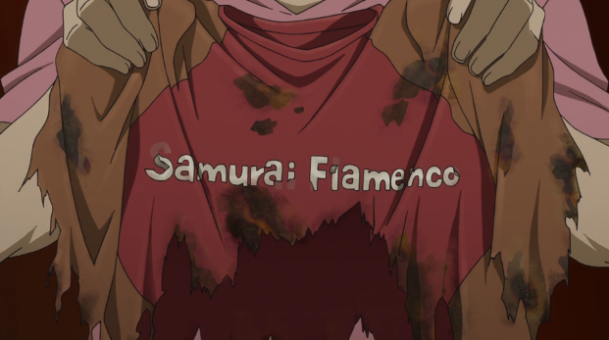
Number 10: Samurai Flamenco and Kill la Kill
I knew I had to include these on the list, simply because they’ve been so good through 13 episodes. But they aren’t over yet and they’d likely be higher on my list if they were done with.

Kill la Kill is the next project from Hiroyuki Imaishi and his crew at trigger and it’s swept the anime nation with ecchi cosplay of Ryuko and Satsuki. It’s merits don’t end with the cleavage of the main characters, though. It is an incredibly fun show that is always able to turn the dial up one more level right after you thought it was done.

Samurai Flamenco does the same thing, but in a way different way. We start the show thinking that it’s going to be a straight up comedy about a guy trying to be a superhero, but it quickly turns into an amazing action piece that showcases what Samurai Flamenco and the Flamenco Girls have learned throughout 12 episodes of fun. It continuously turns the idea of the singular superhero on its head and, with its next 12 episodes, promises to turn the idea of the sentai on its head as well (exemplified when all five members come out as Flamenco Red). From content itself, it could easily be my favorite of 2013.

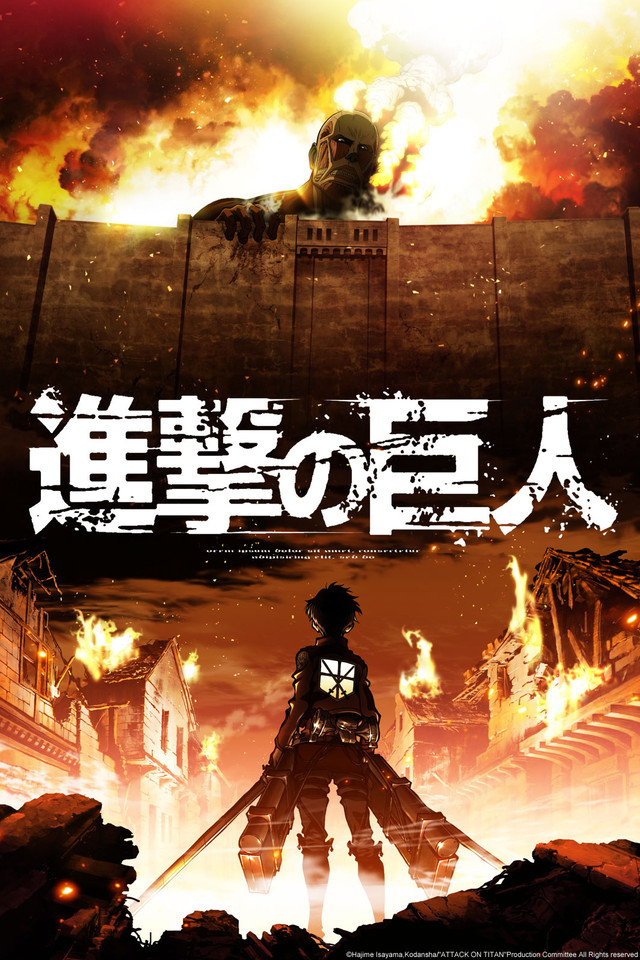
Number 9: Attack on Titan
This is truly the anime that took the world and the internet by storm. Attack on Titan really makes you want to care for the characters and the situation they’re in. But more than that, it is an incredible metaphor for fear. The titans are fear incarnate and we humans can only make coping mechanisms to deal with it (the maneuver gear, the cannons, etc.). It also does a great job at creating character agency for everyone involved, especially Jean, who is the character of the show and don’t let anyone tell you otherwise.

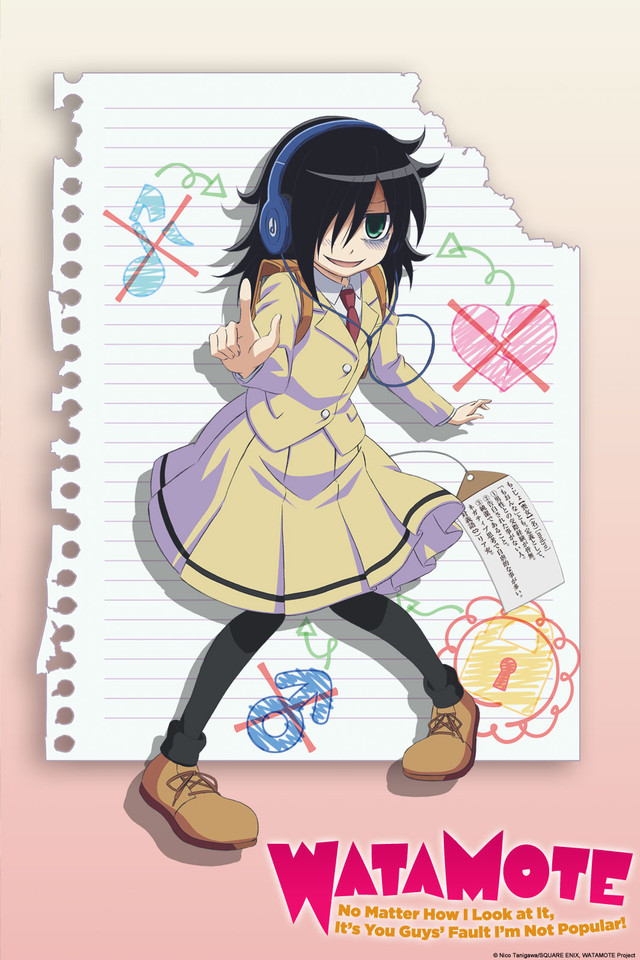
Number 8: Watamote

Otherwise known as Watashi ga Motenai no wa do Kanagetemo Omaera ga Warui! or No Matter How I look at It, It’s You Guys’ Fault I’m Not Popular! It’s mercifully shortened to Watamote and it is a show completely dedicated to exploring the character of Tomoko and why she is the way she is, which is to say relatively insufferable yet completely lovable. She has a crippling social anxiety disorder which makes it difficult for her to even speak to her teachers—or anyone who isn’t her family or Yu, a friend from middle school. Despite this, most of what happens to her is completely her fault for bemoaning the “bitches” in her class or just not noticing the social cues from her classmates that are legitimately trying to become friends with her. It is just an incredible series to sit through that is at once enjoyable, reprehensible, and thought provoking.

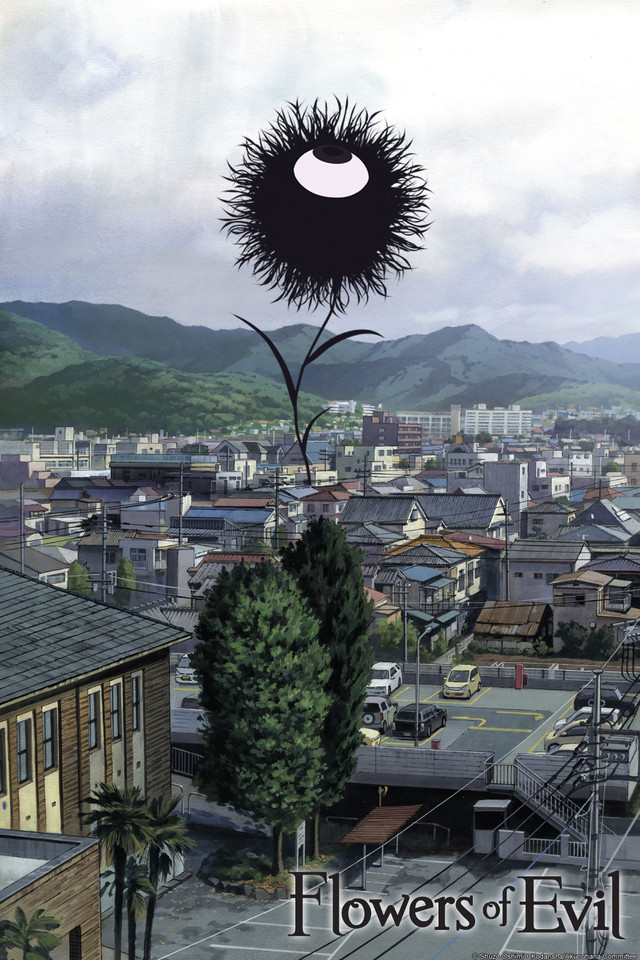
Number 7: Flowers of Evil

Undoubtedly one of, if not the, most divisive anime this year, Flowers of Evil is an incredible exploration of a kid that’s just trying to look cool. Unfortunately, his idea of looking cool is reading Baudelaire’s Les Fleurs du mal to impress Saeki and his friends. His argument is that he read this difficult book, thus he must be intellectual. It’s actually much more complex than that, dealing with the stigma of trying to appear normal yet bottling everything else up inside culminating in one of the greatest episodes in anime history. Flowers of Evil is an extremely deliberate series that’s sometimes frustrating in how slow it moves, because you know how good it can be.

Number 6: Silver Spoon

The next big thing from Hiromu Arakawa, mangaka for Fullmetal Alchemist, turns out to be a pleasant little farm story about a city kid who goes to an agricultural school in Hokkaido. Much of the story is said to be based on Arakawa’s own life, as she grew up on a farm herself. What the show does is showcase what it really means to grow, kill, and then eat livestock for a living, which is not as glamorous a business as it sounds (and it didn’t sound very glamorous to begin with). Watching Hachiken, who is both a great audience surrogate and an amazing character in his own right, grow to love a pig, buy the pig, and then eat the pig is one of the most emotional moments of the year and perhaps the greatest love story of the year…

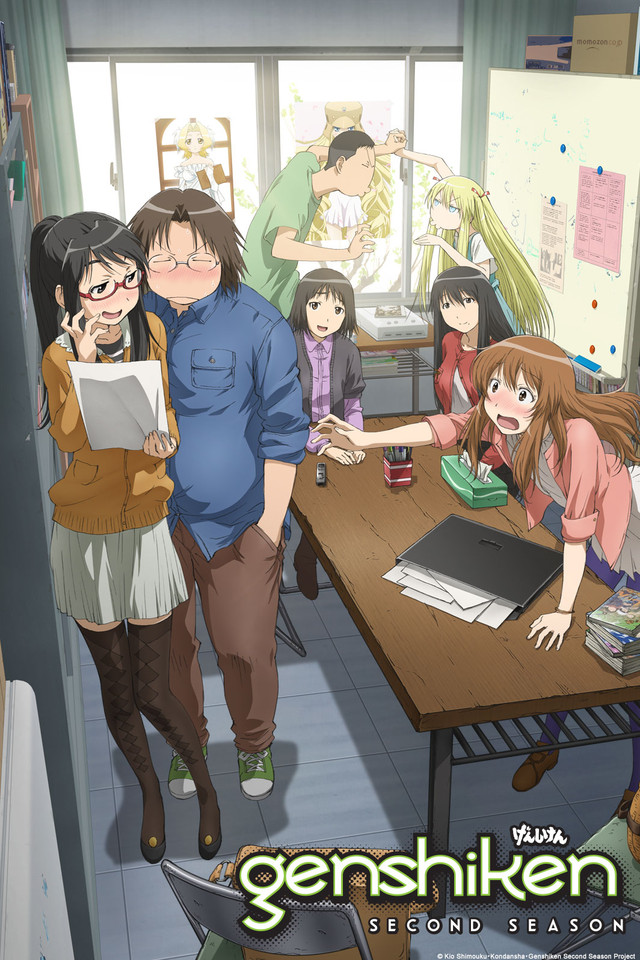
Number 5: Genshiken Nidaime

…Right behind the unrequited love of Madarame to Kasukabe, which is years in the making and provided me with my number one episode of the year. Genshiken picks up right where the second season left off (Nidaime in this translation I guess means generation? But Crunchyroll translated it as season, which confuses everyone). Ogiue is going out with Sasahara, who’s working as an editor at a manga company. Ohno is still in school, trying to get through her last year, and Tanaka is still supporting her from the sidelines with his own work. Kugeyama has largely fallen off the big anime scene, as he’s working his own office job now. And Madarame…Madarame is the tragic guy who just can’t leave his former club behind. But we’re glad he’s around. New club president Ogiue and new members Hato, Yoshitake, and Yajima work well off him, not to mention returning champion Sue. For fans of the first two seasons, Nidaime is a great continuation and gives us precious little time with the characters we’ve already grown to love.

Number 4: Kyousougiga

I didn’t believe this would be as good as everyone said. I didn’t believe that the mess of a first episode was actually a brilliant how-to on how to tell a story (along with the subsequent episodes, of course). But I finally visited it and, with a few days off from work this week, finished it in two days. Its first episodes are an amazing clinic in how to tell a non-chronological story and its next episodes are a great example on how built up can lead to payoff. Those first few episodes gave us near perfect character agency for everyone involved in the finale and it only made that finale more potent as a result.

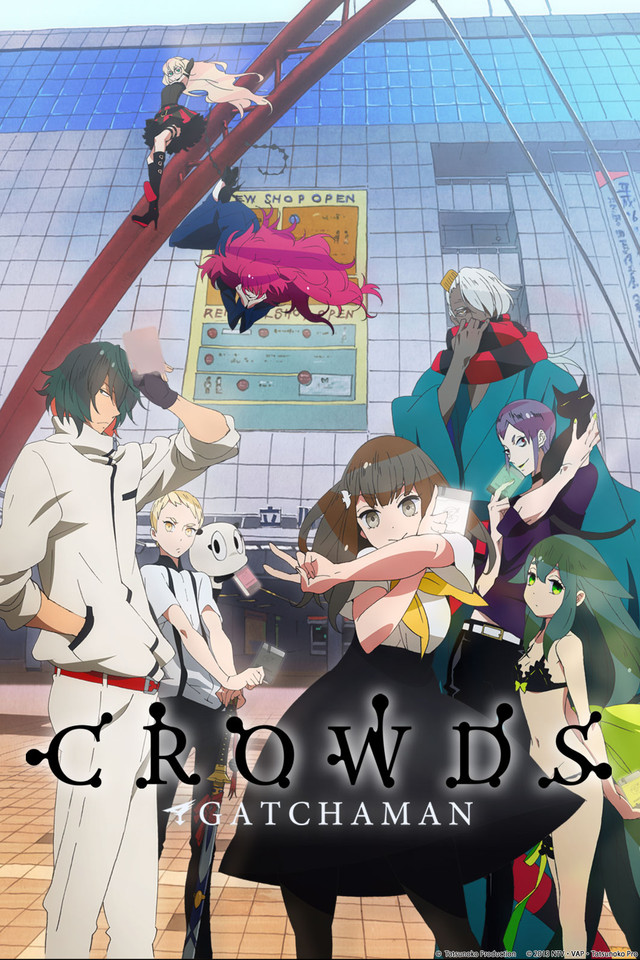
Number 3: Gatchaman Crowds

Like Samurai Flamenco, Gatchaman Crowds threw the idea of a superhero out the window and rewrote the How to be a Superhero manual. Main character Hajime asks such pressing questions like “Why do we have to wear the mask?” “Why do we have to keep our identities secret?” and basically all the other why questions you could ask a superhero. They’ve been answered hundreds of times in various media, but why not just have the people help you fight the bad guy instead of going it alone? Crowds is certainly the greatest deconstruction of the superhero idea in 2013, and we were lucky enough to get two great ones.

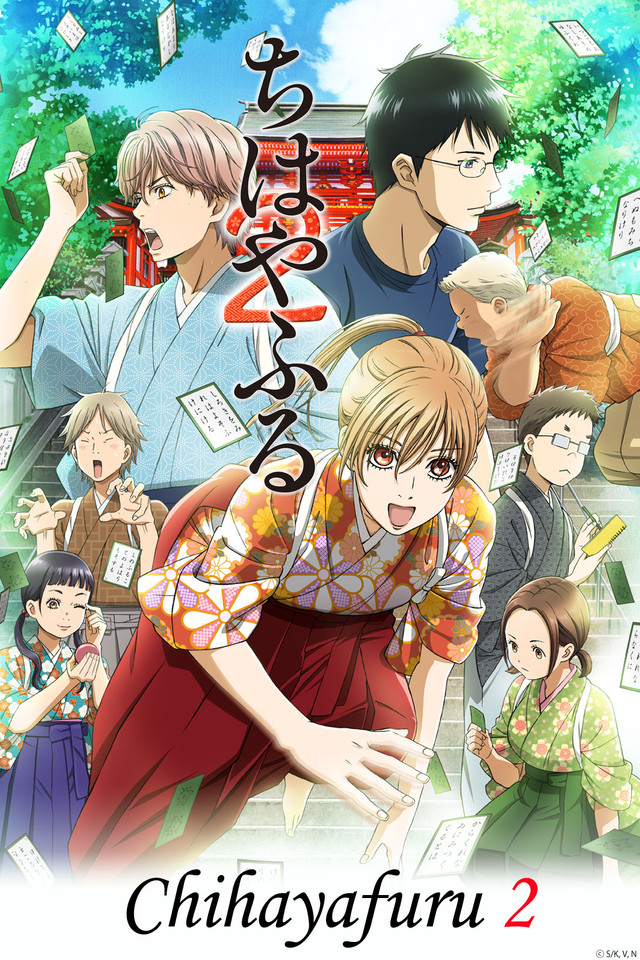
Number 2: Chihayafuru 2

I quickly fell in love with Chihayafuru after its bold move to do a two and a half episode flashback at the very beginning of the series. But what this did was make us completely in love with Chihaya, Taichi, Arata, and their struggles. Chihayafuru, like the best sports anime, gives us a great sense of what our characters are trying to achieve. It’s an amazing to see Chihaya succeed with her friends, like she did back in sixth grade. Or to see her fail and lock herself in a closet after a huge loss. Or cry after seeing her dad finally have a book full of newspaper clippings for Chihaya and not just the older sister Chitose. Chihayafuru is a show that is incredible at building up its characters to succeed and finally watching them succeed. But it’s also great at building them up to succeed and watching them fail. Both sides of the coin, both in karuta and their own lives, are explored and it makes this show one of my favorites of all time, much less of 2013.

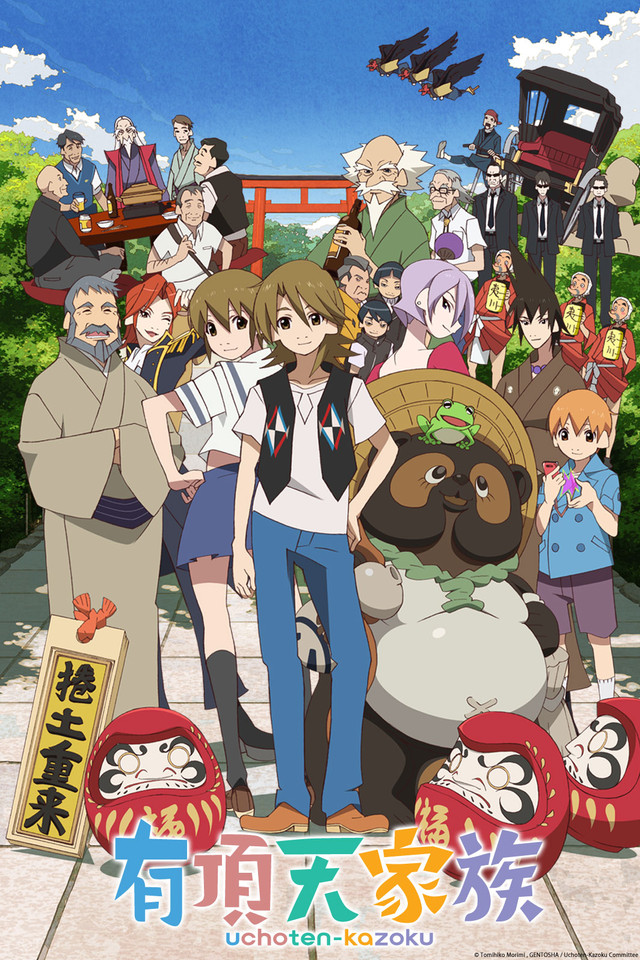
Number 1: Eccentric Family

How do I even begin to describe one of the greatest anime in recent memory? Eccentric Family does a great job at just letting us steep in the lives and the world of these characters in beautiful Kyoto. Someone like Yasaburo is allowed to always be calmly at center stage, yet never sure of what to do. Oldest brother Yaichiro has to act like the man in the family even though he is clearly not prepared for the role, still struck by the loss of his father. Yajiro is even more tragic, having been the last person who saw their father before he died and now relegating himself to a well, forever transformed into a frog. And little Yashiro is just trying to keep the family together in any way he can, even though it’s on the verge of falling apart. And their mother is acting as this big woman, when she truly isn’t; she puts on the best façade of them all and acts strong to convince her kids, and more importantly herself, that she doesn’t just want to cry over the loss of her husband.


But it isn’t all sadness over their loss. The show actually empowers each and every character, yes ever Yashiro, to great heights by the time its final episode rolls around. Giving us the second best episode of the year, fourth best opening theme, and fourth best ending theme of the year, Eccentric Family is a show to lose yourself in. The lives of the Shimogamo family and the world of the tanuki they live in. And that’s not even mentioning Benten, who would win best female character were it not for Tomoko.

Sunday, December 29, 2013

Anime Secret Santa: Gunbuster review, part two

I took a bit of a break, and I’ve still got Kyousougiga to watch as well as Kamisama Kiss. Plus, Dumbing of Age isn’t going to read itself. But I’m back on the Gunbuster train.

Thankfully, the show itself took a bit of a break too. Ten years have passed since they left school and old classmates are instructors now and even have kids. It’s crazy what ten years can do to your old high school friends. I don’t know yet; I just went to a student-organized five year reunion with my friends, so who knows what’ll happen to all of us in five more. But enough about that, we should be talking about anime. 

I’m actually glad I accidentally spread this review over two parts, because it’s in these last two episodes that I realize what Hideaki Anno and his crew at Gainax were trying to do with this entire show. Anno, just like with His and Her Circumstances (at least the parts he worked on it) and Evangelion, is trying to create an incredibly humanizing piece of fiction, in Gunbuster and Evangelion’s case set in this superb world of robots and bouncing boobs.

The dichotomy with the robots provides a great contrast with everything else that’s going on around them. By all means, robots should not exist in this show and it could, in fact, work both without them and the aliens that they’re fighting. The way that this story is framed, of distance between friends and loved ones, is Voices of a Distant Star before Shinkai even thought about making it.

What created the agency for these characters was things like seeing Amano 15 years later meeting Noriko six months later. Or even before that when Noriko saw Kimiko 10 years later. The execution of seeing them together after that extended absence was maybe what Voices was missing that Gunbuster did not for me.

In those moments, it set up the final conclusion’s emotions so much better than any of the fantastical/science fiction elements could have alone. Anno knows that it’s his characters that drive the story and he characterizes them spectacularly. Noriko has grown so much, yet she looks exactly the same as when we first met her. Amano is still the strong young woman she was, but she’s matured in ways much less tangible and evident without looking just a little bit below the surface. And Jung Freud provides the perfect third wheel to the duet of Gunbuster pilots because of her lofty personality and little intrusions/insertions into the story. Jung’s introduction provided us with Noriko in space for the first time, then gaining friends, then growing stronger for the sake of humanity.

The sixth episode, in typical Hideaki Anno fashion, quickly runs out of budget and, in fact, is animated almost completely in black and white. The only color sequence is at the very end when Noriko and Amano return home.

I spent the first four episodes just having fun with being immersed in the world of Gunbuster and into the mind of a younger Hideaki Anno. But the fifth and sixth episodes convinced me that the man knows how to weave a story and how to write characters. He sometimes struggles with story, as this was way too sprawling for what I ended up taking out of the series (which was the relationship between Noriko and those on Earth and how being separated affected her), plus we didn’t really find out anything about these aliens that attacked aside from that they are evil. But we arguably don’t learn that with Evangelion either and that was fine.


Now, if only Hideaki Anno always had infinite money or money management skills for his animation budget.

Tuesday, December 24, 2013

Anime Secret Santa: Gunbuster review, part one

I don’t have much of a reason to write here anymore, because I’m too damn busy writing for the Fandom Post or on Twitter. But I always try to throw a few first impression reviews at the beginning of each season and I’ll occasionally rant on about what happens to be on my mind. I rarely have the attention span to want to sit down and do a whole, cohesive article though. I also don’t have the time, working 9–5 and writing for aforementioned places.

But the Reverse Thieves’ Anime Secret Santa project was solicited and I answered the call. I got the three shows back, and they were: Irresponsible Captain Tylor, Black Heaven, and Gunbuster. Black Heaven is that show with the clip I like to make fun of and Tylor is 26 episodes, so the obvious choice was Gunbuster, the six-episode Gainax OAV from 1988 that marked the directorial debut of Hideaki Anno of Evangelion fame.

Ah the joys of watching shonen action heroes improve in an instant. In a mere month, protagonist Noriko Takaya goes from worst to second with the help of the Coach. You see, Noriko was selected for a special mission out of the entire school, likely because she’s a little bit genki. The coach, Koichiro Ohta, is one of the survivors of the Luxion, on which Admiral Yuzo Takaya died.

The first episode was quite humorous, with giant robots taking the roles of humans in the typical comedy scenes. In one, the high school girls snicker at Noriko as she jumps rope instead of practices inside of her robot. When the resident onee-sama steps in, they all run away saying “Excuse me!” in typical anime girl fashion. It’s moments like this that immediately set the stage for what the show’s lighter moments will be.

But this shonen training montage wasn’t all for naught. Noriko proves that she does indeed have the potential that the Coach said she did; though where he saw that potential is very, very up in the air. She pretty much masters the basics of moving that robot along with a Lightning Kick that drops the supposed second best in the school.

By the second episode, they’re in space and faced with Jung Freud, a not-so-subtle reference to the famous psychologists. She acts as a nice foil to Noriko for a while, but her formerly tough exterior is melted away almost instantly, and possibly disappointingly. She challenged ace student Kazumi Amano to a battle, where they duke it out and find that the other ain’t so bad at fighting after all.

The beef of the second episode is with an exercise where Noriko and Amano have to travel light speed. The ramifications of it are that they’ll leave and come back two months after they leave due to light speed travel being all science-y and such (I don’t understand it, pretend to understand it, or even know if Gunbuster is portraying it correctly or not). Nor do I care because they’re 12 seconds late in returning, thus they spent four more months gone than they expected.

On the trip, they see the shambling remains of the Luxion. Noriko, emotional, jettisons herself from her rocket and boards the ship. Two days had passed on the ship’s time since the attack and she just wanted to find her father. When she gets to the bridge and it’s gone, it is the best moment of the series thus far and I think it’ll have a hard time topping that in terms of emotional impact.

I assume running into the Luxion was unexpected, but it meant a lot for Noriko, who not only missed her own birthday by four months, but Jung Freud’s as well. More importantly, she grasped at a sliver of hope that was barely even there and lost it all when that door finally opened. Seeing her recovery from that will be paramount to her growth as a character, and it’ll be extremely interesting to see what Anno—who, of course, later proved his storytelling chops dealing with emotional trauma like this with Evangelion—does with it.

It’s in the third episode that things really start moving. Noriko is finally faced with a loss that weighs heavy on her heart, not only as a human being but as a pilot. Amano has chosen to un-team up with Noriko, believing that Noriko is too inexperienced to be of any real help. This turns out to be true when she teams up with Smith Toren, named after the translator of the same name. When the two go out on a mission, it turns out bad for Noriko. Her job was to defend Smith, but she failed. He was lost in the battle and they’ve since gone warp speed away.

This is the kind of loss that a TV show almost needs to have to make us really sympathize with the characters. Noriko has had it relatively easy thus far, given her rapid growth and Lightning Kick to the second best. She was high on that, but still knew her relative inexperience is a hindrance. But just how much of a hindrance she would only find out on the battlefield, where Smith could have just as easily been Amano or Jung Freud. And then what?

Noriko, emotionally and physically drained by this point, sees the coach and the presumed Gunbuster robot and breaks down. She’s crying, but she doesn’t want to give up and that’s the best part about it. She doesn’t want to give up, she wants to try harder to make it so this never happens to her again. I admire that out of a character, to be so transparent, and the moment has convinced me that Gunbuster is more than just fun robot show.

With episode four, I can see where Hideaki Anno’s seeds are for Evangelion. Noriko’s entire arc in this episode is basically the same arc as Shinji, just their reasons for not wanting to fight are different. I’m inclined to believe more in Noriko’s arc than Shinji’s because we’ve been around her for longer than Shinji by this point.

But looking squarely at Noriko, she’s grown leaps and bounds in just one episode. She’s still distraught over the loss of Toren Smith (and aren’t we all) and she’s going through some serious PTSD just by being in space. She gets over it with sheer willpower to help those that are literally dying around her and it’s quite uplifting to watch.

To do so, the titular Gunbuster robot is finally unveiled and it is quite amazing. I wish I had a toy of it in my hands right now, but that would make typing a little harder.

The introduction of Gunbuster—superimposed against Amano and Jung Freud’s robots to perhaps look much larger than them (or maybe it is actually larger? I assume it’s larger)—is among the great moments in Gainax badassery. Not only did this spell the “death” of the Noriko of the past, it’s a cool giant robot!


Gunbuster has, thus far, been really fun. I’ve only put it off this long because there’s no legal way to watch it. But, given that this secret Santa told me to, I finally have the opportunity to pirate it and feel a little less bad. I’ve got two episodes left, but I’m SUPPOSED to have it up by today and I’ve just been busy playing Deus Ex: Human Revolution or reading Dumbing of Age or tweeting on twitter. Things have got in the way and I will finish it, and post the rest of the review. But until then, merry Christmas to those who celebrate and happy holidays to those that don’t.

Saturday, October 5, 2013

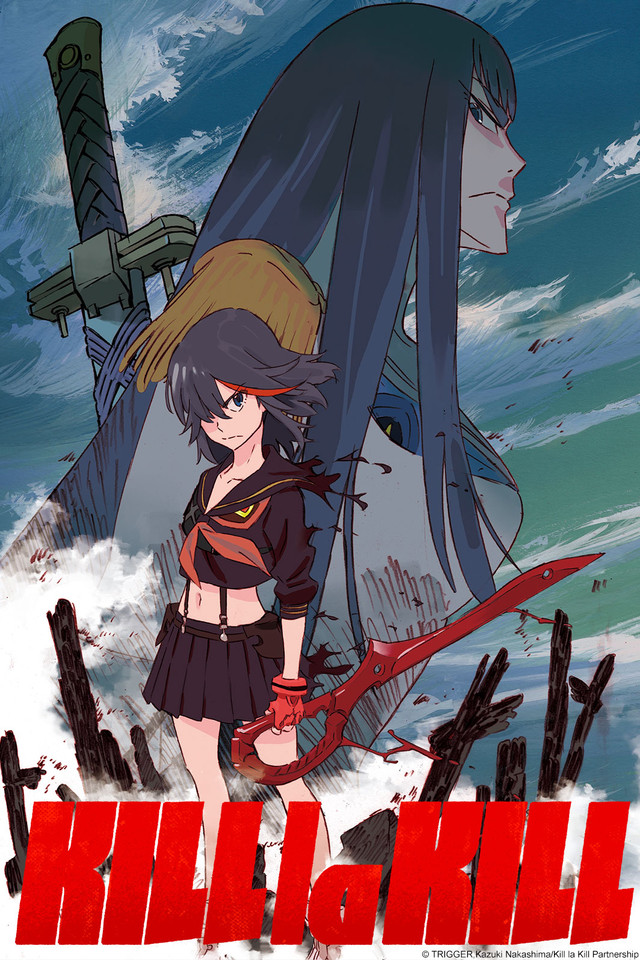
Fall 2013: Kill la Kill

Kill la Kill is meant to entice, it's meant to excite, and it's meant to entertain. It does both better than any show thus far this season (and probably will be better than any show this season). Backed by new studio Trigger (Little Witch Academia) and veteran key animator and director Hiroyuki Imaishi (Gurren Lagann, Panty and Stocking), Kill la Kill had a lot of expectations going in and it's lived up to just about every single one. Let me put it this way: In its opening scenes, a student is brutally, viciously killed at the hands of the disciplinary committee head. It is beautifully animated and visually striking; more importantly, it perfectly sets up the world in just three minutes or so.
Image source: http://www.crunchyroll.com/kill-la-kill
I could mention that Kill la Kill fails to fully flesh out any one character beyond their basic archetype. I could mention that Kill la Kill fails to set up the villain as anything more than "the villain." Or I could mention how Kill la Kill is beautifully, stunningly animated. How the main character, Ryuko Matoi, is one of the more interesting characters thus far. See, she's on a mission of revenge, searching for the man (or woman, as it were) who killed her father and took the other half of the scissors she wields. As it is the first episode, the characterization is light, but the execution is fantastic. She is at the same time charging into her vengeance and stepping lightly around it (exemplified with her reticence and then embrace of the new uniform she wears).

Speaking of those uniforms, they are a brilliant plot device. It sets up a very visible hierarchy that cannot, under and circumstance, be challenged. Even the school principal says that Satsuki Kiryuin, the student council president and main antagonist, controls the school by way of her mother. The uniforms are stacked what seems like five tiered: Satsuki's unform at the top, three star, two star, one star, and zero stars. Matoi's new threads are at least better than the two star Goku uniform, but we have yet to see whether it eclipses three.

Kill la Kill is most certainly (one of) the show to watch this season. I'll likely be jumping up and down in joy during the final, epic climax.

Rating: 5/5

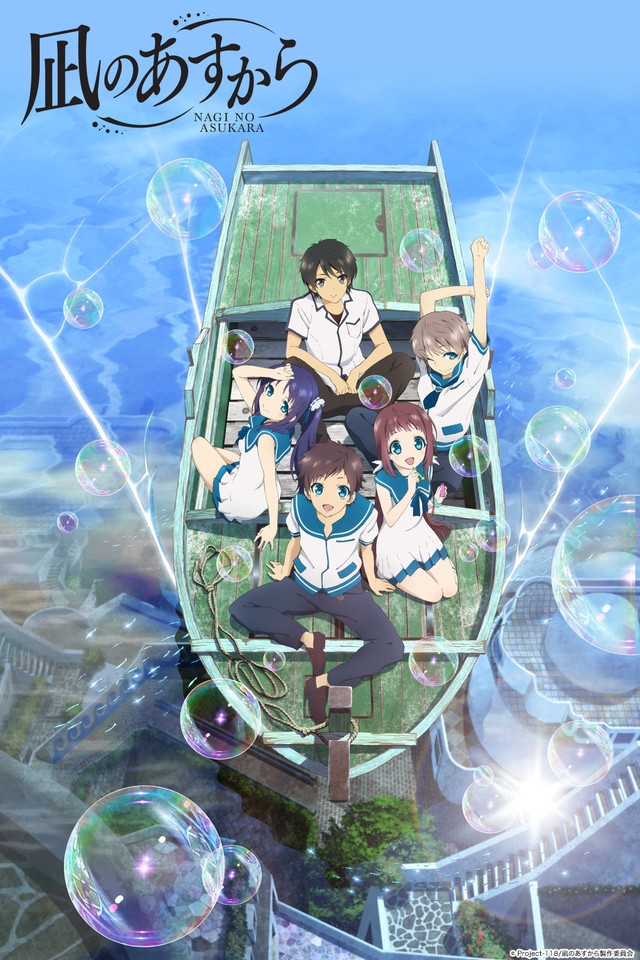
Fall 2013: Nagi no Asukara

PA Works' latest outing, Nagi no Asukara, is immediately visually stunning. It looks like a normal place, but their home is actually underwater. Fish swim around the people and Hikari swims around to get where he's going faster.
Image source: http://www.crunchyroll.com/nagi-no-asukara
The mythology they're building in the show is really interesting. It's built upon everyone once living in the sea and then shedding a sort of skin to only live on land. The two factions, of course, warred after the split (and will likely war at some point in the show). The war is exemplified quite perfectly by a simple fishing boat picking up Manaka, one of the girls who live underwater and one of  the main characters.

The underwater people even have a god - rather a scale of a god - that watches over the folks underwater to make sure they don't get into any trouble. The god, of course, curses Manaka for being a little cheeky. Though the god was being much more cheeky.

The same complaints I had for those stupid fanservice shows still holds true here; characterization was relatively weak, but definitely more there than in the bait shows. What's got me hooked (pardon the pun) is the setting. An underwater setting where humans live is extremely intriguing and the animation is absolutely gorgeous. PA Works is still among the best when it comes to backgrounds. I'm excited to see where this goes and hopefully where the characters go.

Rating: 3.5/5

Friday, October 4, 2013

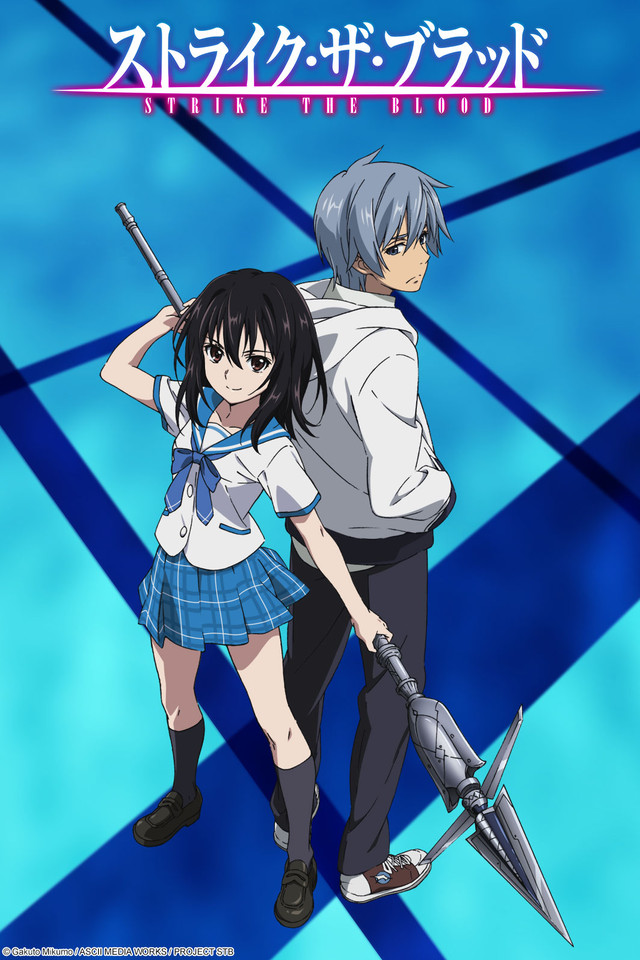
Fall 2013: Strike the Blood

I don't know why, with a title like Strike the Blood, that I didn't think that this show would be about vampires. At first glance, the world seems like it's completely normal. But once you get about seven minutes in, you realize that magic and demons are  a natural part of the world, as a PA system announces that an abnormal magical surge has been detected. To top that all off, something called the Fourth Progenitor is coming.
Image source: http://www.crunchyroll.com/strike-the-blood
The interesting part is that all these mythical and magical beings live on this island, seemingly isolated from the rest of the world, to be protected and researched. But they mention this halfway through the episode. This is the kind of thing that your typical shonen tournament fight show would mention at the beginning of the first episode. In fact, Hunter x Hunter DID explain all that at the beginning of the first episode. Instead, Strike the Blood opts to talk about the mysterious Fourth Progenitor with some weird filters to make it seem cool, or something.

The mystery of who the Fourth Progenitor is solved relatively quickly, only to have the question of WHY is HE the Fourth Progenitor raised, as well as who was the Fourth Progenitor who gave him the Fourth Progenitor-ness. The first episode is raising more questions than it's answering and it isn't doing the most important part: setting up the characters What I currently know about the main character, Akatsuki, is that mystery surrounds him and that he's a vampire. What I currently know about his protector, Himeragi, is that she gets way too worked up over people seeing her panties.

Strike the Blood hopes to grab with intrigue, but it isn't doing it. It's TOO mysterious and doesn't answer enough questions, nor gives enough just general information about the world or the characters.

Rating: 2/5

Is it really the primogenitor? Or is Crunchyroll's description spelled wrong and I just kept reading progenitor? Because they also say "sward shaman" and that's gotta be wrong.

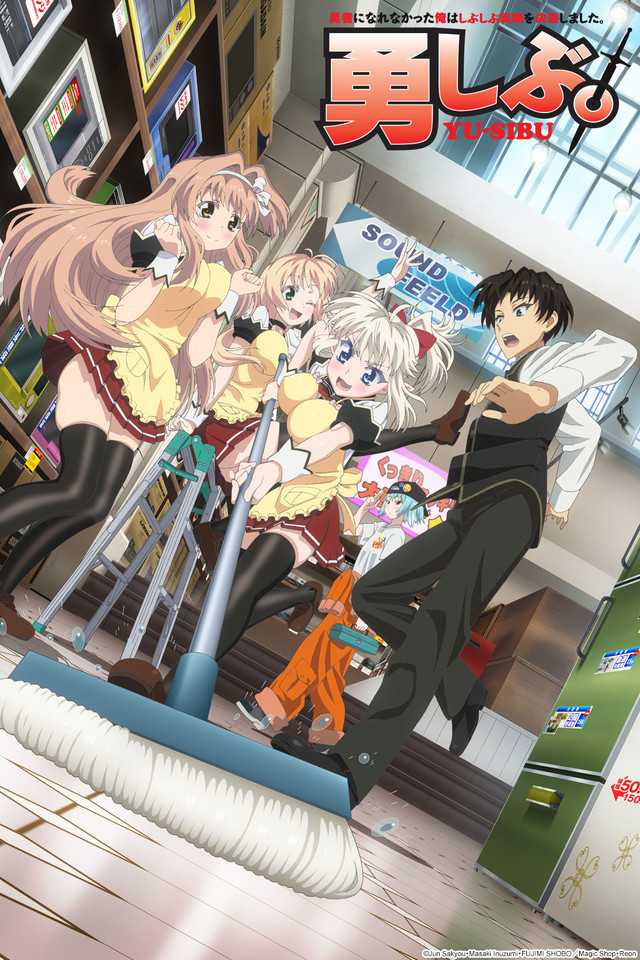
Fall 2013: I Couldn't Become a Hero, So I Reluctantly Decided to Get a Job.

If you've seen The Devil is a Part-Timer from a few seasons ago, and thought, "I want a more fanservice-y version of that that's also worse," then have I got the show for you. The difference is that the Demon Lord and the Hero are real life figures and not just sent to another world. Also, it's adapted from one of those novels that has a really long title.
Image source: http://www.crunchyroll.com/i-couldnt-become-a-hero-so-i-reluctantly-decided-to-get-a-job
First off, the animation is pretty butt in I Couldn't Become a Hero, So I Reluctantly Decided to Get a Job. From what I can tell, it makes use of as many stills as it can and seemingly used all of its budget on the first segment, which wasn't even animated that well. I'm not a master of animation, nor can I typically tell whether something is anything other than really good or really bad animation, but this falls in the latter category. It's using a lot of the style I typically see in the Pokemon episodes I still watch (for the nostalgia). The basic premise is don't move your characters as much as possible and save all the money for the action shots, which I'm sure there will be many. Like when the old man flips the girl's skirt up.

The story itself is much less interesting than The Devil is a Part Timer as well, by sheer virtue of starting the story well enough after the Demon Lord is defeated/killed/written out. The interesting story is likely in the immediate aftermath, but that's not where the comedy is!

They play the show off to be like a game, and it might as well be. Everything is so unrealistic, it's comical and I might be more inclined to believe it if it was a video game story inside of an anime. But whatever.

Rating: 0/5

If this doesn't deserve a zero, I don't know what does.

Thursday, October 3, 2013

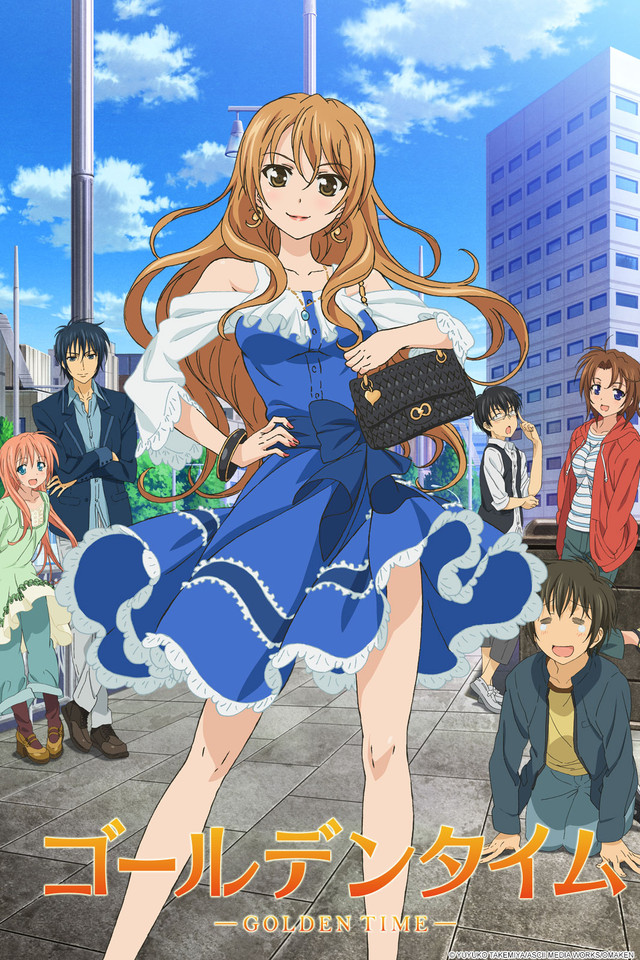
Fall 2013: Golden Time

What a coincidence that these two idiots, both going to law school, can't read a map and meet each other stalking two girls who "seem to know the way" to the college. That slight lapse in logic aside, Tada seems stuck between new friend Mitsuo and new friend's supposed fiance Kaga. What comes from here can most easily be described as "hijinks ensue." After said hijinks, Tada, now alone, gets mobbed by literally every club at the school. A scene described in the show as a war zone.
Image source: http://www.crunchyroll.com/golden-time
The premise as outlined by Crunchyroll was not even touched on until 20 minutes into the first episode, which raises huge questions. Like, "Why would you hold off on bringing up the premise of your show until 20 minutes into the first episode?" That's easily something that could be teased in the first scene or brought up earlier or done anything with at all.

Golden Time's very premise interests me, but only slightly and not if it's going to be like this. One thing happened in the episode in regards to the plot, and it took a long time to get to that point. The characters, however, were set up pretty well. At least Kaga and Mitsuo were, disregarding their current stereotypes. Kaga is the haughty woman who wants it her way or the highway, but will likely turn to pudding if the right guy comes along. And Mitsuo is the hapless guy trapped in the relationship with the haughty girl, trying desperately to get out. I imagine the rest of the series won't be so slow, but we'll see. I'm tentative about the next episode.

Rating: 2/5

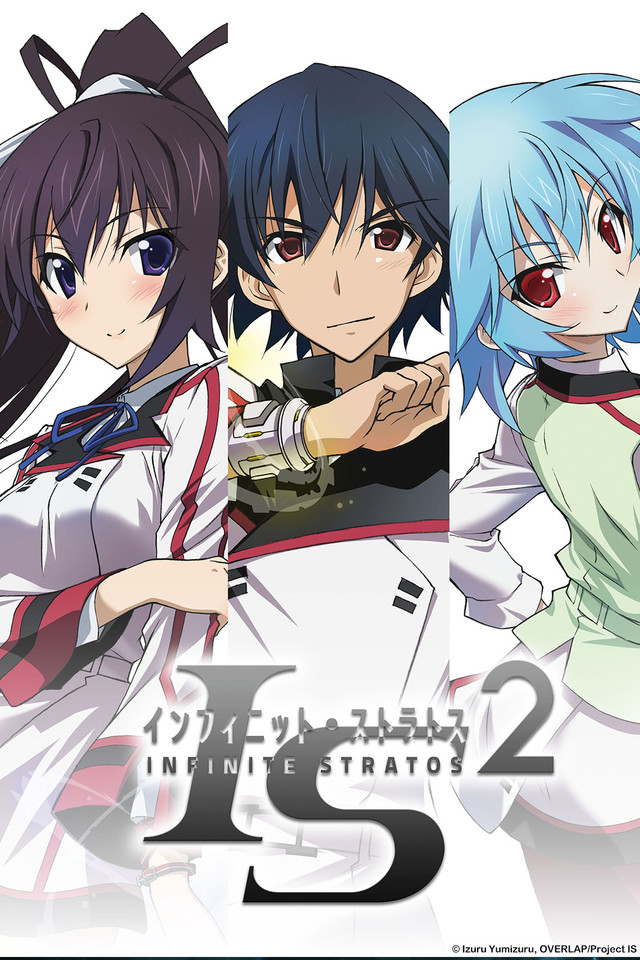
Fall 2013: Infinite Stratos 2

It was at the moment Ichika said, "What? What is she mad about?" after Laura invited him to go to a festival with her that I realized I was done with this.
Image source: http://www.crunchyroll.com/infinite-stratos
I watched Infinite Stratos 1 during either dead week or finals week, which for me was a time where I didn't really want my entertainment to make me think. And think I did not during Infinite Stratos, because it's full of bubbly moe girls that clamber over themselves to get the attention of Ichika.

But I guess explaining the premise in brief is that there are these robots that only girls can pilot...Except Ichika! For reasons I can't remember, he can pilot one. I think it was because his sister (of course, a prodigy in every way and an attractive mid-30-something) invented the robot technology.

The show is complete fanservice fluff. While I was into that during finals and maybe two years ago, not as much now. Stuff like Kiniro Mosaic and Love Lab are a bit different, since it's girls hanging out, and I guess I haven't grown tired of that yet. But these harem shows are just too much for me now.

My own feelings aside, almost nothing happened during the episode. The whole thing was Ichika trying to tell everyone about a festival he wants to go to with them. The parts that weren't that were showcasing Laura and Charlette's skills as fighters, which was actually pretty cool. But not enough to carry an entire episode. The one glimpse of plot, of which I remember almost zero from the first season, amounted to about two and a half minutes of air time.

Rating: 1/5
Rating for me two years ago: 3.5?

Wednesday, October 2, 2013

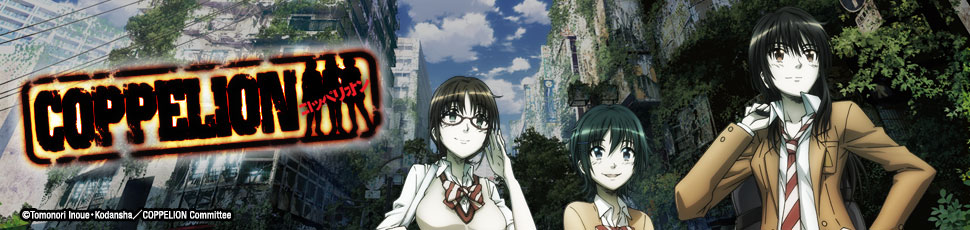
Fall 2013: Coppelion

Coppelion skirts around a disaster that happened in a Japanese metropolis, but it's not yet addressed directly. Sources say that it was a nuclear meltdown in Odaiba, which is what Wikipedia is telling me about the manga plot. The show was originally due to air in 2011, but the Fukushima Daiichi nuclear disaster held it up. Nonetheless, the show's disaster setting is absolutely gorgeous in its bleakness.
Image source: http://www.vizanime.com/coppelion
The best parts of Coppelion lie in its setting, which is rich in promise and will be undoubtedly built upon , adding layer upon layer of social complexity to an already hot topic in contemporary media. The three main characters, Ibara, Aoi, and Taeko, are set up pretty well throughout this first episode. Thankfully, the show only focuses on these three in its first episode. A wise decision, since you don't want to introduce a glut of characters only for none of them to be memorable.

Ibara is kind of your typical shonen action hero, who will save everyone. But as a stereotype, she works well and her subtle leadership skills throughout the episode are great. Little things like injecting herself with nutrition supplements, seeing that Aoi is (very visibly) bothered by Ibara not eating, and then later eating one of her rice balls was a cool little thing. Aoi is the timid girl who serves as a sort of audience surrogate because she (as she should be) is horrified by this landscape and all it encompasses. She's definitely the most outwardly compassionate, and emotive, of the three and will likely provide good emotion later on.

What I loved about the series was how they referred to the girls as puppets (the technical term being Coppelion, the manga and the show's namesake), because they really are puppets. Since birth, they were literally genetically engineered to live through a nuclear wasteland (they just say "these conditions" in the show) and to be other types of special. Taeko was engineered to have heightened senses, like an animal. While the other two's abilites (if any - though Ibara seems to have some sort of super human strength) have yet to be revealed, they're likely the same kind of subtle enhancement rather than electricity bursting out of their hands or something.

There have only been four shows thus far in the season, and Samurai Flamenco and Kill la Kill have yet to be released, but Coppelion is undoubtedly the standout of the four. Its first episode showed nothing but promise and that could go one of two ways: 1. Amazing show or 2. Disappointing show. I'm leaning, tentatively, to the former.

Rating: 4/5

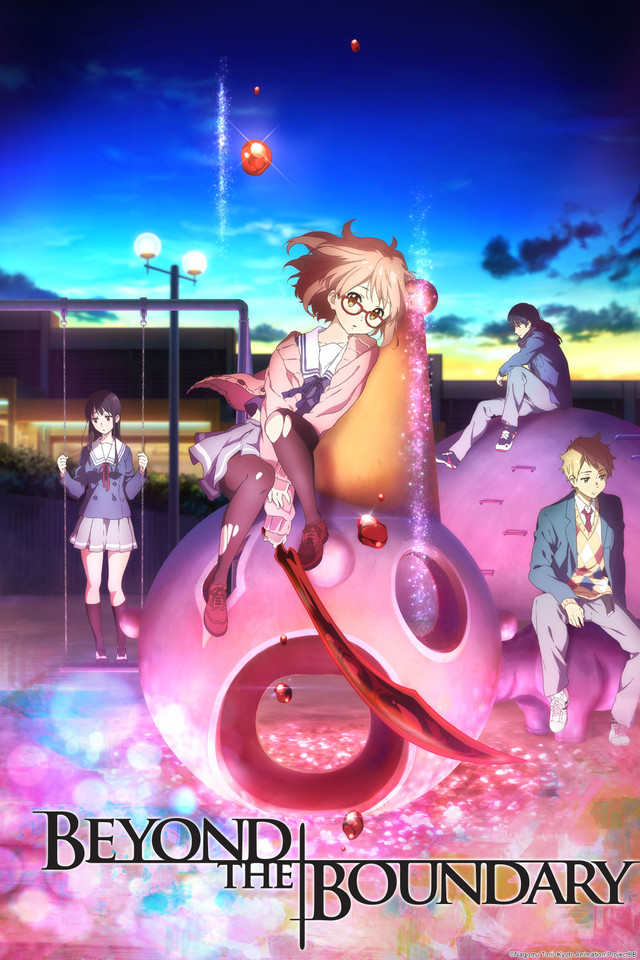
Fall 2013: Beyond the Boundary

Akihito is an immortal and a half-youmu. And if that isn't generic enough, there's a (cute!) girl that's trying to kill him because he's half-youmu. Kuriyama, the girl is rather interesting, though. She fights with a sword made out of her own blood, which is kind of creative. The plot of everything else (of course) is that youmu inhabit the world and there are spirit warriors that fight against them.
Image source: http://www.crunchyroll.com/beyond-the-boundary
The setup, the description, and the promotional art that I've seen all seem really generic and I was not looking forward to watching Beyond the Boundary. But, after watching it, the execution of a good portion of things is actually pretty good. It's Kyoto Animation and, while I haven't seen them do action shows, their "action" animation in Free! was great and it continues to be pretty good here. But I think the best part about the show is the cues, which are pretty much spot on. Everything happens just as it should and the show doesn't feel rushed or like a drag.

That said, the dialogue in the show is super spot on. In the first narration, Akihito is trying to convince Kuriyama to not commit suicide (which, by the way, made me groan internally pretty loudly). The execution here was really poor and definitely the weak part of the show. And in a television show, your dialogue cannot be as bad as Beyond the Boundary has been thus far. There's lots of on-the-nose lines and, while the acting itself is alright, the scripts need work.

For now, I'll chalk it up to being a first episode and trying to get as much information out as possible. It doesn't make it any less poor, but I'll give it a pass for now and watch the next episode soon enough.

Rating: 2.5/5

Monday, September 16, 2013

Fall 2013: Diabolik Lovers

Diabolik Lovers (with a k instead of a c, because that's edgy) is the latest from ZEXCS, who did Flowers of Evil. Now, I loved Flowers of Evil's animation. It was brilliant. But this...I guess the animation is...of quality. It isn't so awful that I have to turn it off, but it isn't anything spectacular.
Image source: http://www.crunchyroll.com/diabolik-lovers
The show's premise is that church girl Yui Komori is moving into this giant mansion with a whole bunch of boys. In concept and execution, a lot like last season's Brothers Conflict. But while BroCon seemed to be a lot of pampering the main character, this one seems intent on abusing Yui. She was completely abused by the six brothers living in the house, one of which keeps calling her Bitch-chan.

Oh, and they're all vampires.

I think the only thing more repelling than this show is if Yui secretly wanted to be eaten or sexualized by the vampires. I wish I hadn't watched it, but I told myself to write my own preview guide. You know, for practice. And I typically watch all the first episodes anyway. But AVOID THIS LIKE THE PLAGUE. Unless it gets better, and it likely won't, you'll just be insulted.

It's merits include its character designs, which are nice albeit generic, and its run time. It's mercifully 14 minutes.

1/5

Saturday, August 24, 2013

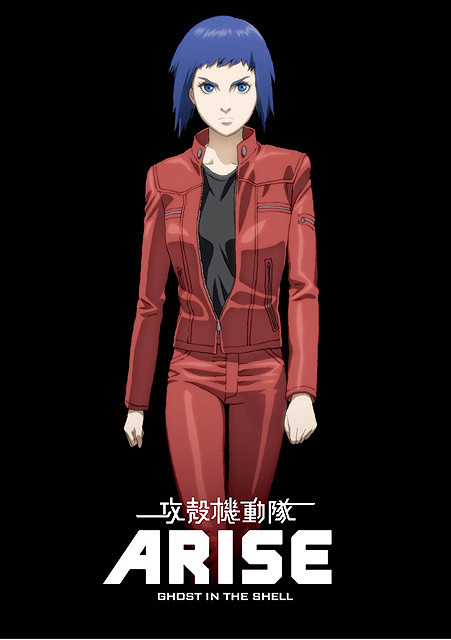
Ghost in the Shell Arise 1 review

When I first heard that some new Ghost in the Shell was being announced, I threw my hands up in the air in celebration. Ghost in the Shell is one of my favorite anime helmed by two of my favorite directors (Mamoru Oshii and Kenji Kamiyama). A new director’s spin on things is going to be awesome! As I heard more coming down the pipeline, like that it was a completely separate timeline from either Oshii’s or Kamiyama’s, I got a little more excited and when I heard that it was going to be a prequel, I got a little less excited. But all that aside, Ghost in the Shell Arise certainly delivers on every level I’d have wanted it to out of a first episode. 

Ghost in the Shell Arise is a prequel to Shirow Masamune’s original Ghost in the Shell comics. However, I don’t believe that it is stand alone. Everything would feel so distant without any introduction to the series (whether that be Masamune’s comics, Oshii’s films, or Kamiyama’s series). But don’t let that be a detraction from an otherwise great work.

Production I.G puts in their A-game in terms of animation here. It blends a modern-style of character designs (done by Kazuchika Kise, who worked on xxxHolic and Legend of the Galactic Heroes of all things) with Oshii’s original feel of the films (a bleaker, dirtier cyberpunk vision compared with Kamiyama’s sleeker look). Kise’s also directing these OAVs and he certainly proves that he can do it. He’s previously worked extensively as a key animator and an animation director, but this is his first time in charge. The direction isn’t bad, but it’s nothing outstanding either. The action scenes were really cool, but they weren’t nearly as dynamic as Oshii’s films.

The scripts are helmed by Tow Ubukata, a longtime contributor for Production I.G (he worked on Le Chevalier D’Eon, Heroic Age, and Mardock Scramble). The scripts are much better than Kamiyama’s as they feature much less stilted dialogue and everything flows much nicer. I’m not sure what Kamiyama was doing in Ghost in the Shell, because his Moribito and Eden of the East scripts were fine.

The music was pretty cool in here too. It’s hard to follow after Kenji Kawai and Yoko Kanno, but Cornelius does a stunning job. It’s nothing I’d listen to recreationally (and I’d listen to Kawai and Kanno’s stuff ad infinitum), but it really fits the mood of the series. The opening in particular provides a great door to the rest of the series. This is the PV, but the opening plays in it.
Arise begins with the familiar Major, now noticeably younger, returning to Japan after a stint somewhere (it’s not brought up, nor is it of particular importance). Still a little wet behind the ears compared to what Oshii or Kamiyama’s versions portrayed, she’s in Unit 501 and her commanding officer has just died.

The things she fights in the first scene we see her in are reminiscent of the dolls from Ghost in the Shell: Innocence, but they’re anything but. They’re actually walking mines that’ll explode upon a good gunshot to the anywhere. The doll thing is actually inside of the coffin that’s supposedly holding Kusanagi’s commanding officer’s body (and intact cyberbrain).

What the show fails to do immediately is inundate us with a familiarity with the characters, which is why I wouldn’t suggest these OAVs to a Ghost in the Shell newcomer. I’ve seen Oshii’s films and Kamiyama’s series (but not Masamune’s original comics), so I’m quite familiar with the Major and her typical antics. In Arise, she’s noticeably different. She acts a little more rashly and she’s a little shorter tempered (and she wears more clothes).

What the show succeeds in is what Ghost in the Shell has always succeeded in: Creating an interesting world with an interesting story involving political intrigue. These OAVs are revolving around the aftermath of the last World War, in which Japan threw seemingly all their money into cybernetics research. Now that the war is over, they have to find a new purpose for people like Kusanagi, who are fully cybernetic. It also poses a problem that never existed in the previous anime adaptations: Kusanagi’s body is technically the property of the army, not her own. In addition, the army is considering implementing a rule for people with full cybernetic bodies similar to a labeling system. They would have to register their body and get approval for basically any action they take. Kusanagi, of course, is against it.

But that’s a very interesting concept that hasn’t really been brought up prior. There’s been a blur between what’s human and what’s cyborg—the first Ghost in the Shell film was about that. But there’s never been anything dealing with prejudice against fully cybernetic bodies or any desire to control those with them. Since Ghost in the Shell’s concepts and stories have been so intriguing, I haven’t considered it, but now that it’s brought up, there’s been a missed opportunity until now.

The bulk of the story, though, is trying to find out how and why Kusanagi’s superior officer, Lieutenant Colonel Mamuro died. In this process, Kusanagi finds something happens to her that happened to a random garbage man in the first film: Her memory is altered. Kusanagi’s memory is, mercifully, fixed. But until then, she’s seeing things she shouldn’t be and not seeing things she should be. It’s not until the third act when she syncs her vision with the Logicoma that she sees things as they truly are.

From beginning to end, we get drops of people from the franchise, most prominently thus far is just Aramaki. Batou (still a Ranger at this point), Pazu, and Togusa (still a police officer) make their small appearances. While they’re important to the plot, they don’t serve much purpose as characters. Its obvious Ubukata is working in their pasts into Kusanagi’s just so they can meet up, but with a prequel story, it’s bound to happen. It isn’t done awkwardly and everyone gets their fair amount of screen time. However, these OAVs are about Kusanagi and not much spotlight should be placed on anyone else.

The cast is completely replaced on the Japanese side of things. Maaya Sakamoto (the only “returning” cast member) plays Kusanagi, a role she once did in Oshii’s film and the Laughing Man OAV as a young Motoko. Kenichirou Matsuda, Batou’s actor, hasn’t done much, but he’s tackling this big character well enough. In comparison, Tarusuke Shingaki as Togusa has much more under his belt, most notably Kariya Mato in Fate/Zero. One of the stand outs is Ikkyuu Juku as Shinji Aramaki who, again, hasn’t done much else. But THE stand out is Miyuki Sawashiro as the Logicoma and don’t let anyone else tell you otherwise. She brings her usual charm into a mix of veterans and newcomers and fits the Logicoma perfectly to the Tachikoma.


The OAVs promise more than they give thus far, and the ending is of course going to be the formation of Section 9 as we know it in other anime media. It looks like the mystery behind Lieutenant Colonel Mamuro isn’t fully solved yet and Kusanagi is still on the fence about joining up with Aramaki. Or at least, that’s what she wants Aramaki to think. Internally, she sounds excited for the opportunity, and so am I.

Sunday, August 4, 2013

Barefoot Gen review

I’ve been striving to write more reviews for my blog, just to get my own words out there. Now, I’ve had five beers, but throughout the film I’ve been drinking water and I’m pretty much out of the proverbial woods of inebriation now.

Recently, I’ve had a lot on my plate and not enough time to do it. Reviewing anime and manga part time is becoming too full time and it’s only my own fault for that! But I’m glad to be doing it, because I like doing it. But for today, I’m reviewing Barefoot Gen from back in 1983 and 1986. 

There’s something insatiably interesting to me about media from a country that lost a war. In the 50s, America got a lot of comedy out of its entertainment media because we didn’t want to think about what we just went through (not that Americans went through more than Japan, but both countries gave up a lot). But Japan comes from a very interesting perspective. Japan is the country that lost the war—in fact, Japan surrendered unconditionally. Germany and Italy are the other two big powers that lost the war, but I don’t think they’ve created nearly as much entertainment media as Japan has over the years and certainly not as much about the war as Japan did.

Japan’s creators were influenced by the calamity they went through, moreso than Germany and Italy or any of the Axis powers. People like Akiyuki Nosaka, Keiji Nakazawa, and Shigeru Mizuki were so profoundly affected by the war and the post-war aftermath that they couldn’t help but write about it. And I couldn’t be more glad they did.

Grave of the Fireflies is the other well-known anime film about post-war Japan. Grave of the Fireflies follows Seita and Setsuko as they simply attempt to survive after their parents are killed. It’s about survival more than anything else.

While Barefoot Gen is undoubtedly about survival, it also takes a deep and dark look into what exactly an atomic bomb does to the people it hits. Having not lived in the era, never been through war, and been as detached for hardship as I almost possibly could be, the experience of simply watching it play out had a profound effect on me.
-----
I kind of went off the rails for a few days, and while these previous paragraphs were written Friday night, it is now Sunday afternoon and I have forgotten the flow I was in during the sleepless stupor at 3 in the morning Friday (technically Saturday). Let’s continue. 

Barefoot Gen doesn’t attempt to romanticize war, as we in the US often do in our film media. It doesn’t try to tell a sob story about the war-torn Japan. It tries to depict life as it was in the aftermath of Hiroshima/Nagasaki. Not only this, it achieves something more. The Japanese are a proud people and when Japan didn’t surrender, the film depicts the people not directly affected by the bomb praising this decision (and even some affected by the bomb praising it). They didn’t want to “conditionally surrender.” They wanted to continue fighting as a country that had already lost its way and the war. Its people were suffering, but TWO atomic bombs had to stop it. That’s part of this depiction, of Japanese nationalism and loyalty. Some Japanese were ashamed, even after Hiroshima and Nagasaki, that Japan surrendered. They can’t be seen surrendering, they need to be annihilated honorably (just read Mizuki’s Onward Towards Our Noble Deaths for that depiction). But Gen, his father, and his family all agreed that if you discard honor for the sake of the life of people, it would be worth it.

That kind of selflessness is a running theme throughout the film. When they meet a burn victim later, Gen licks the burns and says, “These aren’t dirty at all.” These same burns that she’s been ridiculed about since she received them, Gen was embracing and accepting. It’s these kinds of acts that make the film so indelible.

But the film is about tragedy, and tragedy strikes Gen more than just Hiroshima. His sister is born in the ashes of the bomb, and his mother and he struggle to provide sufficient nourishment to her. Everything finally seems alright when Gen and newfound orphan and “brother,” Ryuta Kondo, care for a rich man’s brother, badly burned from the bomb. They received 100 yen and use it all to buy milk. But when they get home, they find that Gen’s sister has already died from malnourishment. These depictions of the war are what emphasize not just the immediate aftermath, but the aftermath days and months after the bomb hit. No one in Hiroshima or Nagasaki was able to recover except the rich, and everyone else was pushed to the lower class and given rations of rice porridge they were happy to have.

The one ray of hope Gen and Ryuta have is the wheat that’s starting to grow despite the fact that grass isn’t supposed to grow for 70 years after the bomb.

The second film picks up three years after the first, and features the aforementioned burn victim girl. The aftermath is only emphasized with the poisoned rain and lingering radiation sickness.

A striking part is the anti-American sentiment that the Japanese had after the bombings. This is, of course, to be expected after something like an atomic bomb, but it’s not something you immediately think of when you consider everything that surrounded Hiroshima/Nagasaki. The adults would look at their occupiers with scorn and wonder why they even needed to be there. Schools would teach, monotone, the rules of Japan’s unconditional surrender. And while the Americans likely got all the resources they needed, Japan’s struggling middle and lower classes were still starving.

Of course, the film can’t be complete without another tragedy. Gen’s mother, suffering from her own malnutrition and cancer, ends up succumbing to it all. Gen is now without any family left, and is kind of listless for a while. It’s only his orphan friends that allow him to grip reality again and continue on living.


These two films are some of the best depictions of a war-torn country I’ve ever seen, and one of the best World War II films I’ve ever seen. They’re also among the paramount anime of the 1980s. They’re a must-see for any anime fan interested in good cinema.

Sunday, July 28, 2013

Rurouni Kenshin film review

Here at AnimeIowa, or at anime conventions in general, you can usually check out some really cool things in the video rooms. In my case, I missed out of Golgo 13 and Evangelion 3.0, but I did check out that Rurouni Kenshin live action film from back in 2012.


I didn’t expect much of this from what I’d heard—I saw the trailer and thought it looked pretty cool, but you can’t garner much from a trailer. What I mostly got out of it was a pretty exciting film with good visuals for what it was trying to do.

Kenshin fit in every major character from the anime in some way (except Misao), and it’s a good thing the film didn’t try to do too much with them. Characters like Yahiko and Sanosuke are merely there as nods to fans and don’t serve much of a purpose beyond that.

Fans of the original manga and anime will recognize one of the main villains as the antagonist for the first arc in Kenshin (the one with the “Battosai” claiming to be part of the Kamiya dojo). Parts of this story are taken out, such as why he’s trying to taint the Kamiya dojo’s name, but it doesn’t take away from the film as a whole. Fans know why and those coming in new will enjoy him for what he needs to be: a challenge for Kenshin in terms of swordplay.

But otherwise the villain falls kind of flat. He's seemingly just there to provide a challenge to Kenshin and as a bodyguard to the other main antagonist. He is an opium dealer that I vaguely recognize from the series, but I don’t remember his name…After looking it up, it’s Takeda Kanryu. But anyway, his character works as well. He’s the money-grubbing dealer that takes advantage of the drug’s most sellable quality, its addictiveness.

See a trend so far? The minor characterizations are pretty much fine, and often downright entertaining, but no one’s really growing or being more than a one-dimensional and sometimes two-dimensional characters. It’s the same for Kaoru, arguably the second most important character after Kenshin. Her role is largely the voice of reason for Kenshin.

But the film does revolve around Kenshin and, despite how subtle and sometimes frustrating his arc is in the film, he does have an arc. His internal conflict between himself has always been keeping to his now-semi-pacific philosophy and reverting to his Battosai persona. Throughout most of the film, he maintains his aloof and cool personality. Each and every event challenges Kenshin to maintain that persona and each and every event pushes him further over the edge until he compels himself with a mantra. “I will kill you to save Kaoru.” He’s not saying that to Jin’e, the man who was sullying the Kamiya dojo, he’s saying that to himself. He’s justifying his actions to kill this man to save Kaoru’s.

It really felt like this movie was one of those where you go ask yourself, “What is this movie doing?” throughout the entire film and you finally get that “A-HA!” moment near the end when you see Kenshin’s transformation in full (a change in voice and demeanor like in the anime).

The best parts of the film are in what it doesn’t do. The comedy isn’t over the top, like the anime sometimes was, and the battles are kept mostly realistic. I really appreciated the lack of Power Rangers-esque wire pully systems just to maintain that anime feel. Of course, they were still in there, but it was only during the climactic battle, so I give it a pass.

The story of the film is rather convoluted. Because of the introduction of so many characters, trying to do enough justice to be a nod to fans but not be intrusive, some of the story is sacrificed. Overall, it's of course about the opium dealer and how he just happens to correlate with Kenshin. But its disjointed by Sano trying to challenge the Battosai to prove his worth, distracted by the incident with Jin'e taking too long to resolve. If the script had been plotted tighter, the film would be much stronger and much more accessible to fans wanting to get into it new.

What I wanted out of the film was a reminder of why I liked the original anime back when I watched it in the early 2000s, and I got that in full force. It’s not great for someone new to Kenshin, but it’s really fun for someone at least vaguely familiar with its source material.

Grade: B+

Wednesday, July 10, 2013

All about pre-1997ish anime

Like I usually do, I ranted on reddit a lot yesterday. Except this time, it was suggesting a lot of classic anime to some dude who wanted classic anime suggestions. Since I couldn't just let that fall into the aether of reddit, like everything does, I wanted to post it here. And since I have no pretense of professionalism, it's fine with me. Even if I did have a pretense of professionalism, it's since gone from my old and poorly written posts.

Without further ado:


I've been down this road myself, and I've found quite a few anime that are worth watching, or are in my queue to watch. Revolutionary Girl Utena flies under your radar, since you said pre-1995. But it's one of the seminal titles of the 90s.

Armored Trooper Votoms was a compelling and complex story about politics and robots that can't fly. That's right, they can only slide really fast with their wheel things.

Galaxy Express 999 and its sequel Adieu Galaxy Express 999, I've been told, are among the best space opera shows of the 70s and 80s. The series is streaming on Crunchyroll. All glorious 113 episodes of it (I call it glorious because I've heard it is).

A bit of an obscure one (but just because us in the west didn't get much into sports anime) is Aim for the Ace. If you've heard of Osamu Dezaki, he helmed the series about a girl playing tennis. It's never going to be licensed, so I torrented it and that's going to be the only way to get it.

Speaking of Dezaki, he's got quite a few things worth checking out. First off, the Black Jack OVAs from 1993. I'll basically give anything that has Tezuka's name on it somewhere a look. Unrelated, Anime Sols is streaming the 2004series. I watched the first episode and threw money at Anime Sols like a parent buying Christmas gifts.

The aforementioned Rose of Versailles was also helmed by Dezaki. He took over in episode 19, according to Anime News Network.

The third, and only, Dezaki work I've watched myself is the Space Adventure Cobra film and I couldn't recommend it highly enough. If any film represented anime in the 1980s, it is probably Space Adventure Cobra.

And I can't believe no one's mentioned Legend of the Galactic Heroes yet! Do I need to explain this one? Because I haven't seen it yet and honestly can't.

For the ridiculousnes, you must do Fist of the North Star. When Right Stuf had their Discotek sale, I didn't pick it up. I regret it to this day and definitely will during their next Discotek sale or when I want to.

The Ghibli's you definitely need to see (if you haven't yet; you didn't list them at least) are: Nausicaa of the Valley of the Wind (not technically Ghibli, shut up), Castle in the Sky, Kiki's Delivery Service, and My Neighbor Totoro.

I'll reiterate Mobile Suit Gundam and vouch for the film trilogy, which ends with Char's Counterattack. The film is technically a follow up to the Zeta Gundam and Double Zeta series, but I had no problem understanding what went on without slogging through all that Zeta.

I'll also add the OTHER mecha show of the decade, Macross: Do You Remember Love?. Campy songs aside, it is a great film worth looking at for any anime anthropologist.

Moving on to the early 90s, check out Memories if you haven't. It's another one by Katsuhiro Otomo and features early works of Satoshi Kon, Tensai Okamura, and Yoko Kanno.

Speaking of Satoshi Kon, again falling under (or over?) your wire is Perfect Blue. A 1997 film that started his career and he, in my opinion, never made anything better. Not to say that I didn't absolutely love Tokyo Godfathers, Millennium Actress, and Paprika. But Perfect Blue was the pinnacle.

More Macross in the 90s (because it's fucking Macross) is Macross Plus featuring some guy named Bryan Cranston. I hear he's in some bullshit nowadays.

I'm counting it because I'm a total cheater, but The Vision of Escaflowne has got only praise from those I've heard from. I watched a few episodes about 5 years ago and wasn't impressed, but I'm going to have to go back. It's 1996, which is why I say I'm a cheater.

Neon Genesis Evangelion if you haven't watched that for some reason.

Last but not least is Touch. I said we were out of the 80s, but I LIED. I lied to your face and I have no regrets about it because Touch is perhaps my favorite series that I've listed thus far (Utena may beat it out though; I'm halfway through Utena). Touch is a baseball anime that is so endearing and so (haha) touching that you can't help but put on the next episode when you finish one.

Oh, by the way, anime may be referred to as going through a golden age in the 1980s because that was around the bubble for anime in Japan when money was freely flowing and OVAs were pushed out like hotcakes. Most sucked, but some were awesome.

By the way, I cannot recommend highly enough the Mamoru Oshii film Patlabor 2, which I forgot about since someone else mentioned it. That movie was so precedent to Japanese audiences that when the Sarin gas attacks hit Tokyo, the news outlets interviewed Mamoru Oshii. And yes, I totally stole that quote from ANNCast.