Sunday, April 14, 2013

Spring 2013 Anime Preview


Attack on Titan
What if humanity was in a war for the last few hundred years? What if they protected themselves over those few hundred years by caging themselves in a wall, 50 meters tall? What if the tiny sliver of hope that humanity has, the Survey Corps, admitted that they never get anything done, that they never CAN get anything done?

If any of those concepts interested you, then Attack on Titan is probably going to interest you. Never before have I seen such desperation in just living out your lives in anything, but Attack on Titan did it. Attack on Titan grabbed my interest and my emotion and pulled them like a marionette does a puppet. From beginning to end, I was hooked.

Of course, the most notable thing from Attack on Titan is the despair, the hopelessness, the exploration of these psychological issues as a society and on an individual level. It’s absolutely captivating to see a grown man try to lie through his teeth, only to fall to his knees and confess that he is indeed helpless. It’s captivating to see a mother tell her child to run and, when she seems him go away, to save his own life at the cost of her own, to see the mother cry out, “Don’t go” in her final act of selfishness to just live on with her child.

Attack on Titan has it all, guys. It is the end all, be all of this season. For all we know, of the year.

HENNEKO - The “Hentai” Prince and the Stony Cat-
Before you get started on me about stupid titles, “hentai” just means “pervert” in Japanese. So it’s not like they’re flaunting their boobs everywhere on late night cable television.

HENNEKO follows the story of Hentai Prince Yoto Yokodera who is, frankly, a pervert. But he puts up a facade to convince people he’s not a pervert, so he prays to the Stony Cat to rid himself of his facade. In a chance meeting, he meets Tsukiko Tsutsukakushi at the Stony Cat, who doesn’t want her expressions to be read so easily. When they both lose that thing, in a way similar to the monkey’s hand, they make a promise to each other to get those things back. And so they meet Azusa Azuki.

Despite the stupid title, this show is actually pretty funny. Imagine if you were unable to hold yourself back from just saying, outloud, your perverted thoughts. Or if you were completely expressionless (well, that’s been overdone since 1995 and Rei Ayanami, so not so much that one). Or if you were unable to get out of your facade. The shenanigans simply put in place by the Stony Cat make this show better than last season’s Oreshura, which had a similar feeling setup.

And, despite the name, there is actually less fanservice in this than in Date a Live and Photo Kano. It is very much appreciated to NOT start a show with the imoutou character dropkicking her brother out of bed while flashing her panties everywhere.

This season seems rife with comedy (as in there are two shows I find funny as opposed to the usual zero), so we’ll see where this one goes.

Date a Live
Mysterious spacial quakes have killed about 150 million people thus far, but no one seems to care because they go into Evangelion-like Tokyo-3 protection when a spacial quake is coming. Fret not! There’s a secret organization that deals with the things causing the quakes.

Date a Live, however, is fraught with fanservice and only has hints of maybe being great. You see, the concept is there and, as always, Ayana Taketatsu is great at what she does: acting. But her acting and the concept cannot make up for what Date a Live is trying to do, which is sell copies and figures.

I talked about this with Photo Kano, but I really have no problem with fanservice. I’m just not going to watch the shows with a crap ton of it. I don’t see merit in them as I consume entertainment. But, well, might as well check out all the first episodes? I guess?

Valvrave the Liberator
In True Calendar year 71, a kid named Haruto hijacks a giant robot to fight against the enemy who pilot slightly smaller robots. You see, Haruto’s love interest was just killed right before his eyes and now those same eyes are full of vengeance.

This is something that anime is sometimes poor at in these middle-of-the-road and/or mediocre shows, and that’s dramatic setup and making us care about the characters before they kill them. I’ve heard Nadesico did it great and Angel definitely did. But in Valvrave, it just falls flat. I don’t care that generic love interest died. But they make it seem like I should.

On top of that, they have these mysterious other kids that just go around killing people in cold blood. And I have no idea what they’re after. What is this all for but to hook the viewer? There has to be something here aside from just mystery. Mystery without purpose is superfluous and doesn’t hook as much as it annoys.

I think the big kicker here was that Haruto just jacked the robot. I can buy this in something like Evangelion and Gundam where the robot was tailor made for Shinji and Amuro is the son of a military scientist and tinkers with robots in his spare time, respectively. But this is just your Joe Schmoe who picked up the robot, got stabbed in the neck, and then suddenly knew how to pilot it. Even I will call shenanigans here.

This is entertainment, guys. And, while it entertained me, that’s all it did. It was just mindless entertainment that, if I turned off my brain, would be really pretty to look at. Because there were some really good visuales. But there needs to be more. Even Date a Live had more to grasp onto that wasn’t just mystery.

My Teen Romantic Comedy SNAFU
Cynist Hikigaya hands in his essay about high school life to his teacher full of sarcasm and dry humor and, naturally, his teacher doesn’t appreciate this. She orders him to join the Service Club, but not that kind of service. It’s a club that helps people overcome their shortcomings. Service Club President Yukinoshita immediately starts her antagonistic relationship with him and so the story begins.

As you might imagine, I was hesitant to start this show because the title (like that of a lot of anime) is questionable. But I am so glad I started this. This show is hilarious in its cynicism and dry humor. It is not your ordinary rom-com just because of that. Hikigaya, feeling shades of Kyon from Haruhi, has extensive internal monologues that commentate on everything that’s going on around him and it only works because the comedy is so good.

The show just isn’t about comedy, though. That’s just the -com part, there’s also the rom- part. And the romance is a little sweet in My Teen Romantic Comedy. When Yuigahama shows up and professes that she needs help, but immediately goes into calling everyone by nicknames they hate, it was both ugh-worthy and hilarious. You see so many characters like this, but she just seemed to work in the context (probably because Hikigaya’s monologues).

My Teen Romantic Comedy should be hailed for its cynicism about high school life, which anime often romanticizes, and for its in-your-face truth-telling about the entire situation surrounding the characters. It’s funny, the characters work (though not fully developed yet), what more can you ask for out of a rom-com?

Photo Kano
What if protagonist’s Maeda’s life were turned upside down by the camera he received from his dad? Well, that’s the premise of Photo Kano and it could not be more true. I know because it’s based off of a Japanese dating sim. As per usual, these dating sims have their otaku checklist of characters: cute little sister, childhood friend, ditzy teacher, busty character, and I’m sure there are tons more characters yet to be introduced who are all just the same archetypes.

But sometimes these shows surprise, like Clannad and Amagami, which were a touch above the rest. Rarely do they do this, but sometimes! Photo Kano is not stepping above the rest and I do not foresee it doing so. We’re going to go through the laundry list of girls and then he’s going to end up with one at the end following a predictable and dramatic climax.

The problem with shows like Photo Kano is that they’re clearly just trying to sell BDs and figures and nothing more. It’s a fine marketing strategy, and it works. I’m not faulting anyone for producing them because it keeps food on the table for a lot of people (and off the table for others, but that’s their choice). This’ll probably be the last show I watch that I know is based off of a dating sim game and I really have no idea why I picked it up now. Same old, same old for this show.

Red Data Girl
Izumiko Suzuhara is a girl with a mysterious power to control electronic devices? But she can also make them just completely stop working. It’s a very strange phenomenon that she’s hesitant about, and tries to not use any electronic devices as a result. Sort of childhood friend Miyuki Sagara is not impressed by her powers or her destiny.

The first half of RDG, with exploration of Suzuhara’s powers, is much more interesting than the last half. The last half kind of devolves into old friend hates your destiny story, and it’s not executed well enough to be at all interesting. The formerly timid and changing Suzuhara turns straight back into the timid little girl she was before she drastically cut her hair. It really felt like we were going to see some good character change from Suzuhara as she un-alienates herself from her father (or, perhaps more accurately, her father from Suzuhara but it’s not yet gone into depth on that).

I think what ultimately turned me off from the show was Sagara as a whole. Right now, he’s just generic child prodigy that’s there to hate Suzuhara and ultimately push her to her goal at the climax of the show. The first half was promising enough that I want to keep watching, but I’m more skeptical than I’d like to be.

Flowers of Evil
Social pariah Kasuga loves reading, but isn’t that great at school. But he has a crush on the smartest girl in school, Saeki.

That’s about the gist of the show thus far, but it is so good. If all three of you reading this pick up any show this season, let it be this one. Especially for you fans of animation. There’s something about Flowers of Evil’s pacing and deliberation that really draws you into the story and makes you forget that you’ve been sitting for 23 minutes watching a show.

There’s a lot of deliberation and care that goes into the animation for Flowers of Evil. When there’s a close up, and someone’s saying something, you can see their mouth move as if a real live person is saying it. And the character designs and the animation style itself is extremely interesting and steeped in realism. The first episode feels like you’re watching a live action show, but it’s clearly animated. I’m not a scholar of animation, but I can tell care went into this.

I think it’s the subtle moments of characterization that ultimately draw me further and further into the show. Like when Kasuga hastily looks away when Saeki catches him glancing over at her. It’s an overdone trope in anime, for sure, but it works here. Or when the teacher is handing back the tests and he just tells Kasuga to “do better next time, eh” as we get a close up of his less than mediocre score. It so telling of both the Japanese culture’s emphasis on test scores as well as the dickishness of this teacher just in one three second moment. There’s not often a lot of subtlety in anime, but when it’s done, it’s done well. Really well.

Sparrow’s Hotel
Sparrow’s Hotel is about the Sparrow’s Hotel where busty woman Saiyuri works. Alongside her are forgettable manager and forgettable other woman worker. In fact, I only remember Saiyuri’s name because it was literally the last line of the show.

This is one of those three minute shorts that, unless they’re as good as last season’s Encouragement of Climb, you have to like their comedy the first episode or it’s just not going to resonate with you. This particular one is about Saiyuri’s antics at being in love with cute things (probably) and being super strong (definitely).

YUYUSHIKI
Yuyushiki follows the shenanigans of Yui, Yukari, and Yuzu as they are just entering high school. Yui plays the straight man while Yuzu is the clown and Yukari is the yuri lover, but only in secret.

This feels a lot like something like Lucky Star or Yuruyuri, where they just have a whole bunch of gags stuff into an episode and pass it off as the passing of time. Granted, their settings are in a logical chronological order, but it feels like it’s chronological only because it couldn’t be a three-minute short.

The problem with Yuyushiki is that its jokes aren’t as funny as Lucky Star because it doesn’t have the extra element of poking fun at otaku Konata and Konata is in general a stronger character than any of the Yu-’s. And Yuruyuri had more of a complete narrative than Yuyushiki does thus far. It seems like it’ll revolve around this club with zero members that they’re joining, but it just isn’t there yet. Given how much it meandered prior to them joining, it doesn’t seem like it’ll really get anywhere. Which is fine, but when there are other shows out there that I think are doing exactly what Yuyushiki is trying to do, why not just rewatch those?

AIURA
Aiura’s another one of those three-minute shorts (but this one runs four minutes!) that’s about three students about to enter high school. That’s about all you get from the first episode aside from some generic character archetypes.

But given the subdued nature of the first episode, Aiura shows promise, especially compared to either Sparrow’s Hotel or Yuyushiki. Encouragement of Climb had some pretty amazing characterization in the time they were given, and it worked great. I have a feeling Aiura can do the same thing. I’m optimistic.

Mushibugyo
The Insect Magistrate (Mushibugyo in Japanese) are a group of insect exterminators that kill these giant monster demon insects. Jinbei is an overzealous late teens/20-something kid who is the son of a great swordsman. Jinbei travels to Edo to join the Insect Magistrate in the stead of his father, and so begins our story.

When you get right down to it, this show is your pretty typical shonen show chock full of flashbacks, inner monologues, and exciting and well animated fight scenes. And even, as Masaomi Kida may put it, boobylicious females (well, female; but, really, that’s enough). I commend Mushibugyo for its steadfast determination to conform to expectations.

Unfortunately, there’s really nothing else behind this show so far. It was a good introduction for the main character, Jinbei. But until we get into the other four members of the Insect Magistrate, I can’t really call this anything but exciting.

Karneval
Surrounded in mystery and intrigue, Karneval is about a law enforcement agency that’s equipped with some cool magic powers and it surely about to fight some more supernatural stuff. Meanwhile, main characters Gareki and Nai are two even more surrounded in mystery and intrigue.

Karneval isn’t really doing much more than Mushibugyo, but it’s working a lot better for me for some reason. The world is more interesting (it’s in what looks to be 1920s-ish England as opposed to maybe Edo-era Japan), the characters are more interesting, the everything is more interesting. Instead of just being, “Oh fantasy characters are attacking feudal-era Japan again”, it’s a neat 1920s-era trains and magic world, which I just personally like better. The characters are less one-dimensional tropes and archetypes and more two-dimensional bases for what could be interesting characters.

The art for this show is stunning as well. I mean, look at this:
http://www.funimation.com/karneval. That’s colorful and exciting and thought provoking on a very basic level. I thought it’d be a silly show from the name Karneval, but it intrigued me from this very image. There’s a lot of potential to be had with Karneval, and we’ll see where it goes.

Arata the Legend
Let me say this upfront: I really like Yuu Watase. I haven’t read Fushigi Yugi, but I certainly want to. But I have read Imadoki! and Appare Jipangu! and I really liked them both. I’ve also heard good things about Alice 19th and Absolute Boyfriend. Not to mention I like her art style. And with that, I’m looking forward to Arata before I even start the episode! Though the art Crunchyroll has on their page doesn’t look very indicative of Watase’s art...We’ll see.

Present day, high schooler and “guy with sense of justice” Arata won’t join the track team. Back in fantasy land, Princess-to-be Arata (who is still male) has to become the next princess or sacrifice his entire clan.

From my memories of Imadoki! and Appare Jipangu!, I’m a bit disappointed in Arata thus far. Those were pretty good slice of life stories and, with the introduction of these big fantasy ideas, I’m not sure I’m yet sold on Arata. It seems like Watase is just throwing as much in there as she can to make it interesting. But usually with these shojo high fantasy shows, it only gets tighter as we move along and Arata is one of Watase’s more recent series, so she’s been around the block once or twice.

However, my fears about the art turned out to be pretty true. I can see some Watase in the way the characters move and how their bodies are, but the faces are a far cry from the trademark look in Imadoki! and Appare Jipangu! I skimmed through some of the manga online and they made the look sleeker and more mainstream and I’m not sure if I like it this way.

Despite all my minor qualms, the show certainly did entertain and, if Watase’s previous work is any indication, it will only get better.

Muromi-san
One day, a fishing high schooler catches a big one...It’s just not the big one he expected. It’s a mermaid that’s buffed up with fanservice and annoying.

The show itself seems to be relatively informative, talking about the ryuugujou (the Dragon’s Palace Castle under the sea in Japanese lore), cretaceous period, jurassic period, and even name dropping Poseidon. But it barely scratches the surface of any of these topics and it more a passing thought than a history lesson. Though, in a television show, you don’t want much more than that.

Other than that, it seems like a gag comedy where Muromi shows up and bugs the main character while he tries (and fails) to fish. It’s certainly an entertaining 20 minutes of TV, but if the comedy doesn’t resonate with you, it’s going to get old fast.

Zettai Boei Leviatan
There is a main character named Leviatan and also two other characters. That is literally what the first lines of the show tell you. The show is actually about a group of three heroes that are heroic and presumably will do heroic things in the future. And Leviatan has a brother that’s missing. But that’s about all you get thus far.

It certainly is a nice looking show, though. The animation being nice to look at and the character designs are easy on the eyes. The acting of Kana Hanazawa as little fairy Syrop and Ayana Taketatsu as Jormungandr are great as always. But I really feel like there isn't much more to say about the show, because there was nothing else given. It was just a very typical good guys v. bad guys story. I'll see how the second episode plays out, if only because what else is there now?

Gargantia on the Verdurous Planet
Mysterious Stranger and his giant robot Chamber are locked in a battle for the sake of their race against a mysterious alien enemy. Given that this plot was already done this season, and I feel that Majestic Prince was a little more unique in its execution, I was skeptical with this show from the get-go.

But Gargantia separated itself at about the halfway point and made it, thus far, the most interesting show this season for me. You see, the whoever aliens are winning and Mysterious Stranger and his people are forced to retreat back through the wormhole. Only, the Mysterious Stranger falls of their ship and gets sent somewhere else. And this is where it gets interesting.

What was so good about Gargantia was its willingness to explore. There’s a lot of cool science fiction things going on here, like the JARVIS-esque robot system, the futuristic setting, and the militant society. But what’s unique is its steeped in realism, by the time we get through the wormhole.

SPOILERS START HERE, because I want to talk about this particular part in detail.

He lands on Earth, but he doesn’t know that. He just lands on a mysterious planet that is exactly 1G and has breathable air. The Earthlings are reminiscent of Native Americans in their clothes and I’m sure it could grow into a cool commentary of where we are now as people. But the most interesting part was when he was running around and he asks Chamber where he is. Chamber responds that there is one possibility, but it’s only been reported and never proven to exist. That’s our planet: Earth. That’s pretty cool. I’m looking forward to explorations of his society, commentary on our society, and the mixture of the two. We’ll see how it works out.

The Severing Crime Edge
Kiri Kaimura finds himself wandering to the house of a ghost with beautiful hair. The ghost turns out to be loli girl Iwai Mushanokoji, just a normal girl with really long hair. That is cursed. You see, her hair can’t be cut. But Kiri has a special pair of scissors.

The setup of Severing Crime Edge would have made me roll my eyes had I read it prior to watching the show. However, getting past that, it has some interesting mythology it could explore. Kiri’s special pair of scissors is the pair that was used by a serial killer that, well, killed people with them. They’re part of a group of weapons that all were used by serial killers or mass murderers or whatever.

That’s what’s so interesting. If they explore this mythology of the weapons and keep it exciting with the two other cursed weapons we know of, it could turn out to be really fun. It was really fun so far. It has an interesting story and mythology to go on, and it can hopefully only build on that from here.

Oreimo season 2
SPOILERS FOR SEASON 1 IN THE FOLLOWING TEXT

Middle schooler Kirino was a closet otaku and lover of “imouto” games and anime before she revealed her big secret to big brother Kyousuke. From there, she was able to branch out, meet other otaku, and reveal her secret to her “normal” friends.

Oreimo’s second season picks up right where the first one left off, with Kirino back home from her study abroad in America. But something’s amiss; Kirino is treating Kyosuke like he’s just a fly on the wall, like it was before the series ever began and it has Kyosuke a little worried that his relationship with his sister is breaking apart. To complicate this, Kuroneko kissed him on the cheek just a few days ago and it’s got him all confused about love and life and stuff.

Thus far, the series is still a really fun slice of life of otaku culture and, while not as good as Genshiken as a whole, does a lot of important commentary against the otaku culture, something that wasn’t present in Genshiken. Fans of the first season are glad to have it back in animated form, because we’re never getting those light novels.

The Devil is a Part-Timer!
The demon king and his trusted companion find themselves in the human world. One hero who stood against the great demon king drove them out of their own dimension following an all-out war between humans and demons.

The first thing I have to mention is anime’s sometimes amazing, somethings awful references to other media. In this show, it’s Holy Potter: Blood Sorcerer and a Dragon. And I love/hate it. And also MgRonald.

Anyway, as the title suggests, they have to get a part-time job to make their way and make their way back to their own dimension. Let me just say this: YAWN. I won’t spoil the obvious ending for you folks, but it’s obvious. The merits of this show simply lay in its promise. It COULD be a cool fantasy story. It COULD be a cool good v. evil story. It COULD be a lot of things. But with a title like “The Devil is a Part-Timer!” it isn’t going to do any of those things. I’ll keep with it for one more episode, because maybe it will do some of those things and maybe it’ll be interesting. But it’s just wasted promise right now.

DEVIL SURVIVOR 2 THE ANIMATION
Apparently it’s in all caps, is the second of something, and is the animation. Further research shows that this is based off a DS game of the same name, which I can only surmise is the second in the series of games. But what this show is actually about is a big natural disaster that throws the world into disarray. Surrounding this disaster is mysterious organization JP and mysterious app Nicaea. The app will show your face just before you die and when the two boy main characters put their faces and names into it, it shows them exactly where they are. Dead.

What follows is the rest of the show where love triangles are blossoming, main characters are wielding unbelievable power, and sidekicks feel left behind. As far as characterization goes, this show could do it better. It leaves a lot to your knowledge of characters in general and, hopefully, will expand on those characters later.

That said, the plot of this is pretty damn interesting. I mean, your life is saved by a game and then you get to wield monsters? Ok, it’s been done before, but it sure is exciting. Through one episode, I feel like this is doing what Btoom failed to in terms of making their characters at the very least believable. It’s short of Sword Art Online, but it could prove to be that show I want to look past its flaws to just enjoy some entertainment. And, really, isn’t that what we watch TV for?

Majestic Prince
In a world where humanity is at war with an unknown alien species, a group of five bumbling idiots are suddenly thrust into a position where they pilot vastly superior mechs and push back the enemy against all odds. Stop me if you’ve heard that before, because I wish someone had stopped me from watching it. The best I can say about this show is that I didn’t really lose my time. I sure wish I had it back to watch something better, but it was...entertaining? If off-putting.

The direction in this show is really weird, and the mediocre animation does it no favors. The most jarring example was when they’re jumping between character reactions. Usually, the director will cut directly to the next character or will do that multiple characters in split screen thing, like in Naruto or Bleach. But not here. In here, they move the camera REALLY FAST to move to the next character. It’s an interesting concept, but it’s jarring. It doesn’t work.

The character designs were a little too comedic for the serious tone I thought the series was going for. I mean, it really seems like they’re trying to make Macross, but with a sentai team. It doesn’t really succeed and you’re just left with an amalgamation of a whole bunch of concepts hastily put together.

Wednesday, March 6, 2013

The Story Thus Far


So I haven’t written anything here in a while and, really, who cares because few people read it and it’s just a writing exercise for me right now. I’m fine with that, because I enjoy writing. But, that said, I miss writing about anime. It’s just that I don’t feel knowledgeable enough about any particular subject, besides just reviewing what I watch, to write with any sort of regularity. I originally promised, or rather pledged to myself, one column a week. Well, that was all fine and dandy when I was first starting and had all these ideas in my head, but now I’m just running out of things to talk about and that kind of saddens me. But whatever, that’s not what I’m here to talk about.

What I’m here to talk about now is how I got into anime. I feel this is an important subject to breach upon because so many new anime fans could come now that Toonami is back on Cartoon Network, albeit on a late night slot where adult swim used to be. But hey, it’s apparently pulling in more viewers than adult swim used to, so there’s that. And #SoulEater has been trending on twitter, worldwide, for the past two weeks. So that’s cool too.

But my story doesn’t start recently. It wasn’t as far back as fansubbed VHS tapes or even no subs tapes with a guy standing up front explaining what’s happening. No, I was born in 1990 and, as an impressionable fourth grader, or thereabouts, I was introduced to a few very important shows to anime in the US. Those titles were Dragonball Z, Pokémon, and Digimon. These three shows nearly molded my consumption habits as a child (alongside other staples like Power Rangers and Ed, Edd n Eddy).

Those shows were part of the initial anime boom in the US, and molded a great many now-anime fans into the anime fans that they are. But for me, they were really cool cartoons with really cool visuals. Something anime does well, and perhaps better than any other medium, is the visuals. You have great stories in Pixar and Disney films, but you rarely get something so striking as My Neighbor Totoro or Paprika. That’s where anime shines and it captured the minds of hundreds of thousands of kids in the mid- and late ’90s. I was no exception. I remember watching Dragonball Z religiously as it came out, week to week. I still remember exactly where I sat with my best friend from elementary school, glued to the tube watching Dragonball Z’s Namek arc transpire in front of us. While I wouldn’t put Z into my top anything of shows I’ve seen, it most definitely is the one that influenced me the most.

Now, there was a good three or four year period where I watched cartoons on TV, not knowing at the time that they were anime, and just thought they were cool. I watched YuYu Hakusho and Kiki’s Delivery Service and several other titles that I can’t even remember (there were so many at the time! Like Sailor Moon, the ill-fated Cardcaptors, Gundam Wing, Hamtaro, and god so many). But when I entered junior high, I just kind of stopped watching anime. It had mostly gone off TV by that point (well, that’s a lie, but it was much less prevalent—at least it was in terms of my then-consumption habits). By that time, I was sucking at Super Smash Bros and playing the also ill-fated Lord of the Rings: The Return of the King game with my new junior high friends (said best friend from elementary school had by then moved away). This was at a time that I hadn’t even seen Lord of the Rings, except the first film…during which I fell asleep during the REALLY SLOW visiting elf land place (I’m poor with Lord of the Rings names/settings/etc.).

Anyway, junior high was done in two years and I went off to high school. But my high school years were, like so many others, spent trying to learn guitar and starting yet another ill-fated band (that is to say that it is both the third ill-fated thing in this column AND ill-fated as an idea in general). The problem was I sucked at guitar and was the leader, which I was poor at at the time. I’m better at being a leader (though still poor compared to those natural leader-types), but still pretty bad at guitar. But I digress!

My junior year in high school was around the time that I said to myself, “Man, remember that one show where that guy shot a gun from his finger.” Me being awful at sentence structure probably actually said that. But I was remembering with fond memories YuYu Hakusho. Being the awful person I was at the time, I downloaded YuYu Hakusho in its entirety and have watched it probably six or seven times since then. And that’s a 112 episode show.

But that was really the beginning to my re-immersion into anime. Since then, which was around 2006, 2007 or so, I’ve watched 328 anime according to my ANN list (that’s 197 TV series, 28 OVA, 72 movies, and 16 specials according to my MAL list; which is also 6,395 episodes and 108.51 days of anime). I believe I can safely say that I am an anime fan.

I, like oh so many others born around 1990, was brought up on those old shonen shows that were on after school. I’ve since grown out of that phase (no I haven’t; I still love One Piece). But my anime fandom will live ever strong into my adulthood. It’s something I’ll pass on to my children, and hopefully they won’t hate me for it.

Saturday, January 19, 2013

Entitlement


Let’s talk about entitlement. Because when I woke up this morning, I said to myself, “Hey, I want to be pissed off about things today.”

First up, a disclaimer, because this is by no means exclusive to anime. That’s evident in the very fact that gamers have thought of the word “freeware” as being a thing. And there are the people that take video cameras into the theater and record the movie in awful, awful quality and then put it up on the internet. And those other people that put up full CDs online for everyone to access (made famous by the Napster stuff of the late 90s or early 2000s).

So, really, this is everywhere. But anime is an industry that can’t hold its own as much as the gaming industry or the film industry or the music industry. Not to say that it can, and has, survived through illegally downloaded content. But it’s going to have a much bigger struggle to recover from illegal downloads on a large scale without the fan backing that it has. So this is speaking really more in general terms that specifically to anime fans.

Anyway…Anime fans (not ALL of them, but a good enough chunk of them) believe that they are entitled to anime the way they want it. That means that it has to have the honorifics in the subtitles and it has to have the names in the Japanese order and it has to be released within the day of it airing in Japan and a whole laundry list of other things that HAVE to be there for them to buy it.

A complaint that I had heard, which I didn’t even know was a complaint, is that anime isn’t being released fast enough here in physical media. It’s released in 13 episode sets whereas American shows are released in full season sets. Well, anime is typically 13 episodes a season, but beyond that, it’s kind of just how the industry is working right now. A few years back, it was $20 for 2-4 episodes, so the industry at large has grown. But also, to make profit in a niche market like this, it could be necessary to sell sets for ~$50 for 13 episodes.

I think what irks me the most about anime fans is that they seemingly HAVE to have their anime right now, subtitled, and in high definition. It can’t be on a one day delay or a few day delay, like Crunchyroll and Funimation’s simulcasts are. That would be ridiculous to wait a few days to watch anime for free and legally.

Really, anime is coming to the States faster and en masse. We have reached a near pinnacle in anime exposure for fans here because of Crunchyroll and Funimation and The Anime Network and even Hulu. These streaming services are bringing over what has to be over 90 percent of the new anime airing on TV each season, and yet fans as a whole will still find something to complain about.

So guys…can’t we all just get along? If you’re worried about price, and you only want subs, then why not just get a subscription to Crunchyroll? If you follow every series that comes out, that’s about 14 episodes of anime PER WEEK. And you pay $7/month. So that’s 56 episodes of anime for $7.

The way I see it, there’s no excuses about “too expensive” or “not fast enough” anymore. You can get 50+ episodes of anime from Crunchyroll for $7/month and they come out the day of or the day after the original air date. So man up and pay for what you love or shut up.

Tuesday, January 1, 2013

Top 10 Anime Shows - #5-1


You can read my introduction and my #10-6, too.

Alrighty then. #5.
My #5 is probably the best science fiction anime I’ve ever seen, which makes it pretty easy to guess what it is. But other outstanding science fiction anime include: Neon Genesis Evangelion and Time of Eve. I had Evangelion really high last time around, and I almost forgot it again this time around. But this is another one of those shows where, if this were a top 15 list, it would definitely make it on the list. But Evangelion has its flaws, including some sketchy direction from Hideaki Anno. But what it’s trying to do is, I think, still unmatched in any media to date. But it just falls short. Again, pushed off by pandering to my own desires and putting both One Piece and K-ON! onto the list, because it definitely deserves to be on here.

On the other hand is Time of Eve, a really subtle six-episode ONA by Yasuhiro Yoshiura. While I’m at it, I’ll also mention Aquatic Language and Pale Cocoon, his other two works that I’ve seen. All of them are extremely subtle and all of them are extremely good. The dub for Aquatic Language is extremely forgettable, but the sub and the story that’s packed in those nine minutes is great. I think that what Aquatic Language was trying to do was both expanded on and done to a greater, and better, degree in Time of Eve. I also put Time of Eve really high up on my last list, but I’ll admit that my memory is hazy of the show as a whole now. But you can import the BD for pretty cheap now (which is what I did!). What it does for both Asimov’s three rules and for blurring the lines between human and android are absolutely amazing. Probably better than what the Ghost in the Shell series did.

Which, surprising no one, is the #5, Ghost in the Shell. The movies blur that line between human and android a lot better than the series, I think. But Mamoru Oshii loves to screw with you like that and the series had a lot more important things to say about government corruption and other things of that nature.
What I really liked about GitS though was the combination of character episodes and plot episodes (called “stand alone” and “complex” episodes in the first half and “dividual,” “individual,” and “dual” episodes in the second half). I’ll admit that the series really dragged for me in the first half. I just didn’t care to see so many front-loaded character episodes all at once. Something that anime does a lot, and I really like it for, is introducing the ongoing conflict early and keeping that going throughout. GitS didn’t quite do that as well for me. But that is hardly a detraction from the series as a whole and is merely my personal preference.

Having said that, I really liked the Laughing Man plot better than the Individual Eleven plot. Though I liked the “dividual” episodes more than I liked the “stand alone” episodes. So it’s a toss-up for what series I like better; though I think I’ll say that I liked 2nd GIG better than the first.

What it basically boils down to is this: Do you generally like science fiction or cyberpunk series? If the answer is yes, and you haven’t seen GitS yet, then go watch it.

Ok, #4.
The also-ran for #4 is His and Her Circumstances. Hideaki Anno’s other great work, but he had to leave mid-project due to creative differences between him and the original mangaka. Despite this, the story that Masami Tsuda had been trying to tell is absolutely amazing and no amount of sketchy directing or production values is going to ruin that. But the manga would almost certainly make a top 10 list. The anime, however, struggled to finish and left a crap ton of things unfinished. Thus it misses out.

The #4, though, is Usagi Drop. This is another fairly new series, but it’s one of the best I’ve seen ever. Granted, I haven’t seen a whole bunch of old things like Revolutionary Girl Utena and the like.
What really draws me to the show, though, is just the story that Yumi Unita is trying to tell in a single parent trying to raise a child. The characters of both Daikichi and Rin are so complex and so great that you root for them and you love them as if they were real people. I suppose that’s the goal in any show, but you almost feel like you’re there when you’re watching Usagi Drop.
This is also another one of those shows, like Space Brothers, where this could be a live action production, but this being in animation really brings it to life. What this show, and the next show on the list, does really well is tackle legitimate issues (in this case, of single parenthood and the effects that it could have on the child as a result) in very tactful ways. At the same time, it makes you slowly fall in love with the characters as they move through their own lives. You find yourself wanting to just watch them talk to each other and see what happens.

Similar to K-ON!, this show has some pandering to fans with Rin, but it’s hardly as detracting as it could be in K-ON! But despite these minor shortcomings, it’s a show that’ll capture a lot of people’s hearts, on a similar level to the Ghibli films. It’s really too bad that it didn’t get a dub, but at the same time, a lot might be lost with Rin’s performance if they did make a dub. But I do regret not getting a dub for this show. Alas, NIS decided against it.

Now we’re in the top three, and right on to #3.
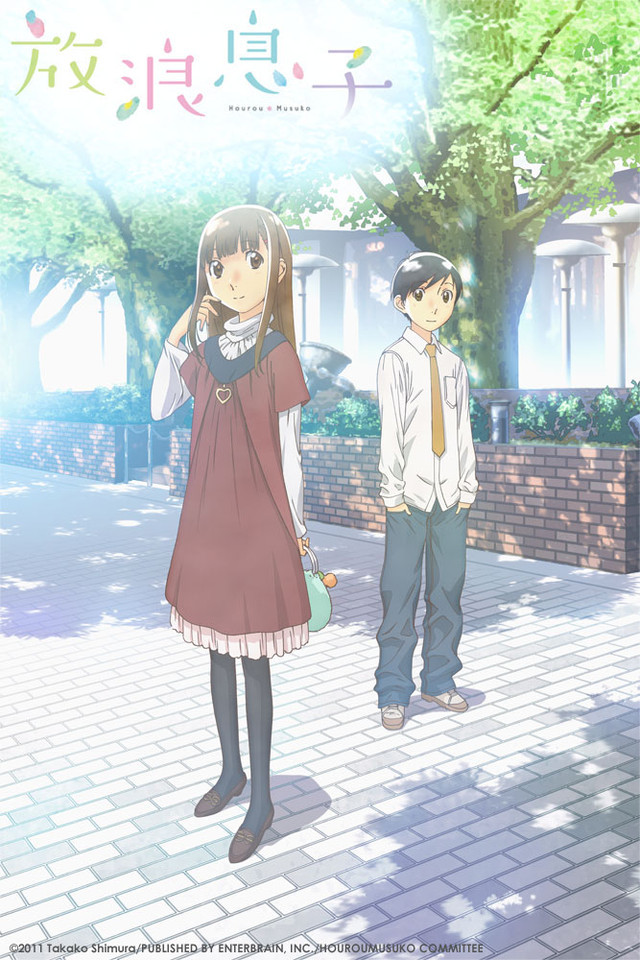
I have no also-rans for #3, nor do I for #2. But prepare for also-rans in #1! Anyway, my #3 show is Wandering Son. While Usagi Drop is trying to tackle single parenting and things of that nature, Wandering Son is tackling a much larger beast: It’s trying to tackle the issues of gender identity, and doing so while the characters are going through puberty. Double confusion for the protagonists, Nitori-kun and Takatsuki-san.
And that’s really what grabbed me so completely into the series. The relationship between these characters and just seeing them grow is so compelling and Takako Shimura’s writing is just so good and so amazing that you want to see these characters live their lives through these really complex problems.

I suppose the only real flaw of this series is the mature characterization of everyone, which is oftentimes stretching belief for the mentality of your typical middle schoolers. But that’s hardly a major detraction from the series, as the stories that Wandering Son is trying to tell hold much more importance than these detractions.

Really, what makes me like this series so much is that it touches on a subject that most US productions wouldn’t touch with a 10-foot pole. And it executes it in such a way that US productions wouldn’t touch with a 20-foot pole. That’s certainly something I really admire about anime; is that it’s willing to tackle these touchy issues, and oftentimes in a very tactful manner.

But I think I’ve rambled on enough about Wandering Son. It’s a very understated series that will get looked over by mere premise. However, it’s definitely worth checking out and sticking out, given that it’s only 11 episodes.

So #3, Wandering Son. Onto #2.
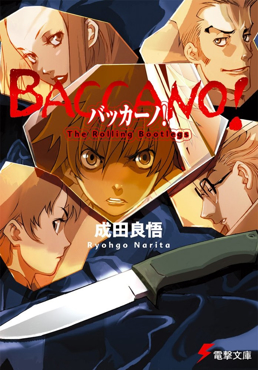
My #2, and former #1, is Baccano!
This show really does everything I want in show. It has great characters and it has a great ongoing plot. The folks at ANN said that you could jump into any scene and just have fun watching it, and I’ll have to agree with that. You won’t understand everything that’s going on in the scene, no. But by god, you’ll have fun watching it. This is a large cast of a little more than a dozen and you find yourself rooting for every single one of them by the end of the series in some little way.

I think one of my favorite things about the series is that it has amazing rewatch value. You get everything you need to enjoy the show watching it the first time, but you gain a greater and greater understanding for the series as a whole as you watch it two, three, four more times.

The characters in Baccano!, though, really bring the story together. Where would this show be without people like Isaac and Miria? Or Firo? Or Ennis? Or the conniving Szilard Quates? Even minor characters like Elmer C. Albatross and the Devil himself play a seemingly major role in the story as a whole. And secondary characters like Czeslaw Meyer and Maiza Avaro really bring the rest of the cast together to form one, cohesive whole. Last but not least, not enough can be said about Ladd Russo. Every time one of these characters is on screen, I just want them to be there forever. They’re easily likable and understandable, and they really have to be for the way the story is being told.

The disjointed narrative, told in chronological order through the various years, but the years themselves told very much out of order, make this show one of the most unique you’ll pick up ever. If this were told in a strictly chronological order, it would lose a lot of its umphf and strengths. The narrative structure, much like the music in a Yoko Kanno or Yuki Kajiura composed series, could very well be called a character unto itself. I wouldn’t, and it would be a stretch to do so, but you could make the argument.

Anyway, overall, Baccano! is a lot of fun. I think that no matter who you are, you will find some enjoyment out of Baccano!, if not from the show as a whole. It has a great mass appeal and a great dub cast, which only makes it more accessible.

Finally, the home stretch. #1.
The also-rans for the #1 spot are just the works of Shinichiro Watanabe, specifically Cowboy Bebop, Samurai Champloo, the “Baby Blue” short that was part of Genius Party, and Kids on the Slope. No matter what this man is doing, it is goddamn brilliant. The only reason they remain off the list is because the shows, while really amazing, just didn’t resonate with me as much as they did with other people. My preferred show is a slice of life, as evidence from three of my top 5 being slice of life shows. But, with the exception of Kids on the Slope, which I enjoyed the most out of the four, they just didn’t resonate with me as much as the other shows. They’re really, really good, and Bebop and Champloo are definitely worthy of an objectively best top 10 list and as great introductions to anime to people who have never seen a minute of anime. But they just don’t make the cut.

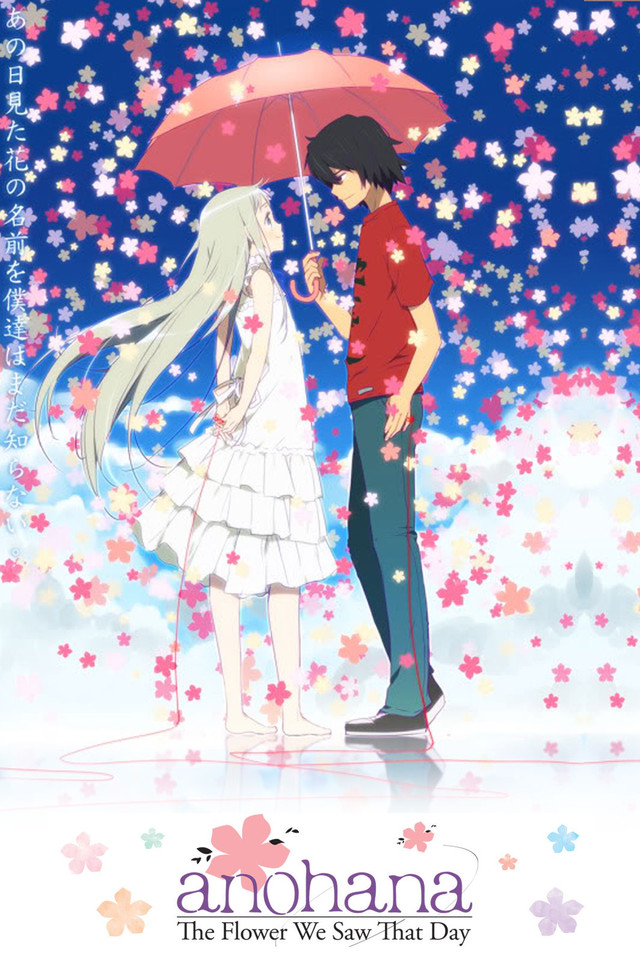
But my #1 show that I have ever seen is Anohaha: The Flower We Saw That Day (in Japanese, ano hi mita hana no namae o bokutachi wa mada shiranai, which translates to we still don’t know the name of the flower we saw that day).
This show is really, really great. I finished this show and wanted to watch it again, just to have that same feeling I got when I finished it the first time. I so very rarely have that desire, but Anohana did it for me.

Anohana really captures what it’s like to grow apart as a result of anything (in the show, the death of their close friend, which is revealed first episode, I think). Coming back together for these characters is a painful, and oftentimes awkward, process that none of them really want to do, but they’re all going through.

The show also highlights the scars that one has after something as traumatic as the death of a friend. These people are going through a really tough transition, and have been for the last few years. While the situations they’re allowed to be in are sometimes stretching belief, I think it only emphasizes just how hurt everyone is.

What I really liked it for was everyone trying to overcome this huge trauma. The five characters keep doing these superficial things and it’s only when they finally give it their all do they really overcome everything that’s happened to them.

So despite Anohana’s sometimes unbelievable situations, it really knows how to hit you right in the feels and tell a great, if relatively simple, story with great, and not at all simple, characters. But the decision really came down to personal preference. I just love slice of life shows, this one in particular.

Well, there you go. My #5-1 best anime that I’ve seen. I haven’t seen some supposedly really good ones, like Rose of Versailles, Revolutionary Girl Utena, and Moribito. It’s also been a while since I’ve seen Wolf’s Rain. I also decided to not include movies on this list, as those will be going in a separate list. Top lists like this really change for me based on my mood, but every show mentioned here will always be a mainstay in my favorite shows that I’ve seen. At least that much is very unlikely to change in the future.

Monday, December 31, 2012

Top 10 Anime Shows - #10-6


Read the introduction first?

Let’s jump right into #10.
The only also-ran I have for the #10 spot is Fullmetal Alchemist and Brotherhood. I don’t call these two one series, nor should anyone because of how wildly different they are. Both of these series definitely have a great amount of wide appeal, evident in just how popular they both are in Japan and in the US. But it just doesn’t eclipse what my actual #10 is, and that is One Piece.
I really, really hesitated to put One Piece on here because it is, I think, objectively worse than Fullmetal Alchemist, and it’s a lot less accessible to a large fanbase because of its length and its sillier moments.

But One Piece is well into its 600s of chapters and almost in the 600s of episodes, and it’s still going strong for me. Some of the most recent arcs, just before the time skip, were some of the most emotionally charged stories in anything, in my opinion. That, by and large, is why I think One Piece is so great. Its ability to tell stories at this high of a level for this long is extremely impressive to me.

One Piece does have a really simple way of telling a story, which is basically powerful person is trying to take over place and Straw Hat Pirates defeat them in the end. Interlaced in this storytelling is flashbacks that inform on a major character of the arc (whether that be Luffy, Zoro, Nami, or whoever). But each of the stories that they’re telling are just so good and hit you in ways that you don’t expect. I did not expect to be shedding tears over the destruction of a ship, but I certainly was watching One Piece.

I think what One Piece does the best is that it doesn’t kill characters just to give finality to the story. It’s something that anime does frequently in these long-running shonen shows, and even Fullmetal Alchemist is guilty of this (but it doesn’t detract from the story). The first major death in the present time doesn’t occur until well into the 500s of chapters, I believe. That, I think, is a testament to just how good Eiichiro Oda’s storytelling is.

It’s a really daunting task to just step into almost 600 episodes of just one show, but I’ll tell you right now that it’s definitely worth it. If you skip over filler and OP/ED, you can power through the show pretty easily in two weeks (that is if you have nothing else, or very little else, to do).

No time to dwell on One Piece, though, which is definitely the longest thing I have on this list. Moving on to #9.
I have a crap ton of also-rans for the #9 spot, and it’s really because they’re similar to my #9. They’re all love stories in a regular-ish setting. First of the also-rans is Fruits Basket. Fruits Basket didn’t quite make the list because some of the anime stories are really meandering in the scope of a 26-episode series. The manga would almost certainly make a top 10 list for me, but the anime just falls short because it’s missing that true ending instead of the anime ending. Also-ran number two is Ouran High School Host Club, for the same reasons that Fruits Basket didn’t make it. Ouran is a brilliant not-really-deconstruction-but-more-parody of the over-the-top shojo tropes, and it’s just so funny. But it leaves every love story open for reading the manga by the end of the series, which had its own (very similar to the manga’s) ending.

The rest of the also-rans are: Clannad and After Story, but the first half drags on for maybe too long. However, it’s necessary for to inform the second half, I think. And the second half is really where the show is at its strongest. It just doesn’t have that complete greatness that the rest of the shows on this list do. Next is Nana, which suffers from the same things that Fruits Basket and Ouran do, and now it looks like we fans may never get an ending to even the manga. Which is really too bad because Nana is among the best shojo out there, ever. Next is Honey and Clover, which I really have to and want to revisit because I think it’s a show that really grows on you more the more you revisit it. It’s completely dependent on you liking the characters to like the show, which isn’t a bad thing, but it doesn’t get into who they are and why you should like them fast enough and the first half of the first season suffers for it, unfortunately. Next is Kimi ni Todoke, which is a show that I really liked. But it’s a really subtle show, and thus doesn’t leave a huge impression on you. I was left with, “That was really, really good. I’ll revisit that down the line, but not anytime soon.” Which is why it has to be left off the list. Last, but not least, of the also-rans is Toradora. Toradora is a show that I immensely enjoyed, but it just doesn’t have that final push to make me love it completely. The ending also feels rushed and wrapped up nicely, when they could have done something like Oreimo and done a few extra ONAs and served themselves a much nicer ending. But they’re might have been something in production that prevented that.

Anyway! My ramblings aside, my #9 is, without any regrets, K-ON! and all related material. First season, second season, and movie. Loved it all. I can watch these girls just hang out for 40+ episodes and a movie and still want more. If any show has completely captured the art of meandering and telling that in standalone stories, it’s K-ON! This is a show that I will revisit probably at least every year, just for that nostalgic feeling you get watching these girls.
But really…this show completely captures that high school life of hanging out with your friends and that feeling of loss you have after you move on. It ends on a high note though, of course, because all the girls are going to the same college (and there’s a continuation manga!). If you didn’t have that really close relationship to people back in high school, or even in college, this might not resonate as strongly with you. Or if you can’t stand just meandering stories, and K-ON! is very meandering, then it might not be your cup of tea. But K-ON!’s kind of meandering is a good kind of meandering; a kind of meandering that informs the characters in ways that some of the also-rans couldn’t do as well.

The dub cast for K-ON! is suitable, but kind of hit-and-miss overall. The actress for Yui strains at several parts and it’s not until you watch a few episodes that you even start to get over it. Mio seems to be perfectly voice matched, but I have to wonder what she’s bringing to the table that the Japanese seiyuu wasn’t. Meanwhile, Mugi is portrayed middle-of-the-road in terms of the performance, but the overall tonality of Mugi was definitely maintained, and I have to give the actress a few more points for that. Azusa was lacking compared to the Japanese seiyuu, but I feel that the dub performance brought something different, albeit subtle, to the table compared to the original. Ritsu, however, is by far the best performance in this dub as a whole. I didn’t really like Ritsu overall based on the Japanese, but the dub really tips it for me. I found myself falling more and more for Ritsu because of how good it was.

So overall, the show really does a lot of things well. But it’s also a very divisive show, with the detractors saying that it’s just moe pandering (which is kind of is). I’m not sure it’s worth putting at #9, but it’s definitely better than One Piece and, on a personal level, I wanted both One Piece and K-ON! to be included because of how much I like these two series. Unfortunately, that means a few other shows get the shaft. Sorry, those shows.

Moving on to #8.
I don’t have any also-rans for the #8 spot, so I’ll just jump right it. The #8 is Hellsing Ultimate, which is not to include the sometimes great, usually spotty TV series.
Hellsing Ultimate, to me, is, well, the ultimate form of anime entertainment. It’s not for the light at heart because, just like the Trust and Betrayal OVAs, there’s a crap ton of blood that pours from places you didn’t think had that much blood to pour from. But the draw to this series will always be Alucard ripping the ever living shit out of people. Sure, there’s some interesting takes and/or deconstructions of vampire tropes as well as a slave-master duality between Seras-Alucard and Alucard-Integra. But what this boils down to is I want to watch Alucard rip things apart in a gruesome manner.
If I watch any show just for the pure, high-octane entertainment value, it is Hellsing. I marathoned through Hellsing I-VIII, the only ones that are in English, and I have absolutely no regrets about that decision. That was eight hours of pure entertainment.

I think what really makes me love this series so much is the rivalry between Alucard and Anderson. Alucard constantly says that no one is immortal, and that seems to be a running theme through the series. But Anderson, the once mortal who Alucard wanted to be killed by, becomes a monster himself and Alucard loses all respect for the man Anderson once was. That says a lot about the character of Alucard and Kouta Hirano does that absolutely brilliantly.

So, yeah. For me, there’s not much more to be said about Hellsing Ultimate. The draw is, and always will be, entertainment. Pure and simple.

Ok, #7.
I had a lot of trouble putting the #7 on the list, just because, aside from One Piece, it’s the only show that’s still airing. And, for all I know, it could have a really bad ending. But it’s just a testament to how good this show has been up to this point that it got on the list.

Before that, though, a few also-rans for #7. These are also relatively new series. The first one is Chihayafuru, which took the fall 2011 season by storm. It was by and far the best show out of that season and I am super excited for the second season coming out in the winter 2012 season. But Chihayafuru kind of had it all for me. It had great characters, with Chihaya, Taichi, Nishida, Komano, and Oe, and a great driving plot for all of them, in the karuta card game. Beyond that, it’s a fairly conventional sports anime, which says a lot about its characters. The relation between these five, and the additional past history with Arata, Chiahya, and Taichi, makes this show absolutely amazing. I’d love to put it on the list, but pandering to my own desires and putting K-ON! and One Piece beat this show out.

The other also-ran is Madoka Magica. It is an absolutely brilliant piece of work from Gen Urobuchi (the writer for Fate/Zero’s original light novels and second season as well as the fall 2012 season’s sci-fi Psycho-Pass) that should be a required viewing for anyone who calls themselves a fan of the magical girl genre. Shows like Sailor Moon and Cardcaptor Sakura paved the way for this to be created and it almost certainly wouldn’t be the same without their own deconstructions of the genre. But Madoka Magica takes deconstructing a genre to the level that hasn’t been done in 16 years when Neon Genesis Evangelion premiered in Japan. It starts off as a pretty typical magical girl fare…and then episode three hits you like a ton of bricks. And it just gets darker and darker and darker from there. These are middle school girls dealing with all of this and it is played absolutely brilliantly. I can say with certainty that the magical girl genre won’t have another great show like this in a good five years at least.

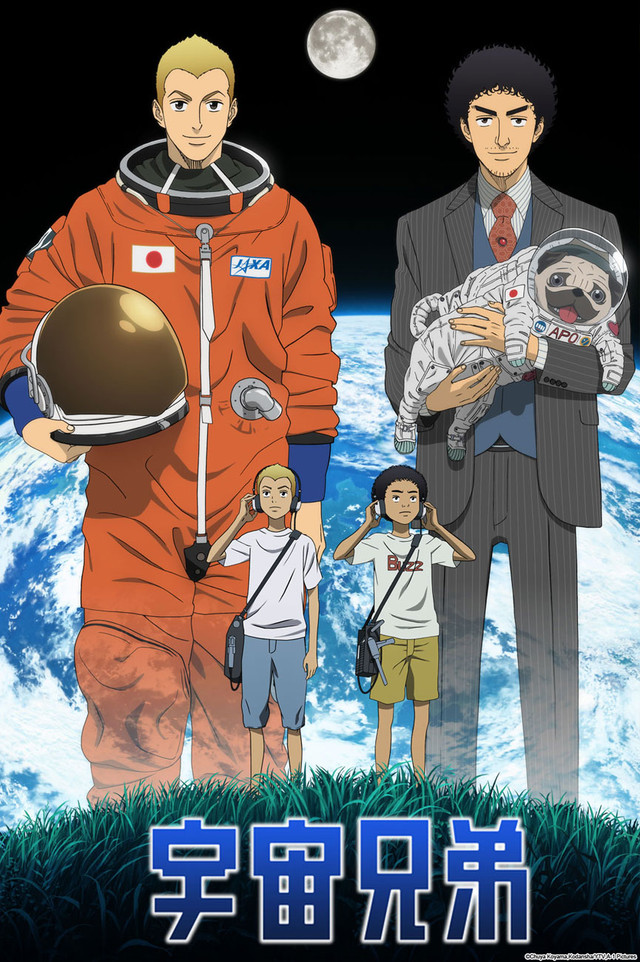
But my #7 show is Space Brothers. It’s just such a great show and by far the best season from a spectacular spring 2012 season that also included Kids on the Slope, Lupin III: The Woman Called Fujiko Mine, and tsuritama.
Space Brothers is a show that takes its time with telling its own story. Once we were 30 episodes in, our protagonist, Mutta, still hadn’t become an astronaut—which is what he’s been trying to accomplish since probably episode two or three.
What makes this show great, or what took it over the edge from just really, really good for me, was around episode 25 when Mutta and four other characters were placed inside an isolated pod tube apartment-ish place as part of JAXA’s astronaut exam. The characters themselves were there for two weeks and it felt like I was watching them in real time. Yet I was constantly at the edge of my seat wanting to know what happened next. Then there’s always one or two episodes of just build up to the point where we find out Mutta has moved further on in the astronaut exam. Each and every time, I don’t know whether he’s going to succeed…But dammit, I’m cheering him on, on the edge of my seat, to succeed.

This just explores characters, both Mutta and the myriad of side characters, in such an amazing and deep way that I don’t frequently see in anime, or even American TV. I don’t think I’d see five minutes of a 20 minute episode dedicated to a character we’ve seen on screen for maybe 20 minutes prior to this. But Space Brothers does just that. It takes the time to give some of the seemingly less important background characters their time in the spotlight. And it could very easily feel like wrapping up the storyline with a nice bow (the character I’m referring to previously had several quarrels with Kenji, who quickly became friends with Mutta at the beginning of the exam), but it doesn’t feel like that. It feels like you learned about the character instead of, “Ok, their story is over now. Moving on.” And I really appreciate that out of this show.

Once this gets a dub, and by god it had better, this is definitely going right alongside suggestions like Cowboy Bebop and all the Ghibli movies as great ways of introducing someone to anime. That’s just how good it is. It doesn’t feel like I’m watching an anime, but it being in animation really brings it to life.

Moving right along to #6.
The also-rans here are simply the works of Makoto Shinkai, simply for lack of a better place to put them. I haven’t seen Children Who Chase Lost Voices, but I’m sure I’ll enjoy it. I also have very little recollection of Place Promised in Our Early Days, but I remember liking that a lot. However, his two works that really represent what he can do as an animator, director, and writer are his debut Voices of a Distant Star and the feature length 5 Centimeters per Second. Voices really hits me every time I watch it. I remember getting it in the mail, watching the dub, watching the sub, watching the sub that Shinkai acted in himself, then watching the dub again. It really is that good. 5 Centimeters per Second is something that I’ve really been meaning to revisit, but I’ve seen it twice and really liked it both times. I’ve only seen the ADV dub of the film, but I thought it was outstanding. David Matranga always seems out of place at first (given my introduction to him was Sanzo in Saiyuki, it’s understandable), but he outshines as always. While Voices emphasizes trying to be together, even though you’re so far away, 5 cm emphasizes the tragedy of simply drifting away from those you love. Both stories are just told fantastically and if you want to check out Shinkai as a whole, do Voices. If you dislike it, stop. If you like it, watch the rest of his stuff. At the very least, you’ll really appreciate the animation in it, because it is top notch.

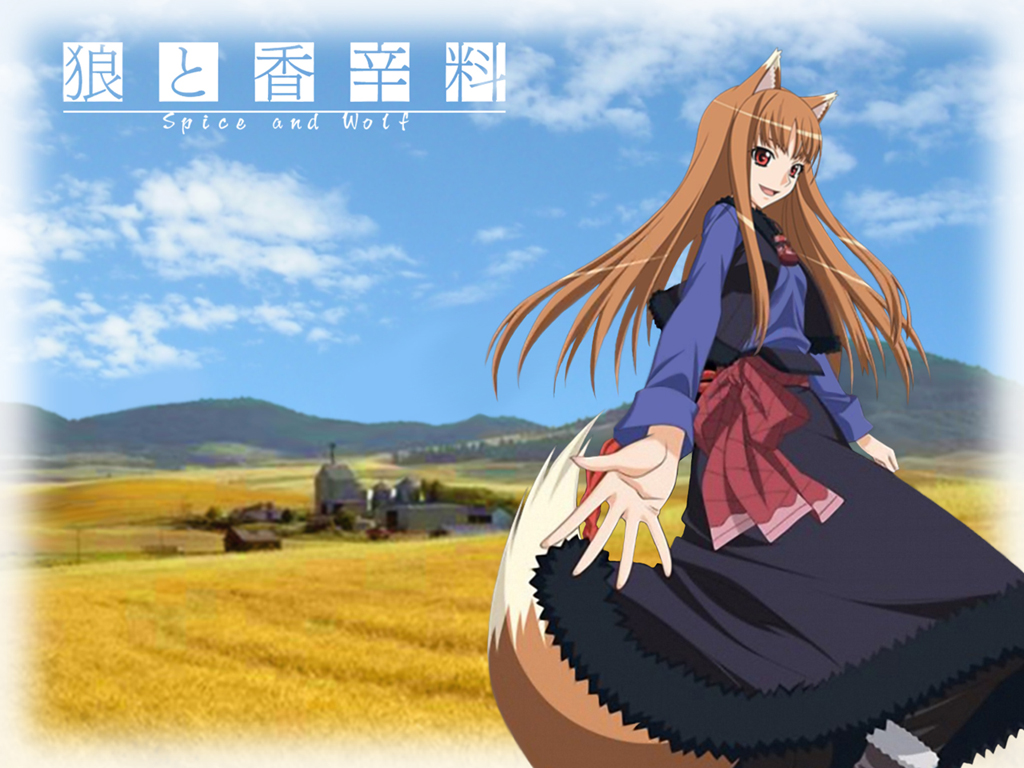
My #6 best anime I’ve ever seen is Spice and Wolf. The stories that Isuna Hasekura are trying to tell are absolutely stunning in their detail and the dynamic between Lawrence and Holo is among the best dynamics between two characters in anything.
I think what really drew me to the series is that both Lawrence and Holo are exactly the type of character that I love to watch do things. They’re both extremely intelligent, yet sometimes just as naïve, and they both always seem to have a plan—even if that plan isn’t panning out exactly as they planned.
The series as a whole tells four complete stories, or four of Hasekura’s now 17 light novels, and each and every story is unique and creative. From the silver coin fiasco to smuggling gold to selling pyrite to fur trading again, they are all amazing works of creative brilliance in economics. I remember the pyrite, which involves simply watching the time go by with Lawrence, and it is one of the most tense moments that I ever remember watching. And it’s just so mundane, it’s great.

What this really boils down to is whether you like Lawrence and Holo and like their dynamic. Because that will be make or break in the series. If you love them, you love the series. If you hate them, you probably hate the series.

Alright, that was a lot of also-rans. I got most of them out of the way, but the rest deserve the wait. Now, that was #10-6. Next up, #5-1. Which you can read here.

Sunday, December 30, 2012

Top 10 Anime Shows - Introduction


I recently listened though ANNcast’s top 10 anime of the 80s, 90s, and 2000s. That got me thinking that my own top anime list was extremely outdated, because I wrote that about a year and a half or two years ago. And a lot can be watched in that time period. And, trust me, I have watched a lot in that time period. I have several also-rans for each number, either because they were similar to that particular show or because they deserve to be mentioned in tandem with that particular number.

First, I want to explain a bit on how I ranked each of these. First and foremost, on a personal level, is rewatchability. For example, things like Buffy and Breaking Bad are really good. They’re really, really good. But do I really have a desire to watch them again? Buffy, yeah, way down the line. Breaking Bad? Probably not ever again. So the top shows on this list I’ll want to watch over and over again and I’ll never get sick of them; or they’re shows that I finished and I immediately wanted to start back over again, just to have that same feeling again.

Next in how I ranked these shows was, of course, simply how much I enjoyed them on a personal level. This works in tandem with how objectively good I think these shows are at their peak. And that last part is extremely important, because some of these shows can really drag at parts (*cough* One Piece *cough*).

Before I start listing off all these series, I want to mention a few shows that just didn’t make the cut. They were ruled out before I even considered the rest of the list.

First off is Rurouni Kenshin: Trust and Betrayal. I watched this back in high school, when I was going through that huge nostalgia phase where I watched everything I did back when Toonami was on weekday afternoons (which included Rurouni Kenshin). At the time, I didn’t really like it that much. Now, when I watched it again, I was really impressed. This show really captured a lot of what I liked about the franchise as a whole, yet put it in a much more serious manner. It’s also tragic to see Kenshin grow up like he did. The title gives away what’s going to happen (spoilers: it’s betrayal). But it’s executed in a way that you don’t 100 percent expect. But it just missed the cut because it didn’t quite resonate with me. I loved Kenshin when I was a kid because it had that ridiculous shonen-y feel to it. This was definitely much more adult storytelling, but it wasn’t the Kenshin I knew. Perhaps if I watch the Kyoto arc of the TV show, I’ll like it more. But pure personal preference threw this off the list. Though that doesn’t mean it wasn’t really great, it was. If this were a top 15 list, perhaps it would make it. Alas, I have no reservations about leaving it off.

Next is Mushishi. Mushishi is a show that really took me a while to finish, or even want to finish. Travis Willingham’s acting really put it over for me, because it was a bore for me the first time around. That said, this show has some really great singular stories that cannot be ignored. “The Light of the Eyelid,” “Raindrops and Rainbows,” and “The Sound of Rust” are among a few of my favorites. But the fact remains that I didn’t want to finish this series at all when I first watched it. It’s only watching it a second time, remembering with nostalgia the great stories that lay within this series, that I began to truly appreciate it. It was around episode 17 or so that I said to myself, “Ok, just power through the rest. Doesn’t matter how bored you are.” Now, I still can probably only take these episodes in in moderation, and that’s what puts it over the edge and out of top 10 territory. Again, if this were a top 15 list, this would almost certainly make it. But alas.

Last, but not least, is Gurren Lagann. I immensely enjoyed this show, and still do to this day. Kamina crying out in episode eight still gives me chills whenever I think about it (but that’s about all I can say without spoiling anything further for the few who haven’t seen this series). Out of these three also-rans, I’d call Gurren Lagann my favorite by a fairly wide margin. I’ve only heard snippets of the sub, but the dub is definitely top notch, up there with Cowboy Bebop and Baccano! as best dubs out there. This one isn’t missing anything in particular…but it’s lacking in one compartment compared to every other show on the list. I can’t justify placing it higher than anything that’s already on my list and, thus, its regrettably relegated to the also-rans.

Ok, that is the introduction. Next up, my #10-6 and the also-rans for those. Read it here.

Sunday, December 2, 2012

Releasing a DVD


I haven’t written words here in a while, and it’s mostly because I couldn’t really think of anything worthwhile to write about. But now I’ve finally thought of something. What is the process of releasing a DVD/BD state side?

First, your typical turnaround from the airing of the final episode to DVD/BD release date in the US is about a year and a half, give or take six months or so (sometimes more, rarely less). Funimation’s products, as far as I can tell, usually have a year and a half turnaround. There are some outliers (Like A Certain Magical Index/A Certain Scientific Railgun) and things like Hellsing and the other Geneon/ADV stuff that Funimation hauled in after Geneon/ADV’s respective demises won’t use this same turnaround.

There are several reasons as to why this takes so long. The first and foremost reason is materials. The Japanese licensor just can’t get the music, the video, the scripts, or the whatever elses to the US licensee fast enough. This, I suspect, is what delayed Hellsing and A Certain Magical Index for so long. However, the license itself can take forever to complete as well, and that can stall a release faster than anything. The most recent, or perhaps most notable, example I can think of is Evangelion 2.0. The problem with that was that Gainax (the production company behind Evangelion) thinks the product is worth its weight in gold. And if you combine all the merchandise that Eva has released over the years, that’s a lot of gold. Anyway, Gainax wanted way too much for the license and Funimation had to either talk them down or concede to a higher price than they wanted to (probably a combination thereof).

Of course, there can be several other reasons as to why production is stalled. The video could be flawed in some way or the English dub audio could be flawed in some way or they could have to recast someone based on the Japanese input or whatever. It really depends on the title itself and the bumps in the road that particular title runs into.
[Note: The Japanese have the final say in everything, including scripts, casts, DVD/BD menus…As far as I know, every part of the US release has to be approved by someone on the Japanese side of things. I’m sure that sometimes, they’ll just sign off on stuff willy-nilly. But for something like Evangelion, I would bet some Gainax intern has to look through everything that a higher up executive or production member doesn’t want to.]

Moving right along, the licenses themselves are split into several parts. So when you license a series from Japan, you have to get the license for the music, for the DVD release, for the BD release, for the streaming release, and so many others that I don’t even know. Sometimes, however, you get a license that just says “home video release license” (or the actual technical title). But what that means is that the licensee gets to release that show on DVD, on BD, and on any future home video thing that we invent for the duration of the license. That’s why you’d see so many, “Sentai formally announces license for X show” or “Funimation announces home video release for Y show.” Because, nowadays, these companies will just license the streaming first to see how it does and then license the actual show for home video. Sentai’s just been announcing that it will stream X show, but never formally says it has a license for anything (but you can bet that it does have a license for X show if Sentai is streaming it).

Finally, there’s the dub production. That’s a whole separate article that I’ll just save for later because that goes through producers, line producers, directors, script writers, actors, and a whole plethora of other important people (those are the folks during the ending that you skip over). But the US licensee goes through dub production, gets it signed off by the Japanese, and finally releases that title in the US. A formal announcement of release date, I would imagine, comes pretty near the end of production. But dub actors usually records shows about four to six months prior to release. Sometimes more, sometimes less, but I believe it hovers around that.

When it finally gets released, the typical thing to do now is 13-episode sets. Very rarely do you see sets with fewer episodes than that (unless the complete series is fewer episodes than 13). The most recent ones that I can think of are Madoka Magica and K-ON!’s first season, both of which were release in four-episode sets. Funimation has, on at least three occasions, released the complete series at one time in two 13-episode sets. But very rarely do you see sets that are released with more than 13-episode in a first run, unless it’s a reprint or an old title (shows that Discotek and Nozomi have been licensing are among these exceptions).

This release schedule is much easier on the wallet than how it used to be. Now, you can get 13 episodes for about $45, usually less, sometimes more. Before, you would spend $20-30 on four episodes. Oh how the times have changed.

Well, that’s a quick and dirty version of the process, with I’m sure a good bunch of holes missing in what I’m saying. But this is the gist of it all, I believe.